Vaccines protect children from diseases and give hope for the future
In 2020, UNICEF and the FCDO targeted 1.1 million children under the age of two with vaccinations and a total of 923,889 children under one year old were immunized against vaccine-preventable diseases

- English
- العربية
In Yemen, it is estimated that a child dies every 10 minutes from vaccine-preventable diseases. UNICEF is working closely with the health authorities in Yemen to grow immunisation programmes and provide life-saving vaccines for all children.
A key part of that is supporting central cold-storage warehouses which keep vaccines safe and effective in order to protect thousands of children against fatal diseases. UNICEF in partnership with the Foreign, Commonwealth, & Development Office (FCDO) have provided that support to the central cold-storage warehouses of the Ministry of Health in Sana’a and other governorates.
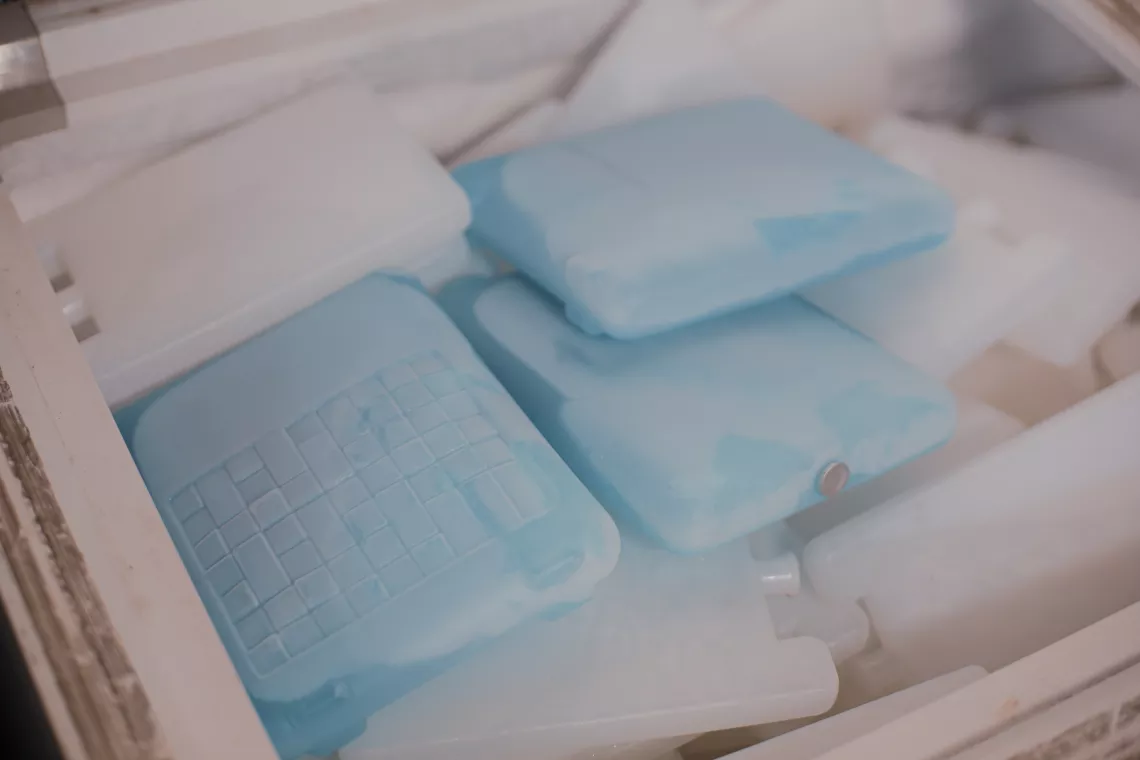
Different vaccine storage methods
“Routine immunisation is the backbone of society, as it is the optimum solution to protect children from serious diseases, and to ensure generations free from epidemics and diseases,” says Taha Al-Aqary, the Head of the Immunisation and cold-chain department at the National Immunisation Programme in Sana’a, Yemen. He adds that “vaccine storage and handling practices conform to the international standards from the moment they leave their source until they reach the central warehouses in Sana’a, where they are delivered and then transported by refrigerated trucks to the governorates’ warehouses, then to the districts, and finally to health facilities. All stages of vaccine transport take place through cold-chain equipment to ensure the potency of the vaccines and their proper delivery to health facilities.”
Protecting against multiple diseases
The method of storage and the temperature required to maintain vaccines vary, and there are questions about how to store them. According to Al-Aqary, some vaccines must be kept below zero degree, while others should be kept between 2-8 °C. There are freezer rooms and cold rooms in the central warehouse, where temperature-monitoring devices are set up to detect out-of-range temperatures and alert those in charge of vaccine maintenance.
“More than eight vaccines have arrived in Yemen, and are available in all health facilities, to help prevent more than 13 diseases,” says Al-Aqary. He further explains that “despite the conditions and circumstances in Yemen, the immunisation programme, with the support of UNICEF and its partners, has worked to provide vaccines, deliver them to various governorates, and distribute them to health facilities, free of charge.” He also points out that vaccines have contributed to reducing or eradicating diseases and epidemics.
Enhancing the cooling system and safeguarding vaccines
Due to the collapse of Yemen’s health system as a result of the war that is now into its seventh year, maintaining vaccine storage facilities remains a major challenge for the health sector. This has prompted UNICEF and its partners to work to safeguard vaccines by supporting the central warehouses and health facilities through the provision of vaccine cold-chain equipment, harnessing solar energy and using mobile technology and telemetry to ensure that vaccines reach all children without losing their potency as a result of exposure to extreme heat or inclement weather conditions in Yemen.
Al-Aqary stresses the importance of UNICEF’s role in overcoming the problem of power outages by supporting the central warehouse in Sana’a and other governorates with generators that work around the clock – and by providing diesel to keep them running. He also notes that UNICEF, the main supporter of the vaccine programme provided both vaccines and cold-chain equipment.
Immunisation means disease prevention
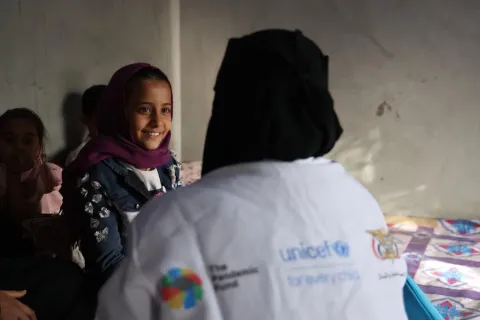
Killer childhood diseases can only be prevented through immunisation. And wherever children are not vaccinated, their lives and communities are at risk. Vaccinators and healthcare workers are keenly aware of this and spare no effort to make sure children are protected from vaccine-preventable diseases, enabling them to better enjoy everything life has to offer.
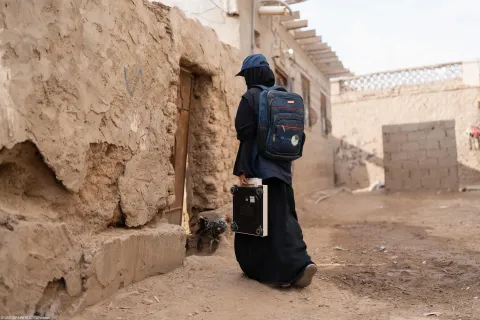
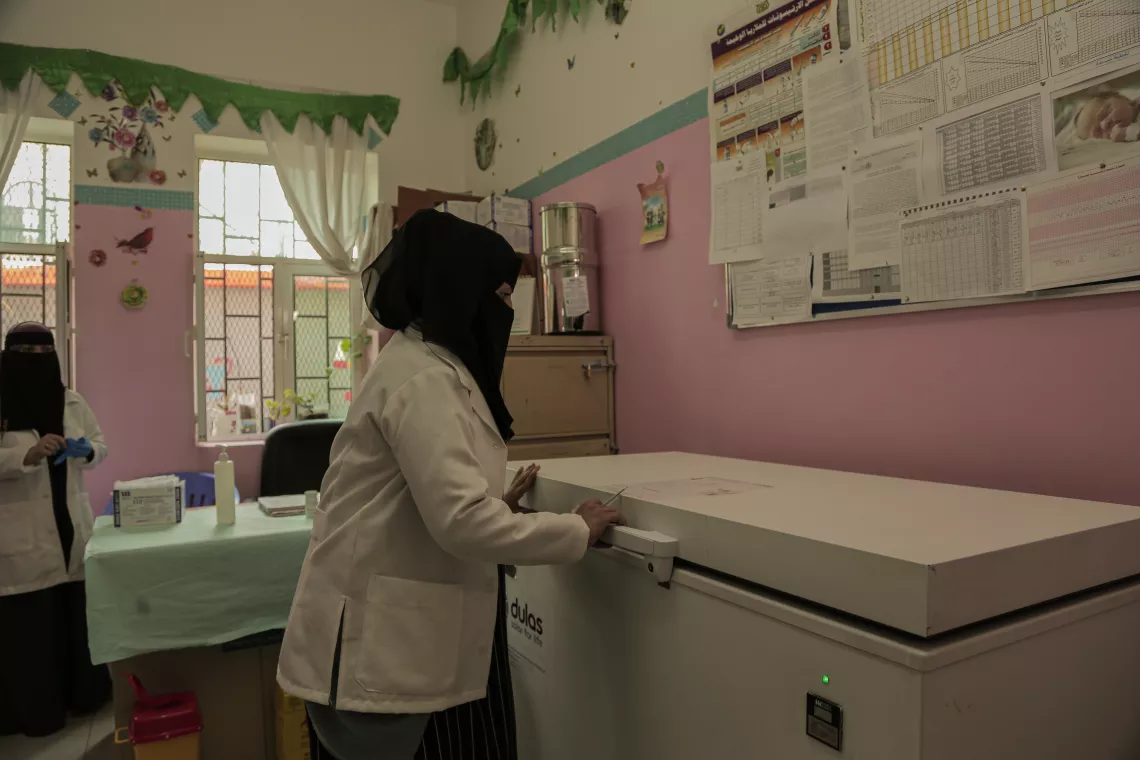
Haniyah Mohammed Sateh is the vaccination supervisor in Al-Safiya District of Sana’a and the person in charge of training vaccination staff in health facilities throughout the district. “Immunisation is of crucial importance and a sure-fire way of preventing diseases and deaths among children. And there should be no concerns around children’s safety [in the vaccination programme] as vaccines get stored in health facilities in accordance with proper mechanisms and standards that ensure appropriate and effective vaccine deliveries.
“After their arrival from the warehouse, vaccines are stored in electric or solar-powered refrigerators that have been provided to some health facilities, which have helped overcome the problems of power failures,” she explains.
Sateh says that rolling out solar-powered refrigerators that help maintain the potency of vaccines even if there is a power cut to all health facilities would continue the progress that has already been made in vaccine storage.
Saving lives
Immunisation programmes play a vital role in saving lives in a country where there are far too many childhood deaths from immunisation-preventable diseases.
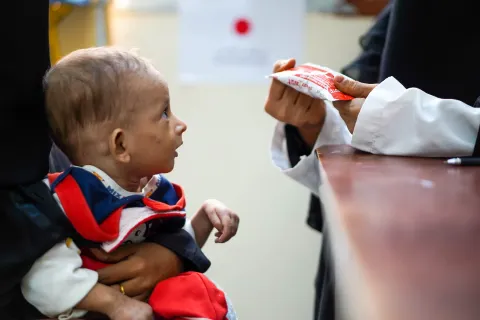
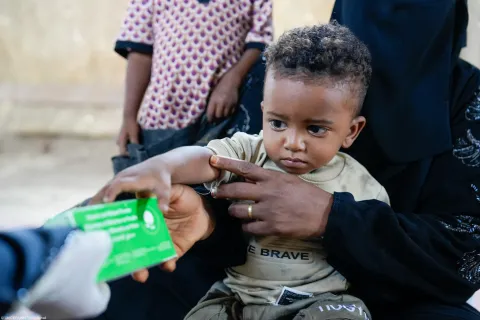
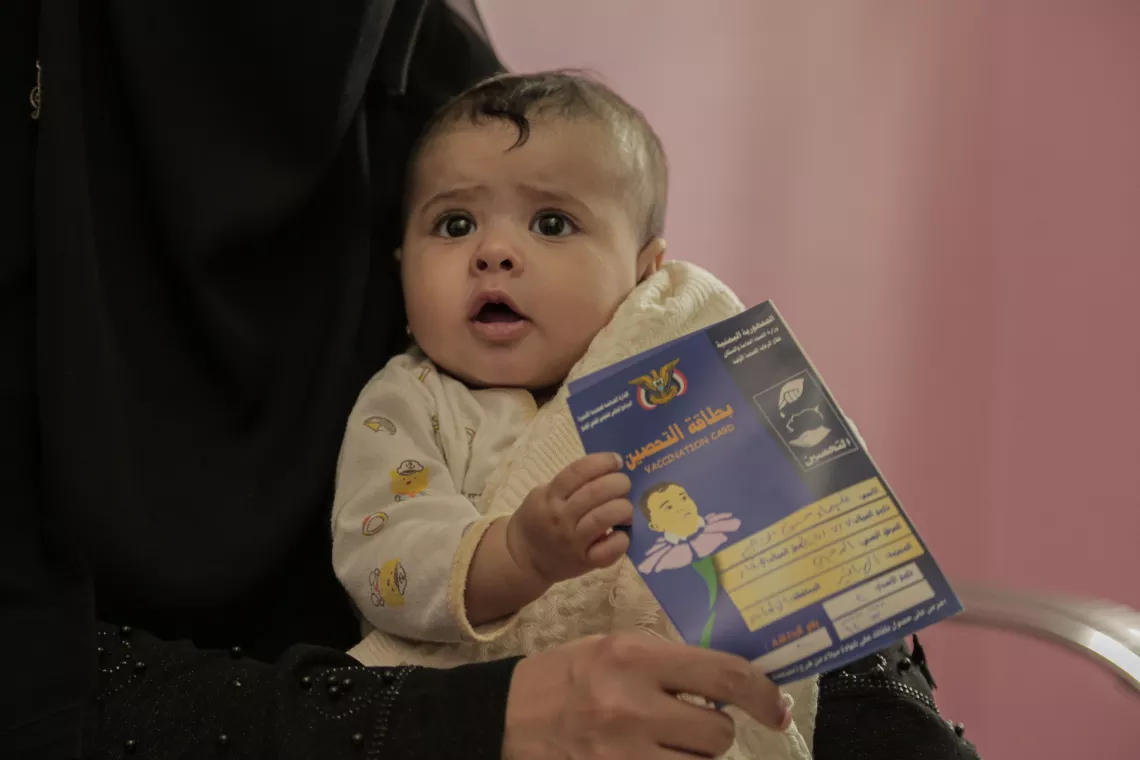
Knowing this, Jumana’s mother is keen to take her five-month-old daughter to Al-Rahbi Medical Centre in Sana’a to get her vaccines. “Immunisation is important to protect children from diseases and ensures a life free from disabilities that can occur in children because they haven’t been vaccinated,” she says. “Vaccines are available at the health centre at no cost, and my daughter receives her routine vaccines on time.”
Jumana’s mother calls on all parents to vaccinate their children to keep them safe and healthy.
A total 19,992,050 vaccine doses
During the year 2020, UNICEF and the FCDO targeted 1.1 million children under the age of two with vaccinations, while a total of 923,889 children under one year old were immunised against vaccine-preventable diseases, and 805,463 children were vaccinated against measles and rubella.
Between January and February 2021, 133,215 infants under one year old were vaccinated against 11 vaccine-preventable diseases and 114,156 infants under one year old were vaccinated against measles and rubella.
According to UNICEF, the total number of vaccines in 2020 and 2021 reached 19,992,050 doses. This figure covers the BCG vaccine, bivalent oral poliovirus vaccine (bOPV), DTP-HepB-Hib vaccine, pentavalent vaccine, pneumococcal conjugate vaccine (PCV13), measles-rubella (MR) vaccine, rotavirus vaccine, inactivated poliovirus vaccine (IPV), and tetanus-diphtheria (Td) vaccine.