UNICEF Water Interventions Bring Life and Hope to Children and Families in Taiz
Residents in Al-Mudhaffar, Al-Qahira and Salah districts in Taiz city now have better access to clean water

- English
- العربية
For years, women and children in Taiz, one of the most water-scarce cities in Yemen, have spent the early hours of the morning waiting in long lines at public water points, or walking long and exhausting distances to collect just a few litres of water, often unsafe to drink.
As local wells fell into disrepair due to sediment build-up and broken pumps, many stopped working altogether. At the same time, the cost of water trucking rose sharply, placing a heavy burden on already struggling families. With few alternatives, some households were forced to rely on unsafe sources, increasing the risk of water-borne diseases such as cholera.
Amid these challenges, a project to rehabilitate and clean 10 water wells across Al-Mudhaffar, Al-Qahira and Salah districts, supported by UNICEF, has become a lifeline for thousands of people. It is helping restore access to safe water in a city that has endured years of conflict and hardship.
A Return to Normal Life
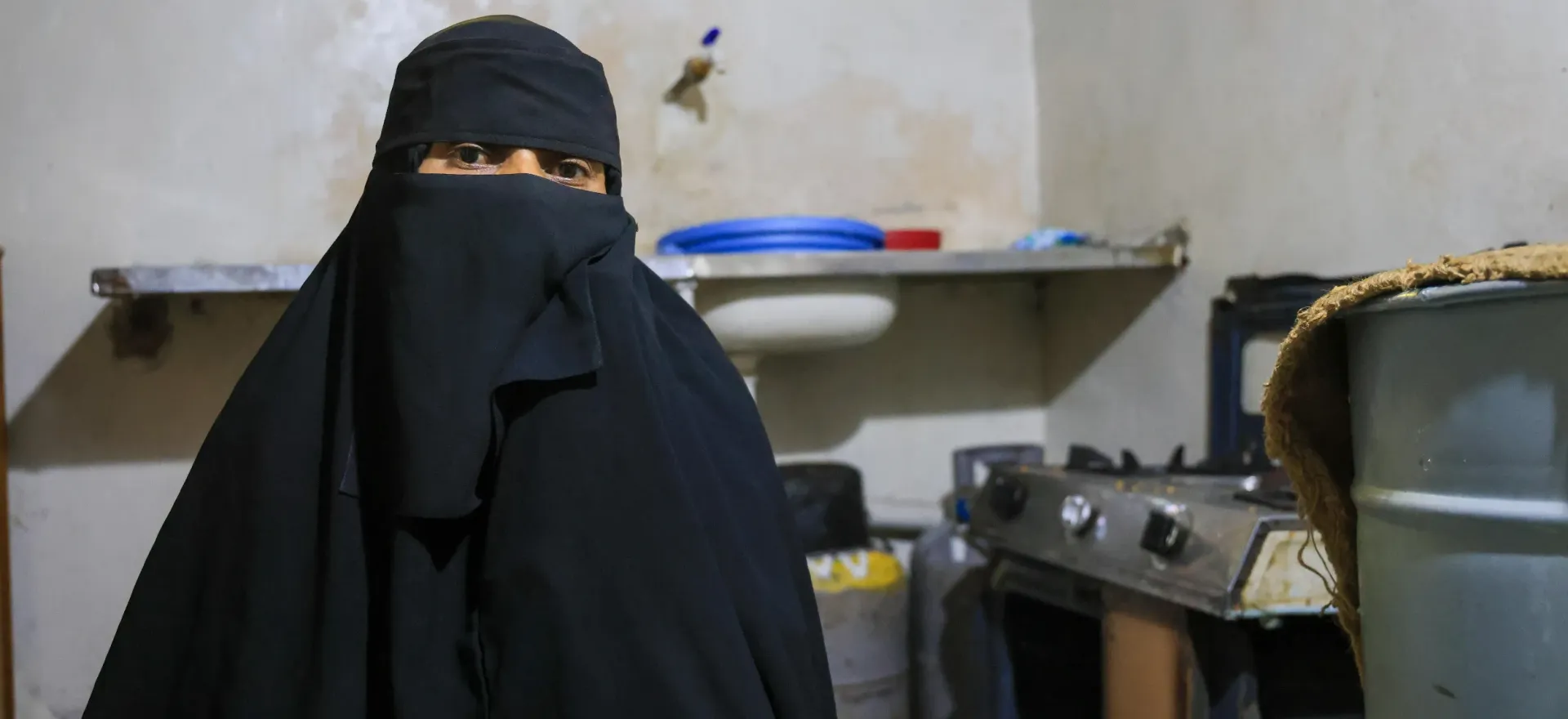
“Joy has returned to our children,” says Hayat Mohammed, a resident of Al-Mudhaffar district. “We finally have the water we need, and it reaches us more easily than before. Children can now enjoy their childhood instead of spending their time fetching water.”
© UNICEF/UN0880189/Al-Basha
Hayat, a mother of 6, recalls how difficult life used to be. Every day, children had to travel long distances to fetch water. “Collecting water was mainly the responsibility of women & children,” she explains. “We used to carry containers from faraway areas, walking for 1-2 hours to reach water sources, sometimes unsafe ones, just to get enough for daily use. Sometimes, the children would return home empty-handed.” She adds, “Now, water comes directly to us.”
© UNICEF/UN0887969/AL-BASHA
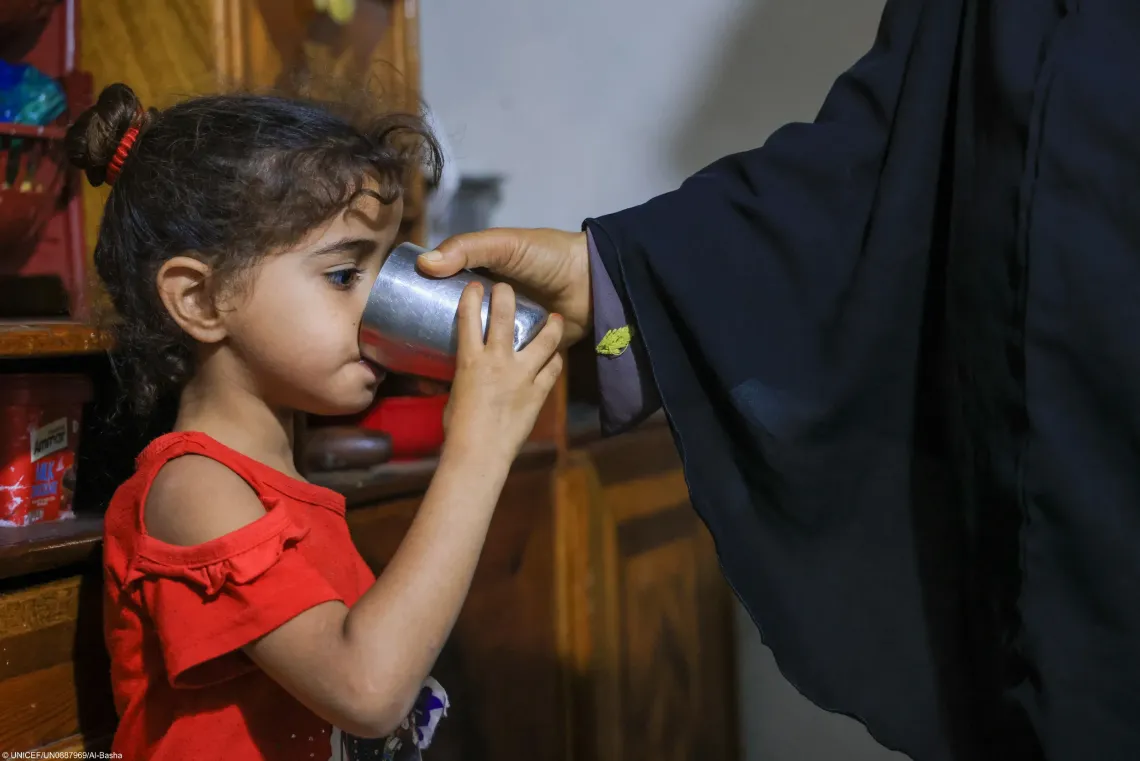
Hayat Mohammed hands a glass of water to her daughter in their home, Taiz. The rehabilitation of the 10 water wells in Taiz has helped 215,000 people have access to clean water.
Water Reaches Home More Regularly
“Three years ago, water reached us only twice a year, and even then with difficulty,” Hayat says. “Now, it reaches our homes every two weeks, and we can fill our tanks properly.”
“After years of hardship, water is finally flowing to our homes more regularly and with less effort.”
Before the project, many families struggled daily to secure water. Children and women moved between neighborhoods carrying empty containers, hoping to fill them.
“Because of the scarcity, the water prices were extremely high that most families could not afford,” Hayat explains. “Drinking water also became very expensive. Sometimes, we had no choice but to drink salty water.”
Easing the Burden
For years, especially since the conflict began, many key wells in Al-Mudhaffar, Al-Qahira and Salah districts have fallen out of service or become contaminated due to neglect, waste accumulation and a lack of maintenance.
To address this, UNICEF supported the rehabilitation of water infrastructure and the restoration of wells across the three districts.
“We had to rely on water trucks, which added a financial burden we could hardly manage,” Hayat says. “It was difficult to cover even our basic needs. We never imagined these wells would work again after so many years of neglect. Today, life has returned, and we no longer fear thirst.”
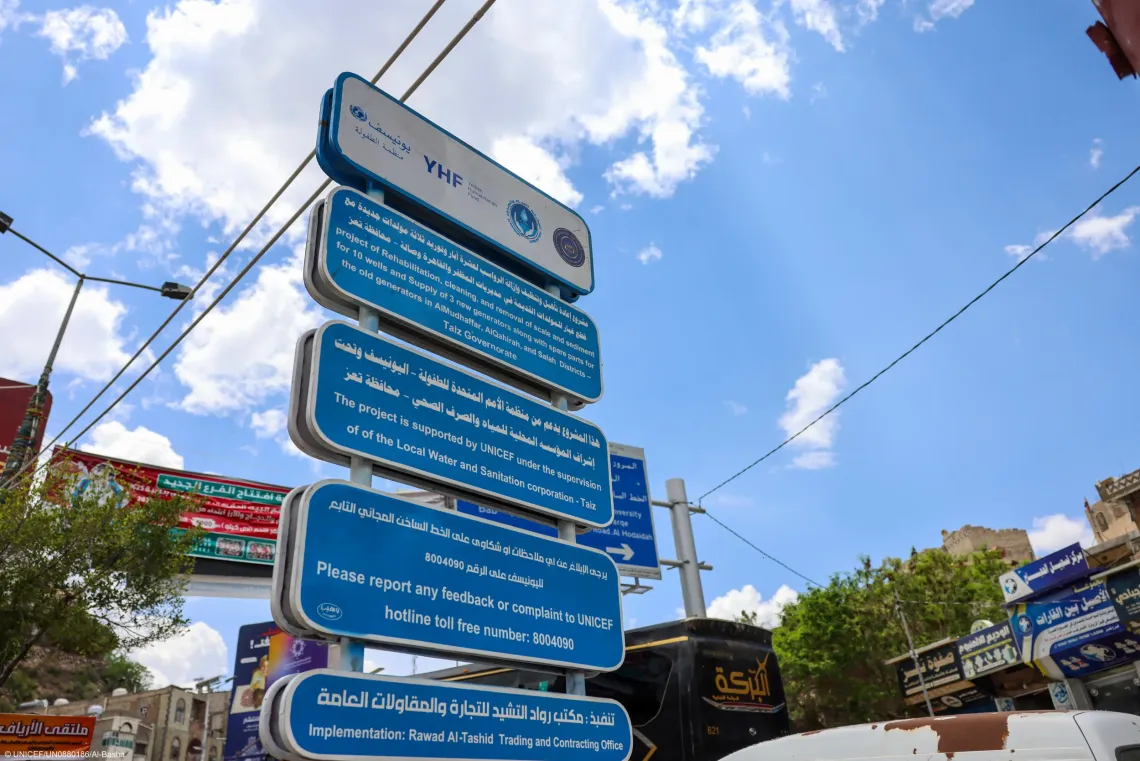
With support from Yemen Humanitarian Fund (YHF), UNICEF rehabilitated 10 wells in Taiz, which made them efficient by 878 cubic meters per day. By removing accumulated sediment and restoring groundwater flow, the project has helped improve water production and ensure a more reliable supply to 215,000 people in Taiz city.
UNICEF representative in Yemen Peter Hawkins, places this achievement within a broader effort to address the city's long-standing water crisis through monitoring groundwater levels, improving connections to the water network, and increasing water supply using more efficient and sustainable methods, including solar energy.
“Water is what we want to do for Taiz. These 10 wells have been made efficient by 878 cubic meters per day. So, the increase for this local communities is substantial. Every day they get more water because these 10 wells cleared.”
Bringing Hope to Families
Improved water access in Taiz is already making a difference for families like Hayat, who have endured years of hardship. It has reduced the physical burden on women and children, while also lowering the health risks linked to unsafe water.
“Now, children can go to school and play safely,” Hayat says. “Access to water has reduced our worries and protected children from the risks they used to face while fetching it.”
With water now reaching homes more regularly, families are beginning to regain a sense of normal life.
UNICEF continues to support the rehabilitation of water systems in Taiz city and other Yemeni governorates, helping communities access safe and reliable water through improved infrastructure and distribution networks.