A Child’s Dream: “When I Grow Up, I Hope to Become a Pilot”
Improving learning outcomes for children both in and out of school
- English
- العربية
This programme, supported by UNICEF and the Government of Japan, aims to improve learning outcomes for children- like Ali- who are in and out of school by providing sustainable education services in Taiz Governorate.
Eleven-year-old Ali Mohammed, a grade 5 student from Yemen, lives with his family in Al-Misrakh District, Taiz Governorate, in south-western Yemen. For much of his time, Ali worked alongside his father to help support the family and save money for a surgery that he urgently needed. The responsibility of working at a young age forced him to leave school last year, which interrupted his education.
Ali’s mother, Iftikhar, says: “My child worked with his father, carrying and transporting stones to the village to help support the family and contribute towards the cost of his ear surgery.”
She adds: “No mother wants to see her children’s dreams broken or have them leave school, but we had no other choice. All of this was affecting his health and psychological well-being.”
Child labour
Child labour remains a major challenge in Yemen. According to findings issued by Yemen’s Central Statistical Organization in collaboration with UNICEF, 12.5 per cent of children aged 5 to14 are engaged in work, rising sharply to 15.4 per cent in rural areas. Statistics also estimate that 3.2 million school-age children are out of school.
Ali received psychosocial support through a UNICEF programme funded by the Government of Japan in Taiz, aimed at improving learning outcomes for children both in and out of school.
Wahda Saeed, a 37-year-old social worker,says: “Ali’s case was identified in October 2025 by the school’s focal point as a case of child labour. That was when we began working to help change Ali’s life.”
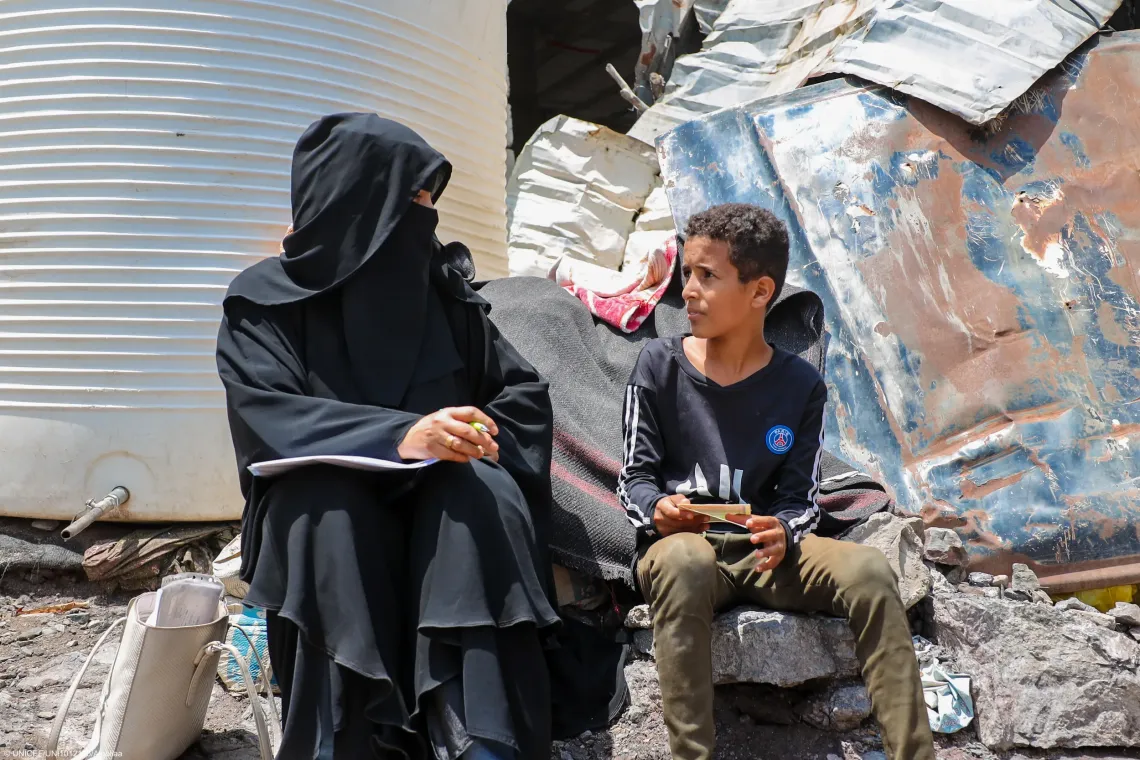
Wahda works as a social worker with the Social Affairs and Labour Office in Taiz. She conducted an assessment for Ali’s case. Ali was provided with initial psychosocial support, and his needs were identified including financial assistance to cover the cost of surgery and a full set of school supplies. An intervention plan was then developed, and the case was referred to the Social Affairs and Labour Office to complete the procedures for providing financial assistance, enabling Ali's family to pay for his eardrum surgery.
Thanks to the support provided to Ali, and to the medical team who treated him, the surgery performed in Taiz in December 2025 was successful. His health improved significantly after spending one day in hospital, bringing an end to the ear pain and night-time fever he had been experiencing.
“This support helped stabilize Ali’s psychological well-being and restored his desire to return to school”
The intervention brought a positive change to Ali’s life After missing school for two months, he returned to the classroom regularly. His academic performance improved, and he is now enrolled in Grade 6. His psychological well-being also improved, and he has regained his confidence. He is also less reliant on the heavy work that had kept him from enjoying his childhood and continuing his education.
This story highlights the importance of early intervention to protect working children. It demonstrates how case management, psychosocial support and humanitarian assistance can help reduce child labour, restore children's rights to education and protection, and offer them a better opportunity to build their futures.
“I love school because education will help me build my future.” “When I grow up, I hope to become a pilot.”
Improving learning outcomes for children
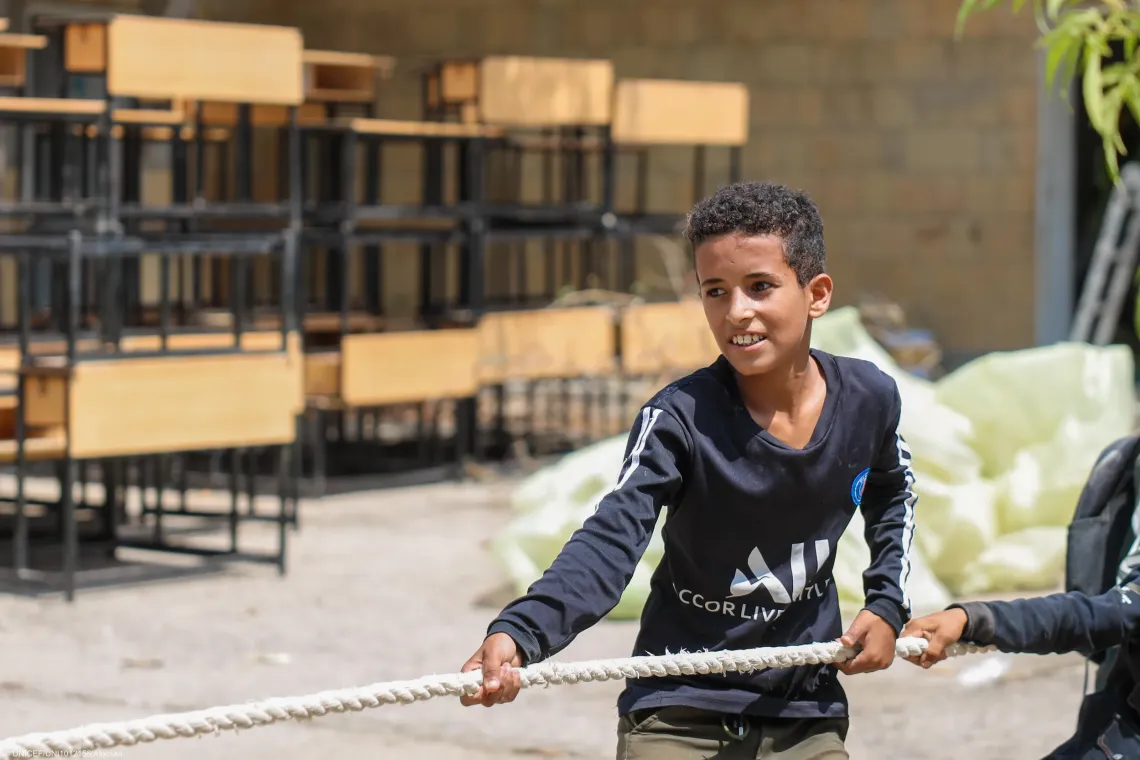
This UNICEF and Government of Japan-supported programme aims to improve education outcomes for children both in and out of school through a comprehensive education strategy built on four pillars. Through social and behaviour change activities to promote enrolment at the appropriate age, 947 children were reached. A further 6,000 at-risk students received interventions aimed at preventing school dropout, while 1,669 out-of-school children were engaged through alternative and remedial learning pathways. In addition, 290 teachers received training in foundational literacy and numeracy skills for early grades, strengthening the quality of education and support systems overall.
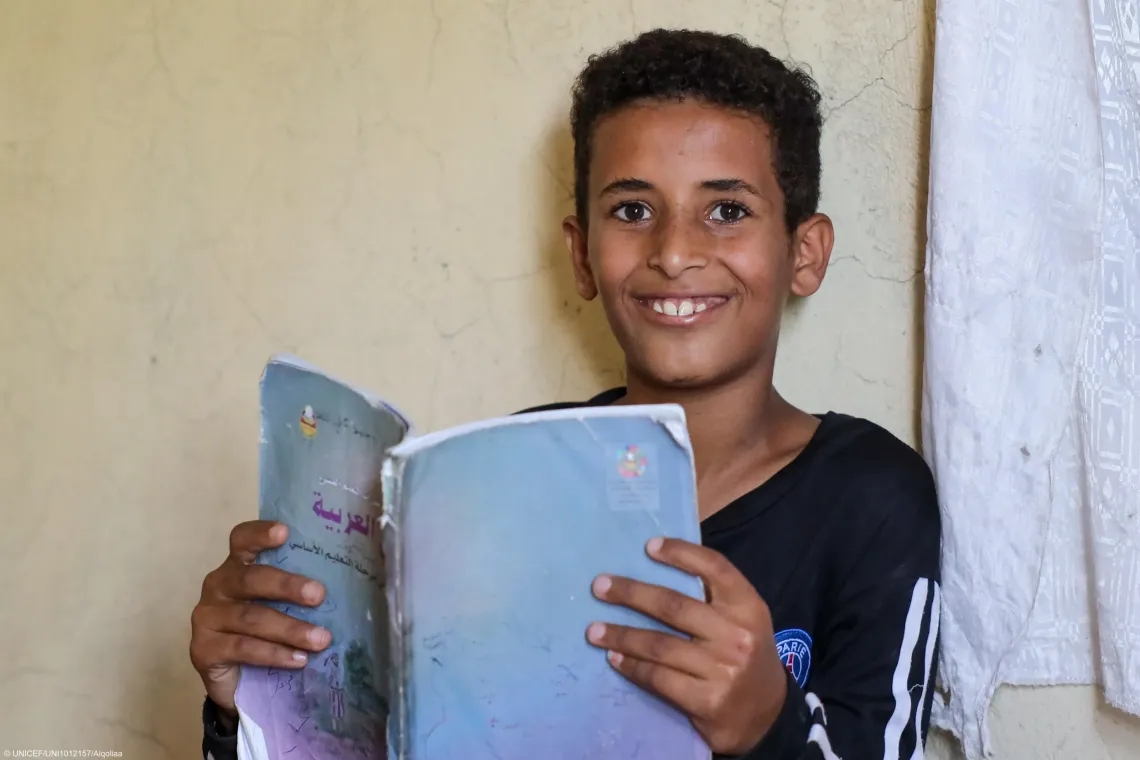
For Ali, joining the education programme marked a turning point. Through this comprehensive approach he was able to return to structured learning environments filled with hope.