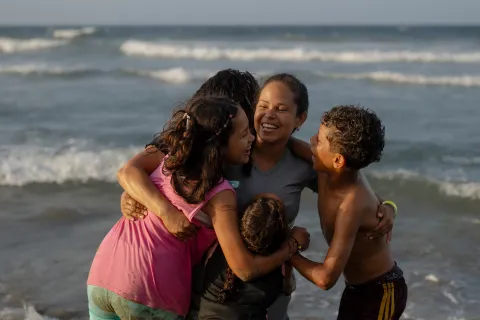
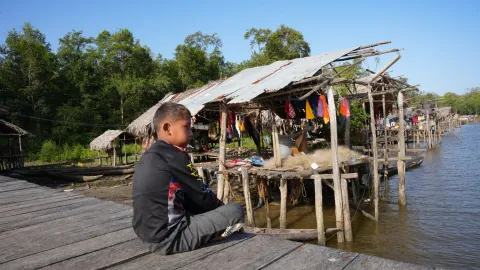
“They told us about our rights, and we have been learning many things such as leadership"
After the emergency that occurred in Tejerías, Edo. Aragua, where 1.400 families were affected and over 750 homes were destroyed, UNICEF worked with the community, teachers and students to ensure the rapid return to school.
- Español
- English
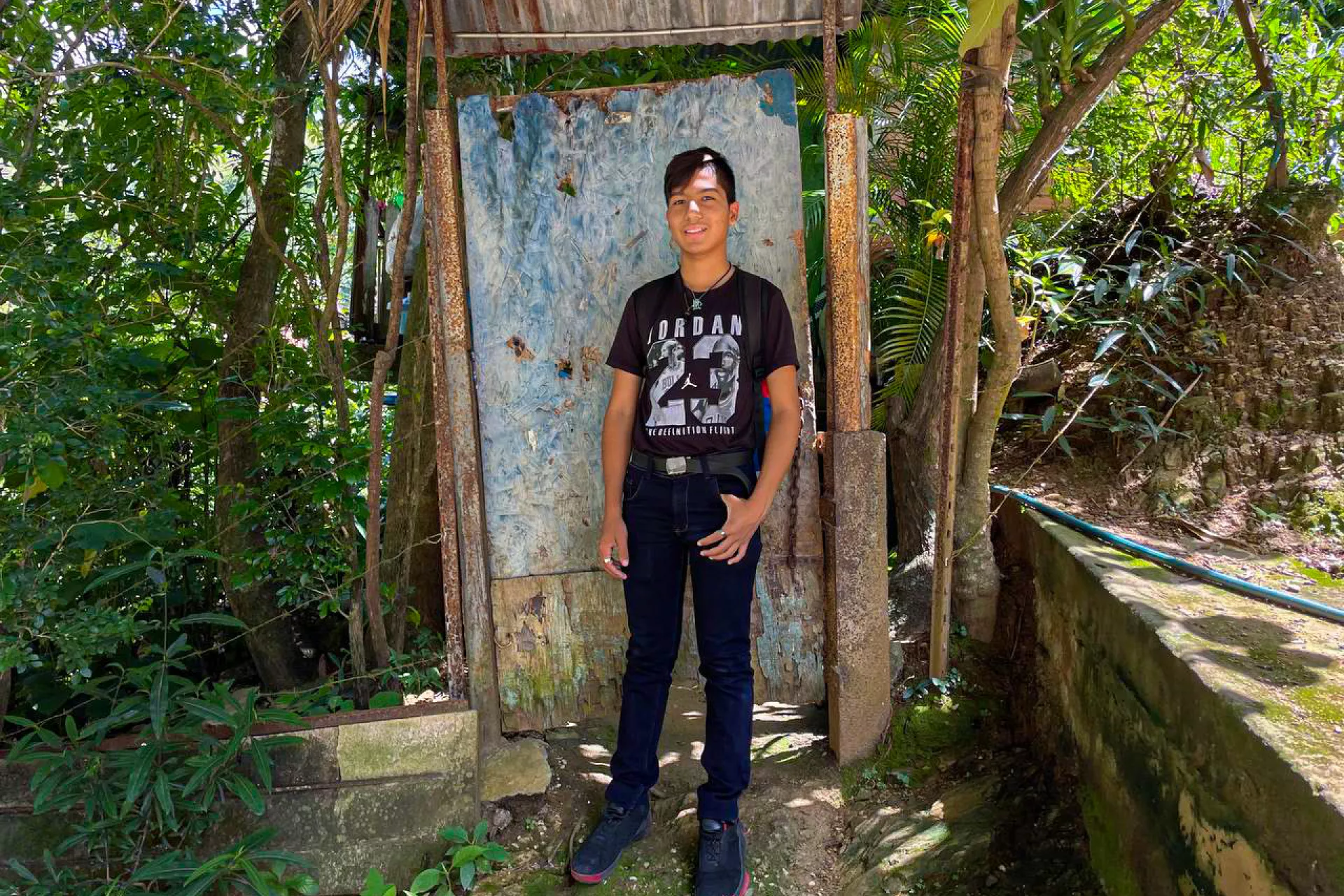
Luis Miguel González is 15 years old, lives and studies in Las Tejerías community in the Aragua state and is in the care of his grandparents. He walks for 45 minutes to get to school but does so happily because it is a new opportunity to see his friends. He likes to sing, especially rap, and his stage name is “Men in Black” because he likes to dress in black colors.
“I have always enjoyed studying, and at school, I feel free and calm; it is my second home”, says Luis Miguel. On 8 October 2022, a landslide in Las Tejerías, Aragua state, some 67 kilometers from Caracas, swept away sediment, vehicles, rocks, and trees, destroying dozens of lives and homes.
“I live almost at the ravine, between two ditches and a bridge. During the emergency, it was a disaster; it looked like a zombie movie, the end of the world. I was scared, didn’t know where my friends were, I was desperate. As time went on, we began to understand what had happened, and the best lesson is that we were all worried about each other and came together to help each other when the river overflowed,” explains Luis Miguel González in his own words.
Over 1,400 families were affected, 756 homes were destroyed and the school infrastructure deteriorated. UNICEF responded to the emergency by rehabilitating the affected schools and providing school kits, water, sewer, and hygiene essentials. Luis Miguel González acted as student leader during and after the emergency and, through his music, supported information strategies and organized groups of adolescents to implement programmes developed in his community.
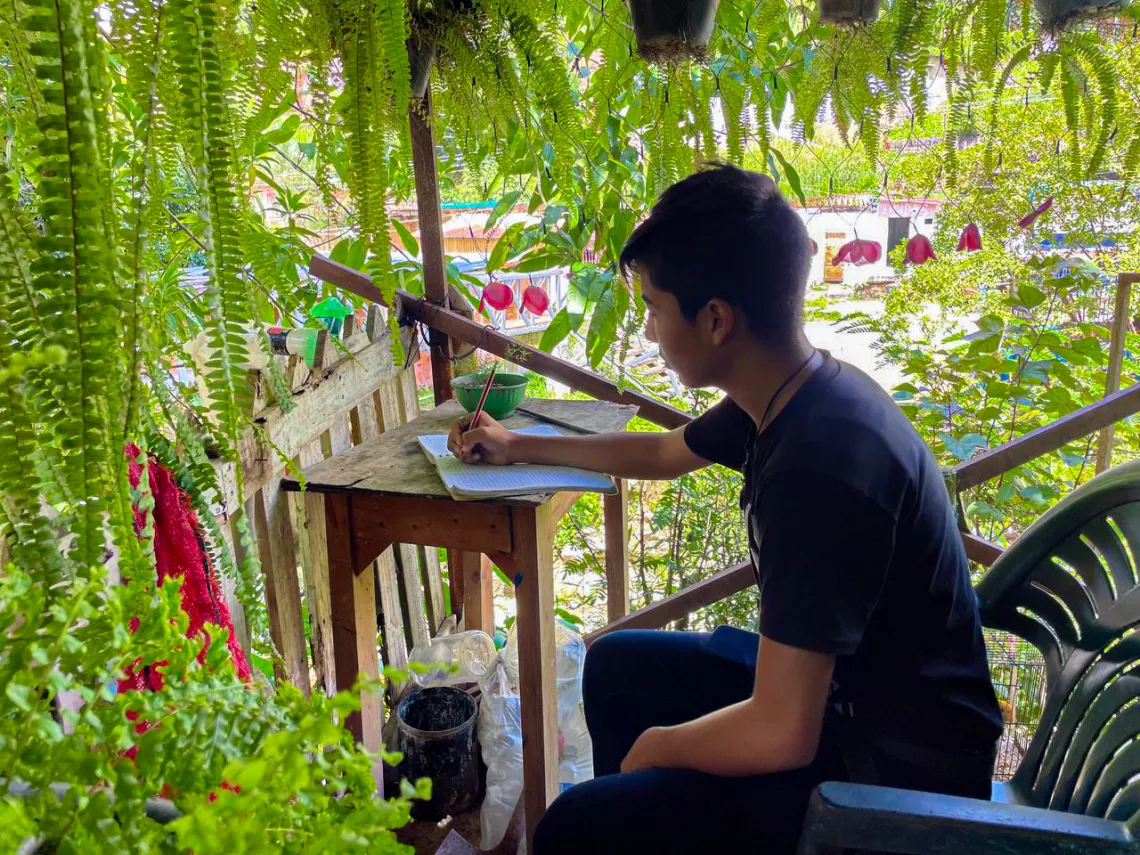
“UNICEF named me student leader and gave me a cell phone that allowed me to organize groups among my friends and at school. I started going from class to class and making lists of people’s interests: the ones that liked playing, singing, dancing, and playing an instrument, and this started growing beyond the school and in the entire neighborhood. We created groups to meet, and everyone started finding ways to express themselves, learn more, and support each other”, comments Luis González.
To ensure a fast and safe return to school, the UNICEF team provided teachers, boys, girls, and adolescents with socio-emotional and psycho-social support so that teachers know how to help boys, girls, and adolescents handle their emotions; and, at a later time, to support boys, girls and adolescents with their experiences as a result of the emergency. Currently, 667 boys, girls, and adolescents have services that improve their mental and psycho-social health and 801 boys, girls, and adolescents have developed skills that contribute to their wellbeing.
“I have always wanted to help, and every time I have reached something positive, I have wanted to share that tool with my friends. If it helps me, it can help others”, says Luis González.

“I was coming from doing an assignment for school, and some kids called me to rap, and I thought I could improvise a song for them – I could see they did not study very much – and I went straight to them saying: do not stop studying, follow your dreams, fight for your families and your goals, you can reach it all if you want to be a football player or a singer, you can do it. After I started seeing that they were going to school more and more, I could see them with their pencils and studying. One day, they stopped me and thanked me for my rap, they said I had inspired them to keep going. Today, I am proud that I helped them, and I feel that, with my music, I can help many other people as I have helped them”, explains Luis Miguel.
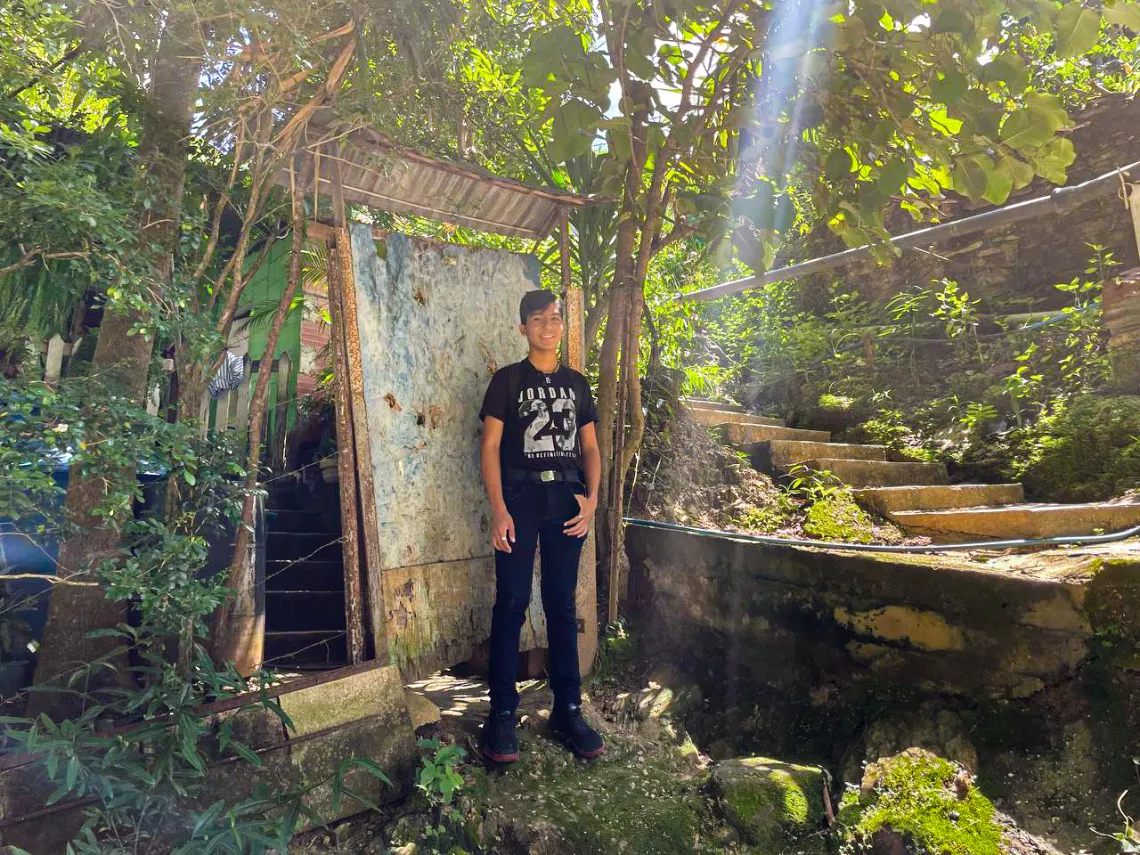
“They have taught us about rights, and we have learned many things about leadership, the right to have an opinion, to participate, and we have received psychological support and feel better, more free, more heard. To go to the psychologist, we made a challenge among friends – if you go, I go – and we drive each other. It is important to release because sometimes, at home, we do not feel much confidence to speak about our concerns or work through problems we might have”, explains Luis Miguel.
“We want to learn about photography, football, emergency simulations, and how to care for nature to reduce disasters, everything they can teach us that will help us have tools for the future and go to the university”, concludes Luis Miguel about other contributions that UNICEF can provide to the adolescents of the community.