Stories for different ages, to disseminate the Convention on the Rights of the Child
The United Nations Children's Fund in Venezuela spreads through its digital channels the series of books for children and adolescents Derechos de Colores, with content inspired by the articles of the Convention on the Rights of the Child
- Español
- English
Caracas, December 30, 2024. UNICEF, the United Nations Children's Fund in Venezuela, is disseminating through its digital channels the series of stories for children Derechos de Colores, as part of its campaign in favor of children's rights "Escucha nuestra voz, protege nuestros derechos".
The launch of the series occurred within the framework of the commemoration of the 35th anniversary of the Convention on the Rights of the Child, to which Venezuela is a State Party. The country signed the Convention in 1990, a few months after its approval by the United Nations Assembly on November 20, 1989.
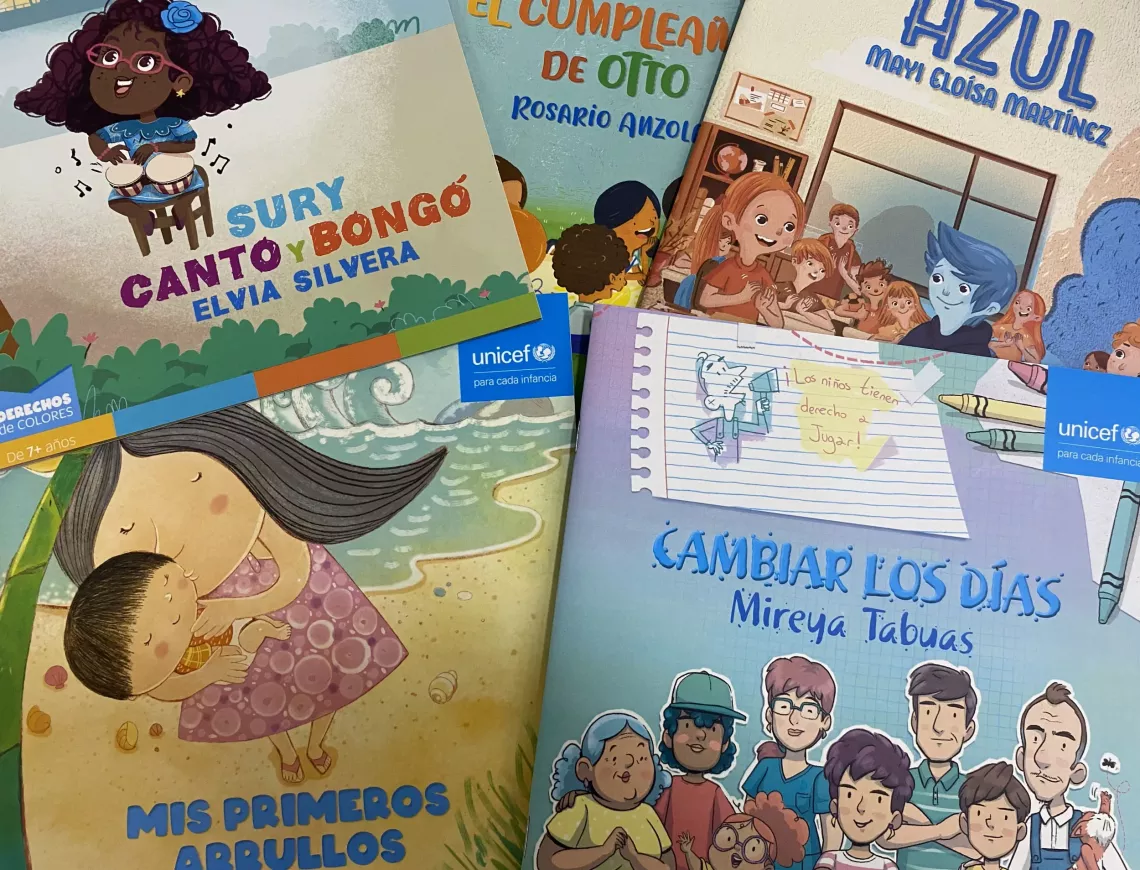
Derechos de Colores series is composed of five books, each of which addresses a specific right established in the Convention. Five Venezuelan writers were invited to participate: Fanuel Díaz, Rosario Anzola, Elvia Silvera, Mireya Tabuas and Mayi Eloísa Martínez, who created texts for different audiences of children and adolescents.
Mis primeros arrullos, by Fanuel Díaz, was designed for children from birth to 3 years old and is inspired by Article 7 of the Convention, which establishes the right to identity, name, nationality and parental care for all children.
Rosario Anzola's El cumpleaños de Otto is aimed at children from 4 years old and is based on Article 2 of the Convention, which guarantees equal rights for all children without discrimination on any grounds, including ethnic origin, nationality, economic status, disability or any other condition.
Sury, canto y bongó, by Elvia Silvera, was written for children from the age of 7 and revolves around Article 13 of the Convention, which establishes that all children and adolescents have the right to express themselves, both artistically and by any other means. Changing the Days, by Mireya Tabuas, for children from 10 years old, talks about the right to rest, leisure and play, as indicated in Article 31 of the Convention.
Finally, Azul, by Mayi Eloísa Martínez, is aimed especially at adolescent readers from the age of 13 and presents a story around Article 30 of the Convention, which points out the right of every child or adolescent who belongs to ethnic or linguistic minorities to use their own language and to practice their own culture.
All the stories are published for free download on the UNICEF Venezuela website, through the link: www.unicef.org/venezuela/escucha-nuestra-voz-protege-nuestros-derechos. Each of the stories has also been adapted to an audiovisual format to make it more accessible. The public can consult the social networks of UNICEF Venezuela, @unicefvenezuela, to learn more about other dissemination formats.
UNICEF Venezuela's campaign "Escucha nuestra voz, protege nuestros derechos" was designed to share with all of society, including children, messages about the importance of the Convention on the Rights of the Child, with the aim of raising awareness about the need and urgency to protect and promote the rights of children.
Media contacts
About UNICEF
The United Nations Children's Fund (UNICEF) works in 190 countries and territories together with partners from governments, the private sector and organized society, to promote the fulfillment of the rights of all children and adolescents around the world.
UNICEF has been working in Venezuela for 57 years, strengthening national capacities to advance in the fulfillment of all the rights of children and adolescents, with special attention to the needs of the most vulnerable.
With its team deployed in priority areas, UNICEF helps strengthen national capacities for children in access to health, nutrition, education, protection, water, sanitation and hygiene, and social protection, and continues to support the country's efforts to ensure that no child is left behind in the fulfilment of their rights. It also responds in cases of emergencies, as required.