Guidelines for Climate Resilient Water Sanitation and Hygiene in Schools in the Republic of Uzbekist
Guidelines for Climate Resilient Water Sanitation and Hygiene in Schools in the Republic of Uzbekistan

Highlights
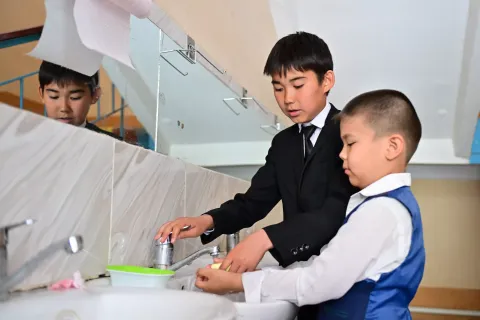
The Ministry of Preschool and School Education, Republic of Uzbekistan and UNICEF, Uzbekistan, have developed comprehensive Climate-Resilient guidelines on Water, Sanitation and Hygiene in Schools in the Republic of Uzbekistan. These guidelines provide practical, climate-resilient standards for safe drinking water, sanitation, hygiene, menstrual health, and waste management - essential for improving student health, learning outcomes, and reducing absenteeism, especially among girls. The guidelines support the development of policies and programs that promote health, education, and gender equality, ultimately improving student wellbeing and learning outcomes.
Investing in WASH infrastructure in schools also supports social equity and inclusion. It ensures that all students, including those with disabilities, have access to clean, safe, and accessible facilities. This is particularly important for children with special needs, who may require ramps, wider doors, and other accommodation to participate in the education process. To support the implementation of these special needs, the guidelines adopt the Three-Star Approach and related assessment tools, which enable schools to assess their current status, plan improvements, and gain recognition for their progress.
In the long term, well-maintained WASH systems will contribute to a healthier, more educated workforce, reducing absenteeism and boosting economic growth. Investments in WASH will improve education, gender equality, and community awareness about hygiene, benefiting society as a whole. By prioritizing WASH policies, Uzbekistan can create safe, inclusive schools that lead to healthier students, stronger education outcomes, and a more prosperous future.