For every child, adequate water, sanitation, and hygiene conditions
Thanks to UNICEF's assistance, thousands of children and adolescents in Karakalpakstan have learned and applied knowledge and skills on WASH
Arthur Emmamatinov (14 years old) walks for 30 minutes every day to school #14 from the village of Jiluanjap. He is a proud and ambitious young man who wants to be an actor in the future. “I dream of glorifying my village and my school, I want my parents and teachers to be proud of me,” he says.
At school, Arthur has another very important task - to show his peers, how to properly wash their hands with soap to avoid getting sick and not miss lessons at school.
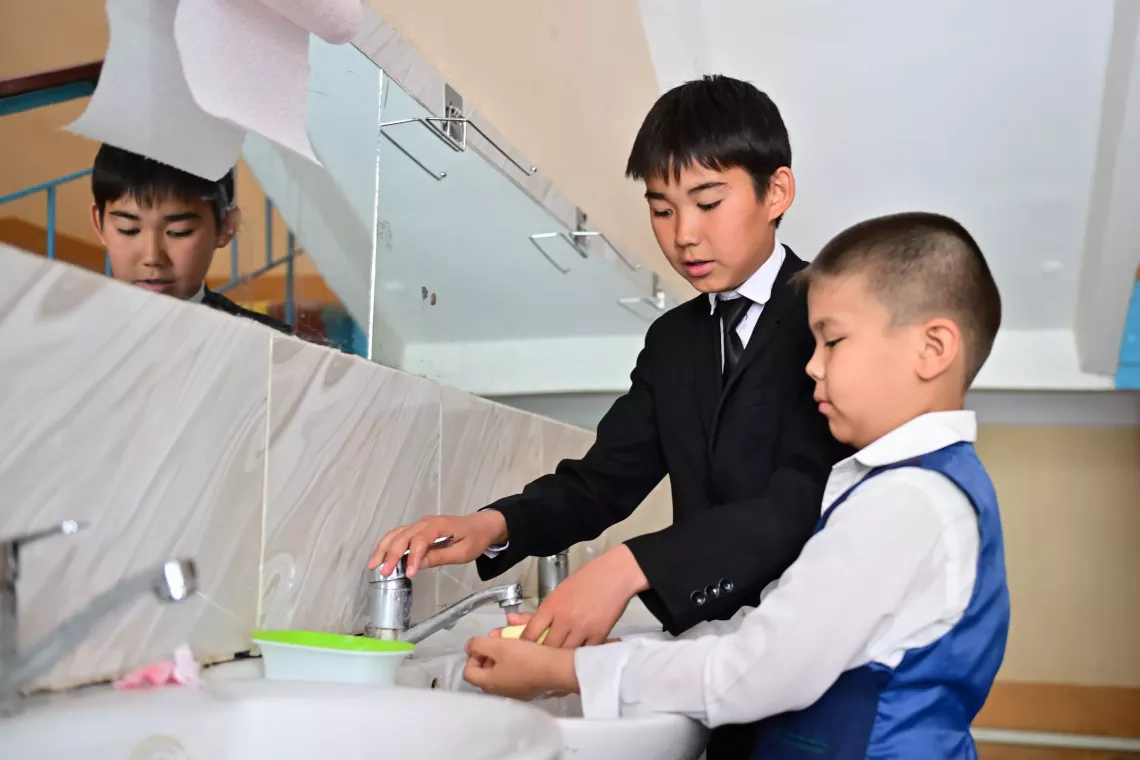
“I am glad that we now have special places at school to wash hands with soap. We also have clean drinking water,” says Arthur. He and his peers completed training on water, sanitation and hygiene (WASH) and carefully follow hygiene rules. “I teach this to children both at school and at home because proper hand washing with soap prevents illness. You need to wash your hands after using the toilet, before and after eating,” explains Arthur.
Along with ‘soft’ skills demonstrated by Arthur, the school received 14 wash basins. Further, the school received 2 sanitary facilities. The handwashing and sanitary facilities in most instances were either non-existent or dilapidated.
A UNICEF-led assessment of WASH in schools revealed gaps such as absence of water supply network inside the school premises, absence of indoor sanitation facility, poor condition of outdoor sanitation facility without ventilation and no doors for compartments.
9th grade student Ayjamal Abdurakhmanova (14 years old), who lives in the village of Otegen, recall a bygone era, with no adequate supplies. “When I came to the 1st grade, our school did not have conditions for hand washing. Last year we got not only water for handwashing and drinking, but also toilets and shower rooms. These are very necessary conditions for girls.”
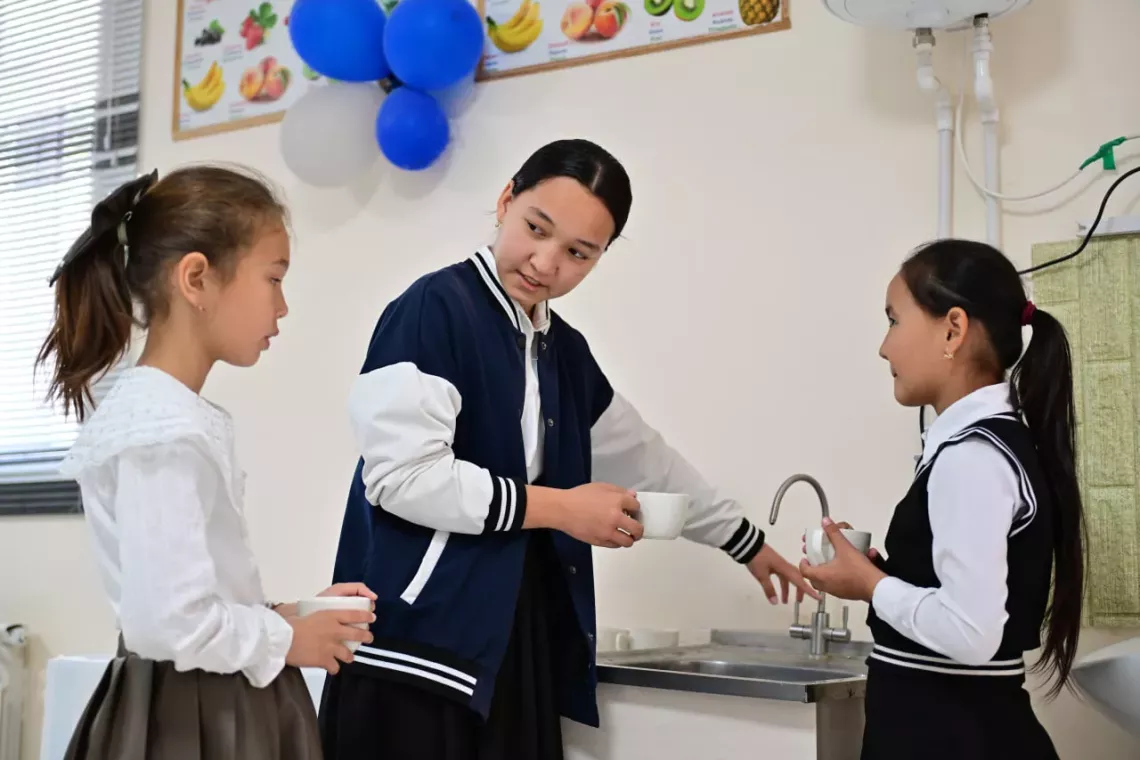
She is right, evidence has shown that adolescent girls are like to miss school citing sanitary and menstrual health issues.
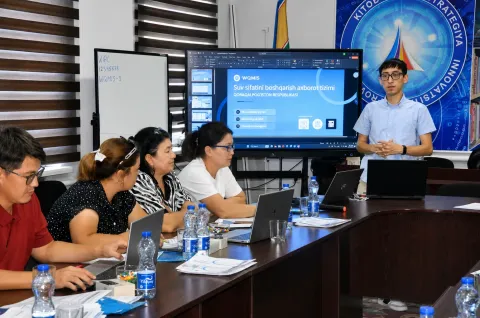
UNICEF conducted the WASH training for 416 people including teachers, parents, and children. They are currently teaching WASH practices to schoolchildren, family and community members, reaching 88,000 of people in the community.
Aziza Adilkhanova, Deputy Director of the school, talks about the changes over the past year in this school in the Kegeyli district of Karakalpakstan.
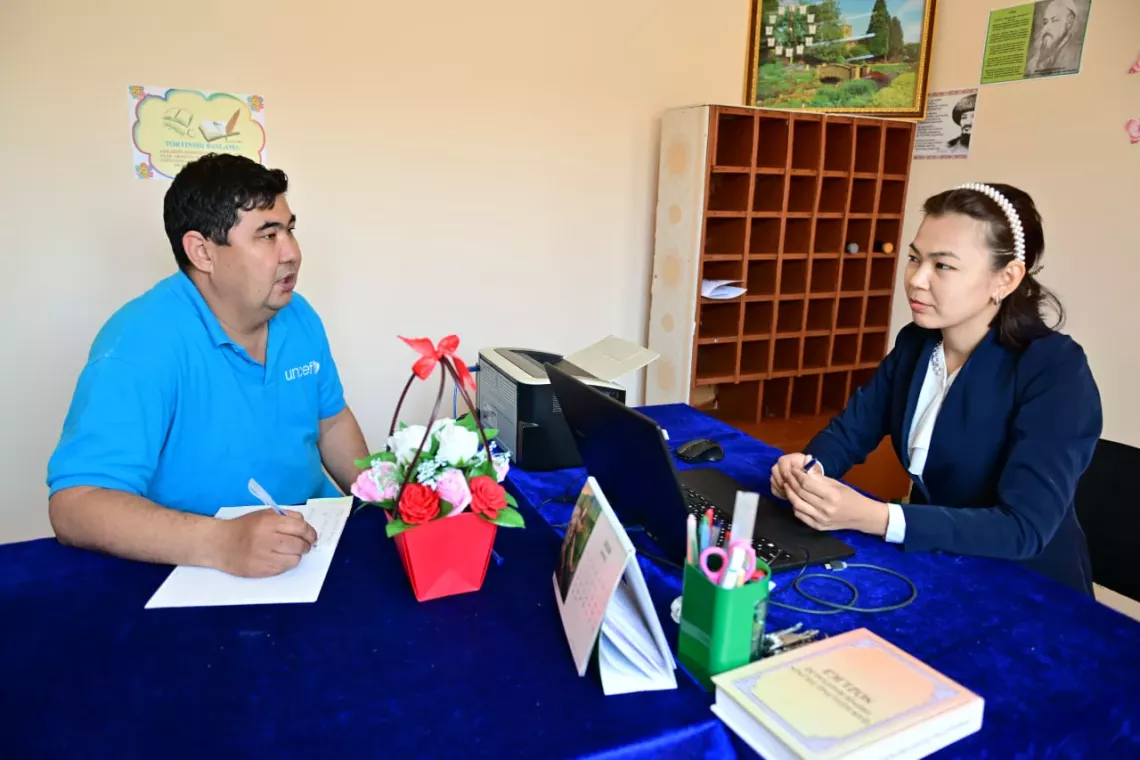
“There were only a few washbasins for about 500 students and the teachers in the school area. We had to carry water, which quickly ran out. In 2023, UNICEF established a water supply system to provide all 4 blocks of the school with cold and hot water. For heating system and hot water supply we use solar panels,” she says.
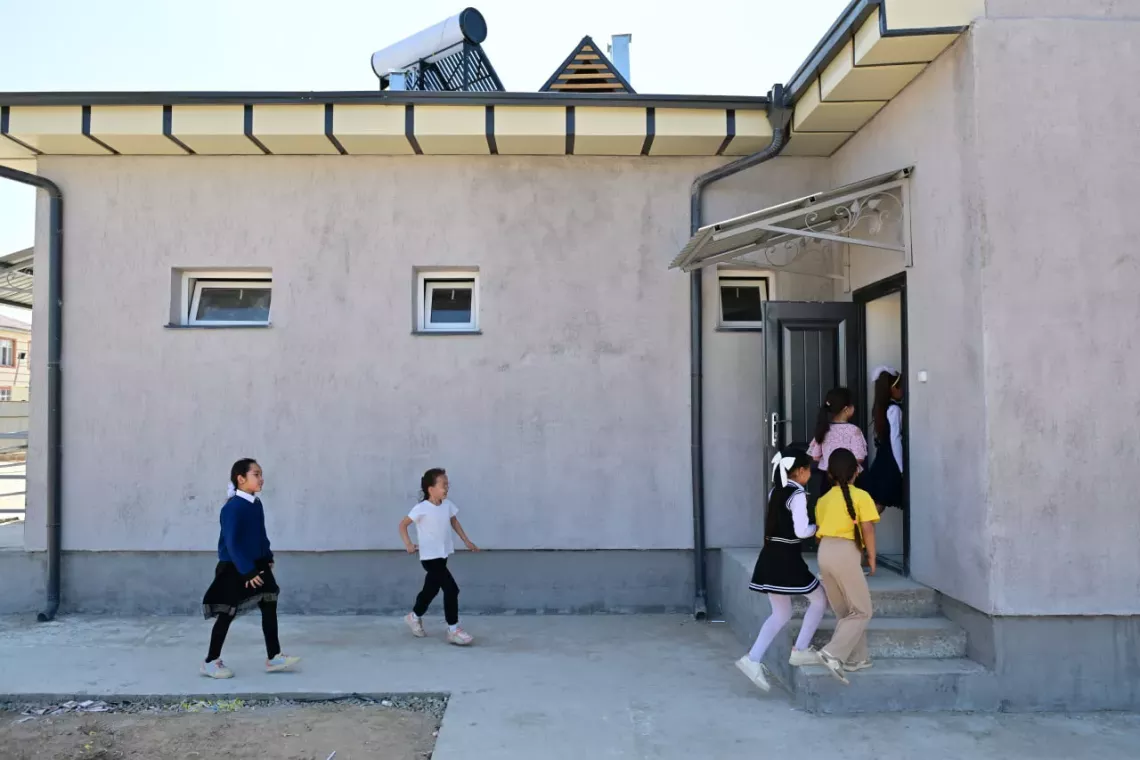
Aziza noted that improved WASH conditions contributed to reduction in the incidence of diseases in students.
The number of students missing lessons has decreased. The number of first graders in the new school year increased by 5 percent because parents want to bring their children to this school.
Changes at school # 14 in Kegeyli district over the past year are just a part of the results of the joint UNICEF, WHO and UNFPA program “Laying the foundations for people-centered, climate-resilient primary health care and water, sanitation and hygiene practices at healthcare facilities and schools in Karakalpakstan", funded by the UN Multi-Partner Human Security Trust Fund for the Aral Sea Region.
“Improving water and sanitation services in 10 schools and promoting school hygiene contributed to the comprehensive education of 5,000 children and youth about healthy lifestyles. We improved access to WASH facilities at primary health care and educational organizations for 241,000 people, including 5,000 children and adolescents aged 7-18 years in the Kegeyli, Chimbay and Karauzyak districts and Nukus city of the Republic of Karakalpakstan”, said Sagitjan Aitjanov, UNICEF WASH Officer. “These facilities are environment-friendly and resilient to climate risks”, he added.
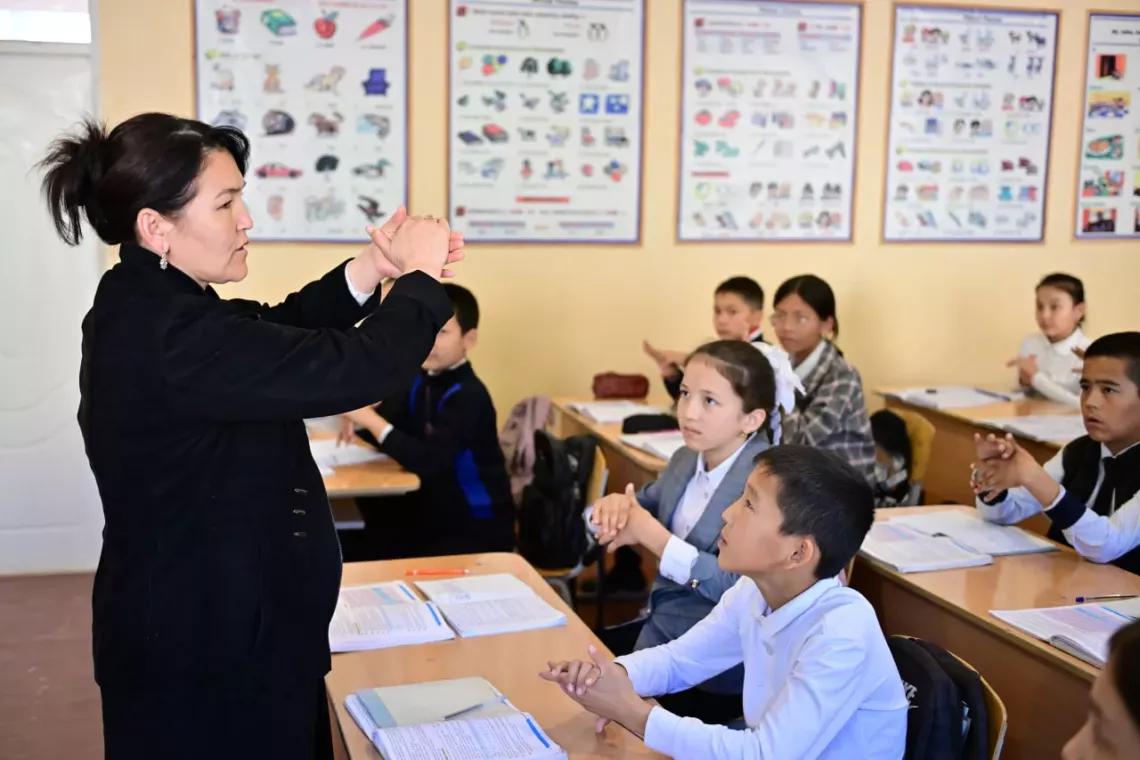
Thanks to UNICEF's assistance, thousands of children and adolescents in Karakalpakstan, like Arthur and Ayjamal, have learned and applied knowledge and skills on WASH.