National Education Milestone: New National Curriculum launched to achieve a world-class education for about 7 million learners in the Republic of Uzbekistan
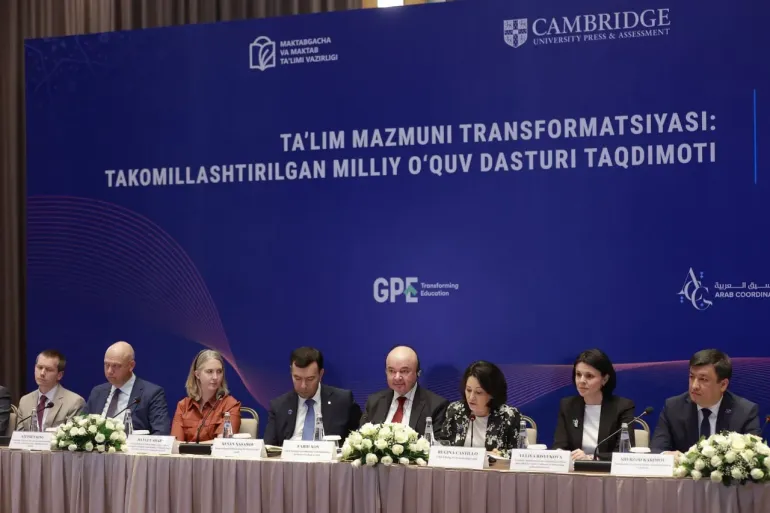
TASHKENT, 18 August 2026 – Today, the Ministry of Preschool and School Education (MoPSE) launched the new National Curriculum Framework (NCF), which is a huge step towards Uzbekistan’s education reforms. The NCF has been developed with the support of the United Nations Children's Fund (UNICEF) within the SmartED Project, funded by the Islamic Development Bank (IsDB), the Arab Coordination Group (ACG), the Global Partnership on Education (GPE), and implemented jointly with Cambridge University Press and Assessment.
The revised NCF is introducing learning objectives for all students and aligning more closely with the international standards of high-performing education systems. A key goal is to raise achievement across primary, lower secondary, and upper secondary education, creating pathways that can support outcomes comparable to internationally recognized Advanced Level (A Level) standards.
Developed over almost two years by 147 national and 30 international specialists, the new curriculum is the result of an extensive evidence-based process involving more than 260 working meetings and consultations. Building on best international expertise and practices, this is the first time in a curriculum review process that every single subject team was supported by strong international subject experts, who were working together with the team every week during this period to complete full curriculum revision. While international experts were engaged in the curriculum development process previously, it was not a co-creation process and did not cover all subjects and all grades.
The revised curriculum emphasizes a competency-based approach and is guided by the principles of inclusion and equity. The Universal Design for Learning approach makes content accessible to all students, including those with disabilities as well as high achievers. Clear learning objectives and a spiral curriculum design help learners build knowledge and skills progressively over time. The revised framework will strengthen grade level progressions, connect learning across subjects, and place greater emphasis on practical, real-world applications.
New content will develop digital literacy, climate and green education, and social and emotional competencies, helping learners prepare for the future while supporting Uzbekistan’s sustainability priorities.
“The National Curriculum Framework reform is part of a broader education transformation that also includes improvements to assessment systems, teaching practices, textbooks, and learning materials. New guidance for teachers and school leaders promotes effective classroom practice, formative assessment, inclusion, gender equality, and high expectations for every learner”, says Mr.Sherzod Karimov, First Deputy Minister of Preschool and School Education of Uzbekistan.
Together, these reforms aim to create a more ambitious, inclusive, and internationally aligned education system that equips all young people in Uzbekistan with the knowledge, skills, and opportunities needed to succeed.
“This has been a genuinely national process, led by the Government and bringing together national experts, teachers and institutions with international expertise. The New Curriculum Framework provides something fundamental: a shared vision and a common direction, so that different investments and reforms can reinforce each other and ultimately improve learning,” says, Ms. Regina Castillo, UNICEF Representative, Uzbekistan. “The real measure of success will be what happens next, in all classrooms, improving the quality of education across Uzbekistan,” she adds.
"One of the strengths of this reform is the way it has been developed. The Republican Education Centre and the subject working groups have led the process, while Cambridge and UNICEF have contributed international evidence, research and experience. Together, we have worked to create a framework that reflects Uzbekistan's priorities while aligning with internationally recognised principles of effective curriculum design," says Steve King, Head of Education Reform, Cambridge University Press and Assessment.
Once implemented, the impact will be transformative reaching about 7 million learners to support cognitive, social and emotional development and prepare for life in a rapidly changing world and stiff requirements for the labour market.
For additional information, contact the following media contacts:
- Ministry of Preschool and school Education of Uzbekistan: Dilfuza Sabirova, Press Secretary, +998 99 898 18 39
- UNICEF: Nargiza Egamberdieva, [email protected]
- Cambridge: Megan Thomas, [email protected]