How one class in Kharkiv region was changed by war
Children who think of others before themselves
- Українська
- English
Whenever something went wrong at the lyceum — a prank, a scuffle or some mischief — the maths teacher, Liubov Mykhailivna, would head straight to her sixth-grade classroom. She was almost certain the culprits would be her students.
“If someone was mooing under the stairs, taking doors off their hinges, fighting, rolling in the mud or throwing jackets around — it was my lot,” she recalls, shaking her head with a smile. At the time, it was far from funny. To restore calm in the classroom, she had to involve a psychologist, social services and parents.
Today, those same children — shaped by growing up, COVID-19 lockdowns, war, distance learning and loss — have unexpectedly become the strongest class in the school.
“As strange as it sounds, everything they went through made them more open,” says Liubov Mykhailivna, who has been teaching for 33 years.
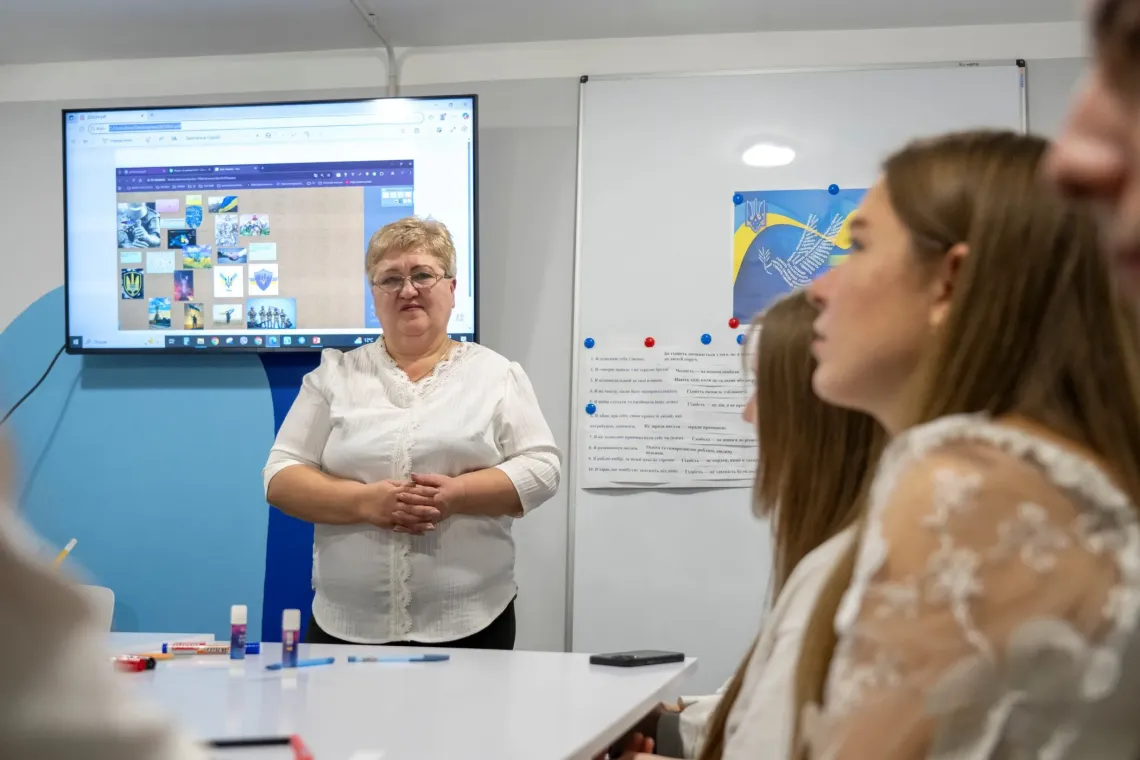
“Because of the war, they were scattered across the world and missed each other terribly. When they finally came back together, they didn’t withdraw, they became more empathetic, more human. They think about others, about how someone next to them feels. They don’t have that typical teenage mindset of ‘everything is mine’. This is a class the whole school can rely on.”
A teacher’s recipe for friendship
Zlatopil is a small agricultural town in eastern Ukraine, less than 100 kilometres from Kharkiv. Although it lies in a relatively safer part of Kharkiv region, far from the frontline, the war has reached here too. Since February 2022, all schools in the town moved online.
Zlatopil Lyceum No. 6 returned to blended learning for the first time only last autumn and for Liubov Mykhailivna’s class, it marked a major moment. It is their final, graduating year.
Over the years of war, the class has changed dramatically. What began as a group of 36 children has shrunk to 25. Many students fled abroad to countries ranging from Poland to Australia, while new children joined the class after being displaced from frontline areas.
“It was a very difficult class when they first came to me in Year 5,” the teacher recalls. “But even then, they already knew how to listen to one another.” Before them, she had already guided four classes to graduation.
The first thing she prioritised was not test results or academic assessments, but a shared trip to Lviv. Liubov Mykhailivna believes nothing brings children together like shared experiences in an informal setting.
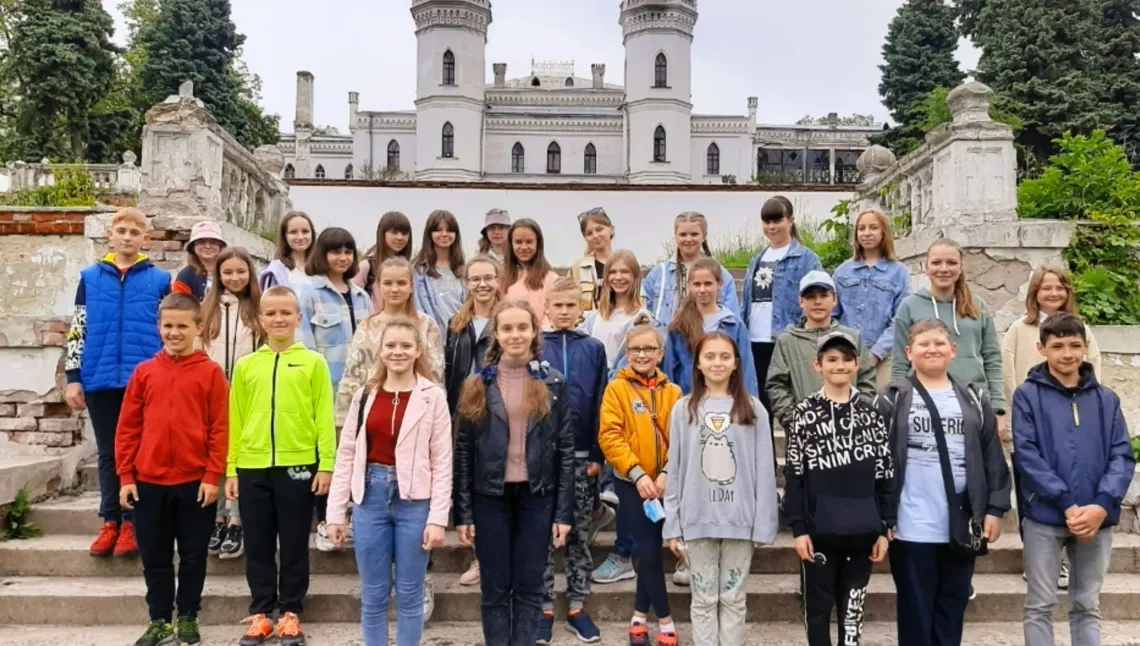
“We travelled wherever we could. Even shortly before the war, when Kharkiv’s EcoPark reopened, we went there. It was a sunny, freezing day. Everyone was cold, but so happy. I could see it clearly: the more time we spent together, the more the children opened up.”
She shares this from the school’s shelter, where most of her lessons now take place.
It was on one of those trips that she finally had an honest conversation with the boy who had been behind many of the class’s earlier problems. He told her he had been bullied before and where his anger came from.
“After that conversation, everything became easier,” she recalls with warmth. “I stood up for him, and he opened up. And all that destructive behaviour stopped.”
Staying close
Despite the pandemic and the war, the class managed not to lose academic ground during distance learning. Ten students remain top achievers, and the rest perform well. But it took enormous effort.
“Even during online learning, we stayed in touch every day. Monitoring was essential. If a child didn’t show up, I knew immediately I had to contact the parents. Honesty was key. If you overslept — just say so. The worst thing is making things up,” she laughs. “Sometimes, right before a Ukrainian literature lesson, suddenly half the class ‘needed to see a dentist’.”
When the class finally reunited in person last year, the children didn’t want to go home. Liubov Mykhailivna had to call parents to come and collect them.
Children who had arrived in Zlatopil after fleeing heavily shelled cities quickly became part of the group.


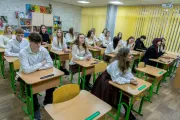
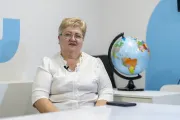
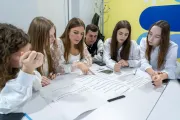
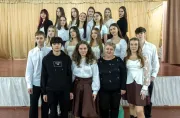
“We’ve been through very difficult moments. One student lost her father. New children joined us — everyone carries the impact of the war. But this class truly supports each other. They’ve become incredibly sensitive and caring. Everyone has someone close here. We have our own ‘inner circle’.”
She gestures toward their favourite classroom — a small white room with a large projector, located in the school shelter.
“Here, we’re always close to each other,” she adds. “Always together.”