KYIV, 3 March 2026 – Ukraine’s future starts with its children and young people. That is not a cliché; it’s reality. Despite the horrors of the past four years of war, and more than 12 years for many families, children, young people and the adults who nurture them are the hope that tomorrow can be better than yesterday.
I write this with a heavy heart, knowing that far too many families are living through the unimaginable pain of having had a child killed or injured.

Like Iryna and Maksym, who I met in Kyiv last year at an event led by the President to commemorate the children killed. Iryna’s four-year-old daughter Liza was killed in a strike on Vinnytsia. Maksym lost his three children in an attack on Kryvyi Rih. They somehow summon the strength to keep going through the darkest of days.
As do young people who have had friends killed. Like the 11th graders of Korostyshiv lyceum in Zhytomyr region, who marked the last bell of their final school year at their classmate Roman’s grave. The 17-year-old was killed with his younger siblings a week before the end of the 2025 academic year.
According to the UN, the number of child casualties since the start of full-scale invasion by Russia totals more than 3,200, and tragically rises every week. On too many occasions, I’ve stood at the sites of horrific attacks. From Okhmatdyt hospital to a Kryvyi Rih playground and apartments in Ternopil, the lives of children and their families have been shattered by attacks even far from the frontline.
But in my travels across the country, I’ve also witnessed the extraordinary dedication of health and social workers, teachers and water technicians who, often at great personal risk, are determined to maintain the vital services children need and equip them with skills and opportunities to develop in life. Their actions are why children must not lose trust that adults still hold their best interests at heart.
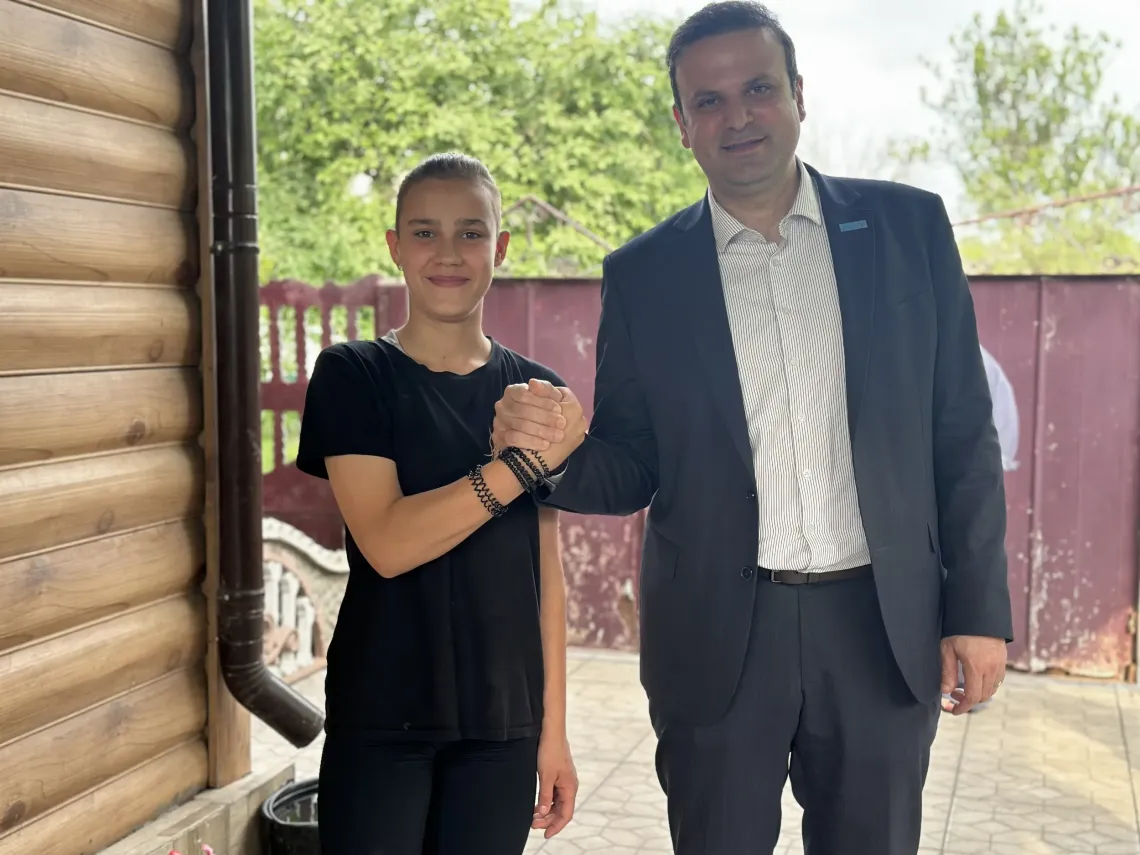
Like 16-year-old Erika in Dnipro region, who I’ve had the pleasure to meet on a couple of occasions. She’s a passionate, talented, and champion kettlebell athlete. Erika was raised by her loving foster mother, Nelya, in a family home along with 10 other children. The nurturing care and encouragement she received to thrive is a far cry from the earliest days of her life in an institution.
Behind Erika’s story is the Better Care reform led by the Ukrainian government that is putting in place the systems to strengthen the family unit and ensure every child can realize their right to grow up in a loving and safe family environment.
Or like Anton, a visually impaired student, who travels across Poltava city to attend a UNICEF-supported youth centre. He says the career guidance services being offered in this youth centre are helping him to grow and explore his options ahead in life. This space, like many others that UNICEF provides technical support to, is co-financed by the local authorities and the facilities are fully embraced and owned by the local community, ensuring sustainability. This is child- and youth-centred recovery in action.
Through my work with UNICEF and our inspiring partners, I see hope in action. That’s also embodied in the children and young people I’ve met, from Kharkiv to Kherson, and Zakarpattia to Zaporizhzhia. It’s what motivates me and my UNICEF colleagues to do what we can to protect children’s rights, nurture their lives, and to provide every opportunity possible to help develop their talents and fulfil their potential.

But childhood is time-bound. Children, young people, and families need continued support and investment in their wellbeing and services today. We must ensure that the vulnerabilities and anxieties of wartime, which also pervade childhood, do not persist throughout life.
I leave Ukraine for my next assignment with deep respect and admiration for the country’s commitment to its children and young people. I long for the nightmare of war to soon be over for every child. That there is no fifth-year mark of war.
Let me end by sharing the dream of peace that eight-year-old Stanislav from Pokrovsk articulates so well in his poem for peace:
What is peace? It’s happiness in eyes,
It’s the blueness of sky, love in hearts that lies.
It’s a bright future, the fulfilment of dreams.
Our dreams are all different. But peace? It’s one thing!
А що таке мир?
Це щастя в очах, це неба блакить,
кохання в серцях. Це світле майбутнє,
це здійснення мрій. В нас мрії всі різні. А мир? Він один!
May peace come true for every child.
Munir Mammadzade was UNICEF Representative to Ukraine from 2023 to 2026.