On the outskirts of Kramatorsk, in eastern Ukraine, a group of men and women busily sweep the path of a local park. The green space is impressively clean and family friendly, ready for the day ahead.
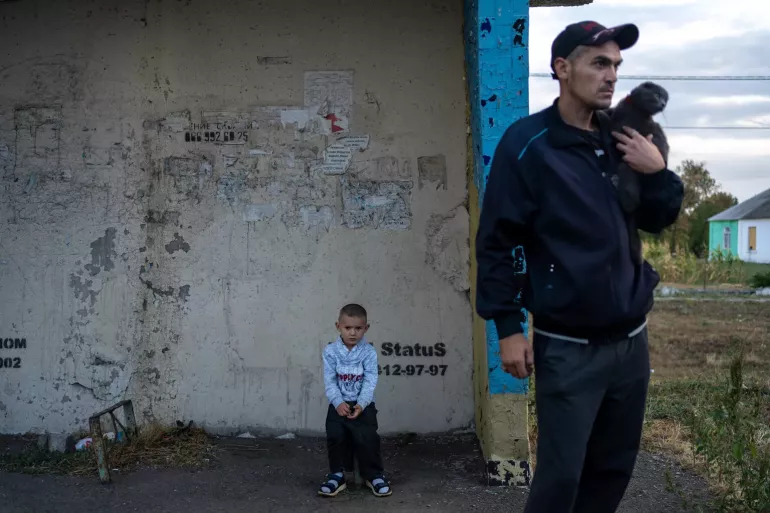
But it’s quiet this morning as we approach the city; only a handful of people are out and about.
I was last here in 2019. Back then, mornings were lively. Children walked to school with backpacks full of books and supplies, cafes were bustling, and while people spoke of economic challenges, the frontline of what was then referred to as a frozen conflict in the east was still far away.
At the time, I was with a UNICEF Ukraine team returning from a trip to Zolote 3, a small mining outpost close to the then-contact line and that is now in occupied territory. There, we spent a day with 13-year-old Daryna and her uncle, who lived in a small apartment. They were among only 300 people left in the largely deserted town.
“When they start shooting you get stressed,” Daryna said. She still went to school and said it was the only place she felt safe, even though it had suffered damage in an earlier attack.
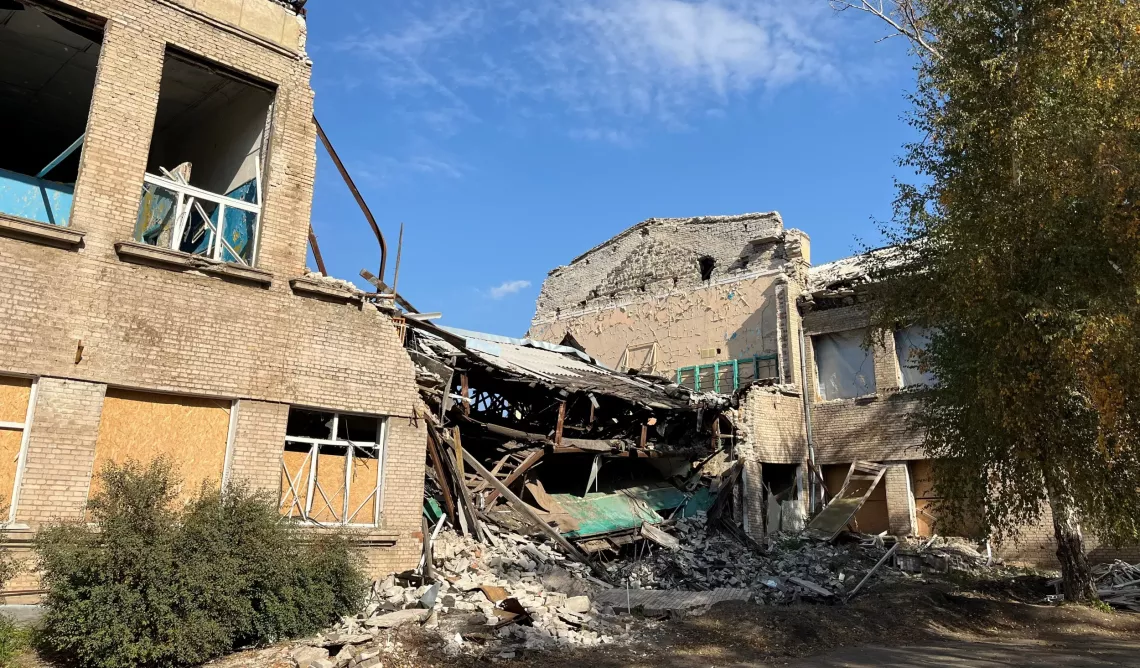
Fast forward to today, and there are no schools open in Kramatorsk.
During my visit this time, I see what’s left of one school that has been largely destroyed. The walls and roof of much of the building have collapsed, although one of the classrooms on an upper floor remains strangely still intact – windowless now, but still containing desks. It’s a sad reminder of the school life that once existed there.
A sad new normal
Disrupted education has sadly become the norm for children across Ukraine. The COVID-19 pandemic and then the escalation of the war mean children are between one and two years behind in core subjects.
Online learning has at least provided some access to education, including in frontline areas, for children like 14-year-old Dasha. We meet her, along with mum Asya and their dog, Lionia, at a transit centre in Pavlohrad, some 180 kilometres west of Kramatorsk.
They have just fled Dasha’s childhood home. Asya explains that the fighting was just getting too close and dangerous. Now they are all heading even further west to stay with friends in a safer area. Dasha has spent three years learning online and her mum hopes she can finally get back in a classroom to be with her peers again and to socialize and have fun. “But it means I’ll have to get up earlier,” Dasha adds.
It’s not only education that has been disrupted and damaged, but access to other essential services for children, like water.
The local authorities in Kramatorsk tell us that a water pumping station has been damaged outside town. We see first-hand the impact of what was another massive strike on water related infrastructure closer by.
The goal of our assignment today is to assess and bolster preparedness efforts should the water stop flowing. The team unload emergency water tanks, which are essential for water storage at points across the city. UNICEF and partners are also providing access to the technology and chemicals needed to ensure that water can still be treated so that it’s safe for consumption by children and their families.
In frontline cities like Kramatorsk, there’s a constant balance between lifesaving emergency work and recovery efforts, such as rehabilitating the network for medium to longer-term impact that UNICEF supports nationwide.
But no one really know what’s in store for the children and the people of Kramatorsk and surrounding areas. The freezing winter months are closing in and the sounds of war are audible in the distance.
“I hope that this war will end,” Daryna told us in late 2019. What happened soon after was, tragically, the opposite.
Toby Fricker is Chief Advocacy and Communications, UNICEF Ukraine.