A safe place to wait
Four years of the Spilno Spot in the Lviv railway station, Ukraine
- Українська
- English
February 2026 – Four years since the start of full-scale war in Ukraine. Four years of displacement, of interrupted childhoods, of families carrying what they can manage to bring onto trains toward somewhere safer.
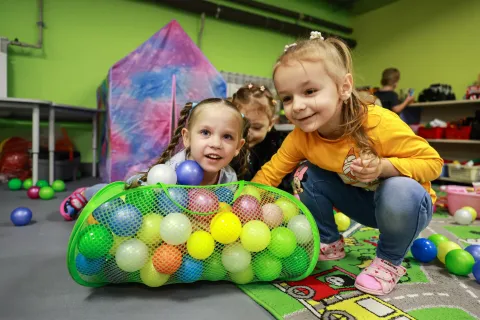
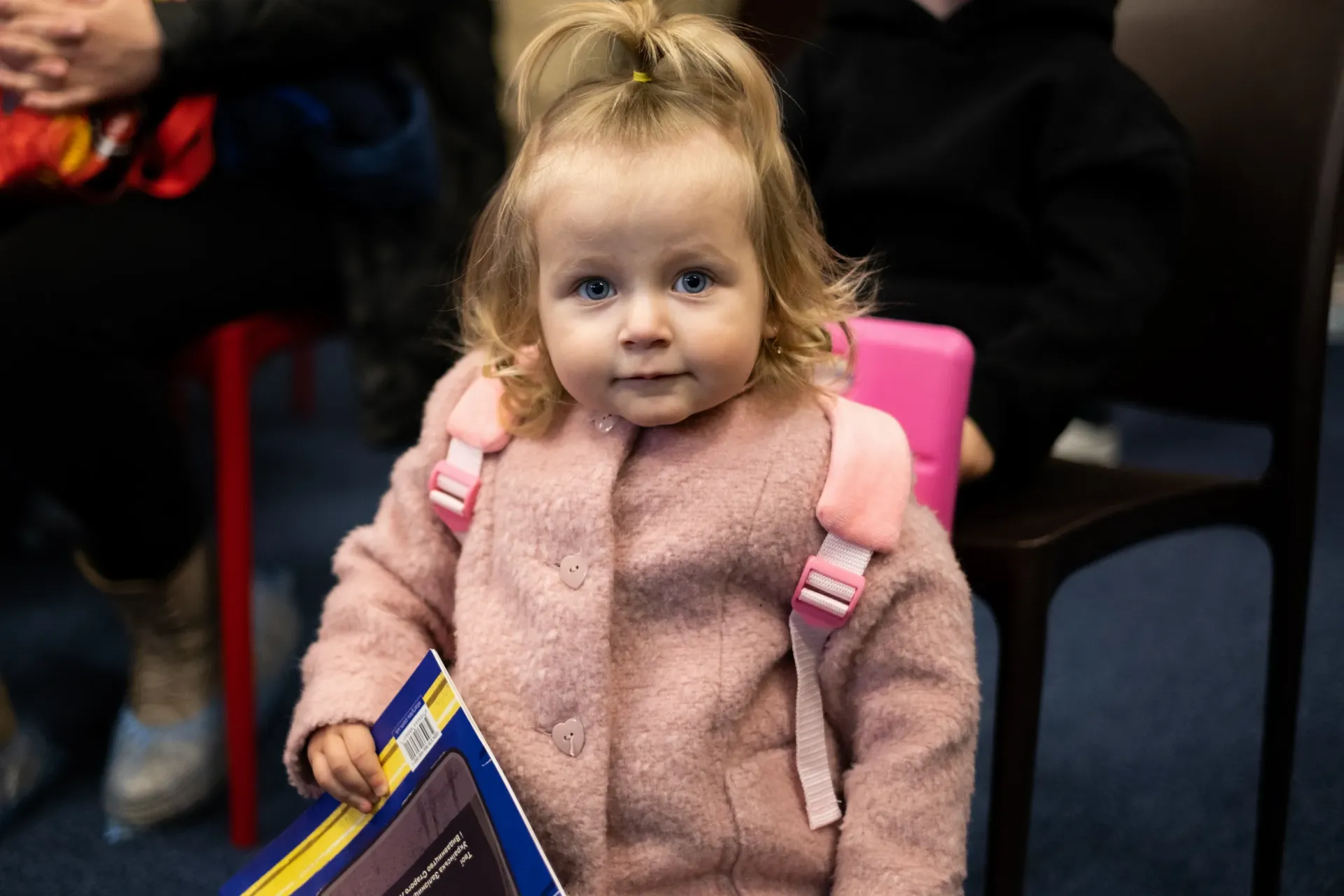
Since March 2022, amid the uncertainty, there has been a spacious, bright, and warm room at the Lviv railway station where children can simply be children for a little while.
From 2022 to 2024, UNICEF-supported Spilno Spots, which are fully equipped and supervised child-friendly spaces, have welcomed more than three million young visitors across the country. These are spaces built around a simple idea: every child’s right to safety and play must be protected, especially in times of war. In Ukrainian, spilno means together – an apt name for a space that unites children and families from across the country in a safe space.
Spilno Spots at railway stations in Ukraine were launched by UNICEF jointly with Ukrainian Railways from the beginning of the full-scale war. As the war continues, the Spilno Spot at the Lviv railway station continues its mission every day, welcoming families who are evacuating, returning home, or simply trying to navigate a railway system stretched to its limits.
Lviv today is one of Ukraine’s most critical transit hubs. Trains are often delayed, routes change suddenly for safety reasons, and winter outages strain the network. Families can wait for six, eight, even ten hours for a connection. Some arrive at five in the morning and stay for half the day. Some are on their way abroad; some are returning to cities under fire. Many simply do not yet know where they will sleep for the evening. For all of them, the Spilno Spot offers something rare in a railway station: a place that doesn’t feel like waiting.
"We wanted them to feel joy, not fear."
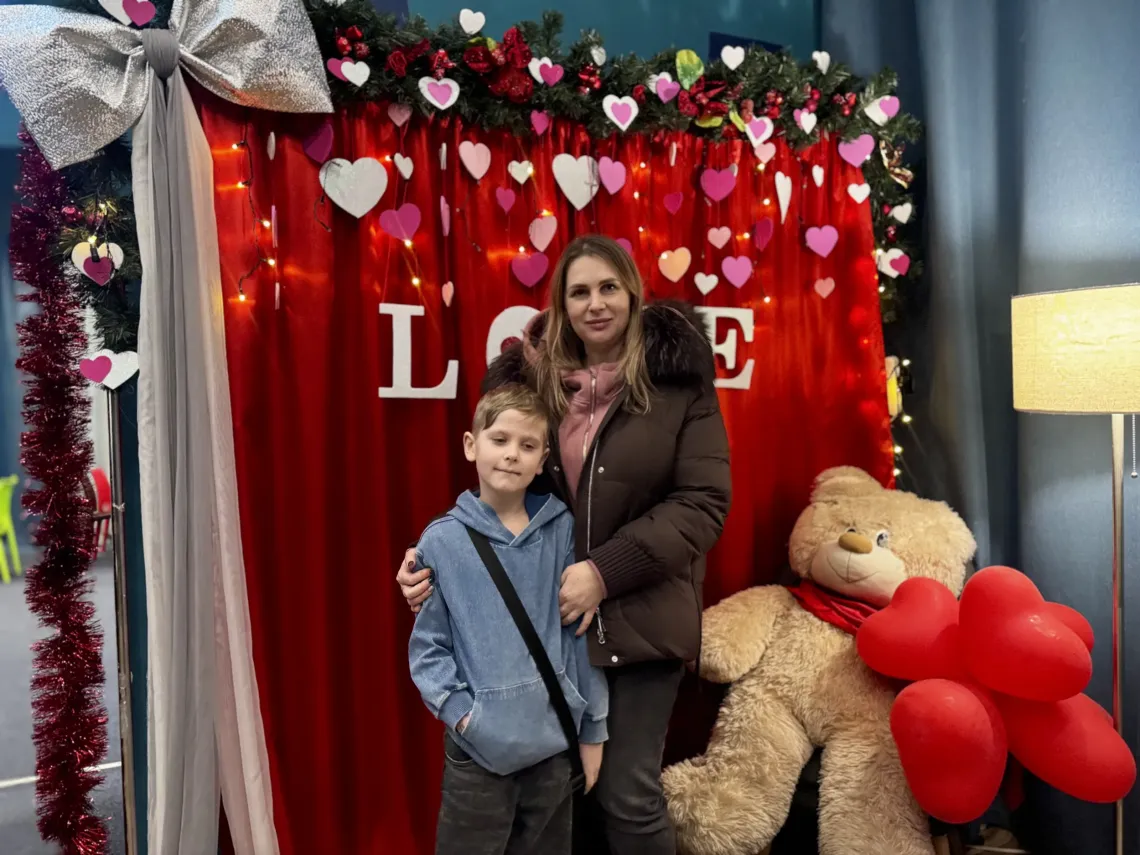
Yuliia, an administrator at the Spilno Spot, arranges the paper hearts on the Valentine’s Day photo zone, a cheerful red-and-pink corner that children run to immediately, posing with props and handmade cards. It is one of many seasonal decorations the team creates throughout the year.
“On 24 February 2022, I was working in a hospital. The sirens started while we were in the middle of a surgery. We barely finished it. I ran home under the alarms, calling my daughter and telling her to prepare medicines and fill up water. Nobody knew what to do. It was terrifying,” she said.
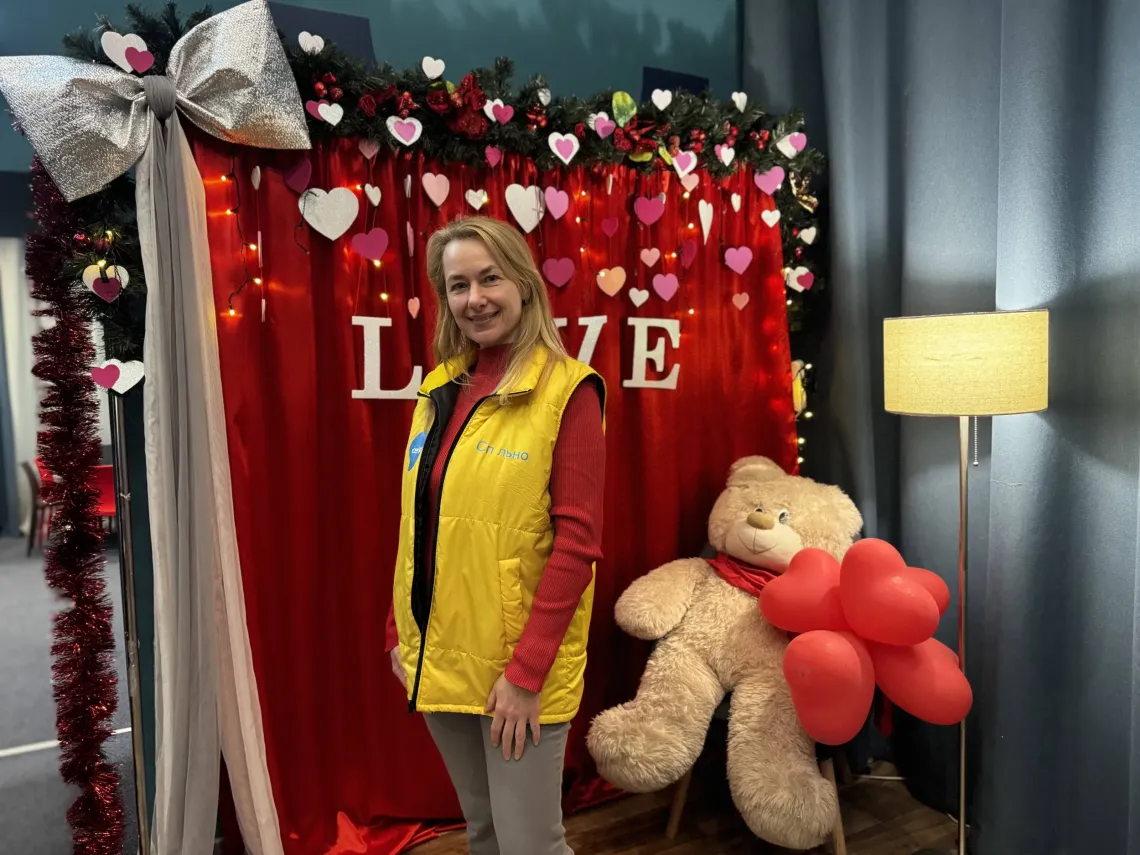
Two years later, she saw a job posting for the Spilno Spot and joined the team in 2024. The work is demanding, but she smiles when speaking about it: “Children come in, look at all the toys, and their eyes light up. Parents finally exhale or sometimes also play with their kids. You feel you’re giving them a little piece of normal life.”
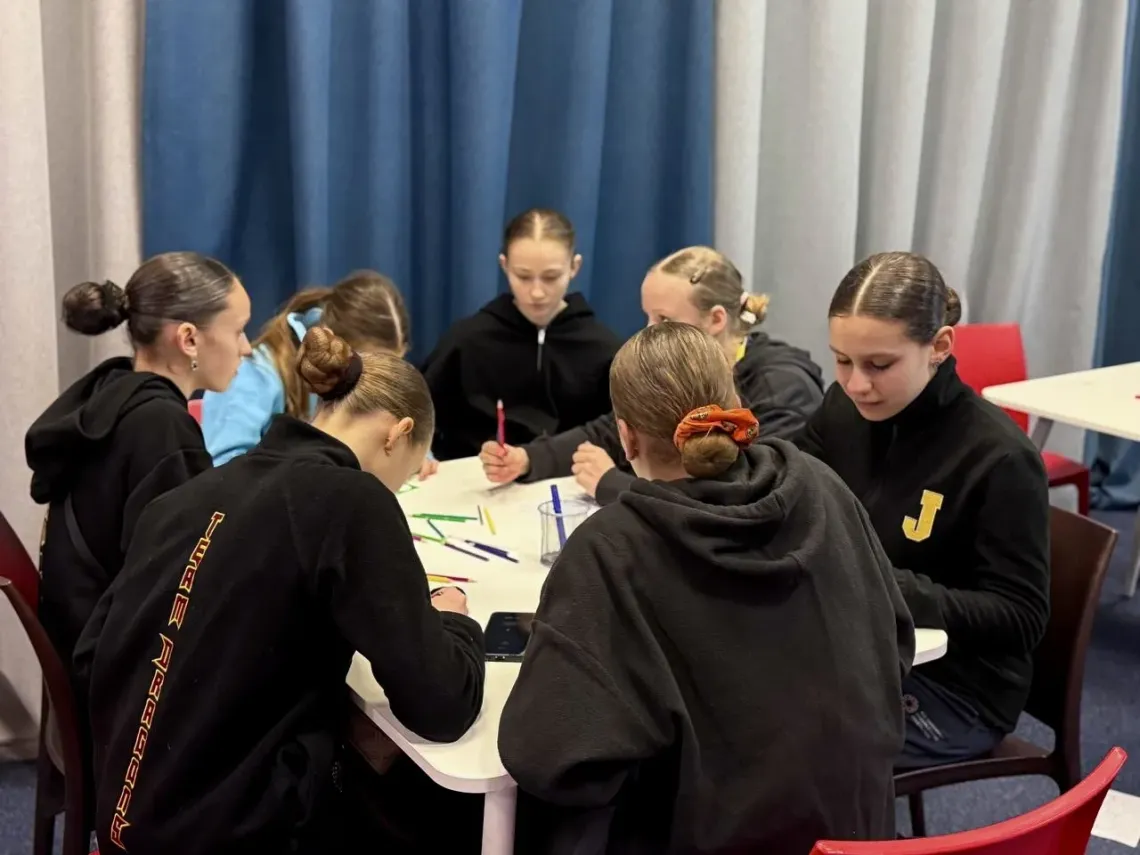
Her colleague Kateryna, who has worked at the Spilno Spot longer than Yuliia, shares that recently, a group of 15 girls arrived from a dance competition and spent hours here playing, charging their phones, and resting between trains. They were on their way back to Kyiv, where power cuts have become more frequent and longer. For many of them, the Spilno Spot was the only fully powered, warm, and safe place they had seen during their long journey.
Families travelling from eastern Ukraine often arrive tense. Some break down and cry while talking. Yuliia says that children from frontline towns sometimes flinch when a train passes overhead, mistaking the rumbling for an air-raid alert.
The families
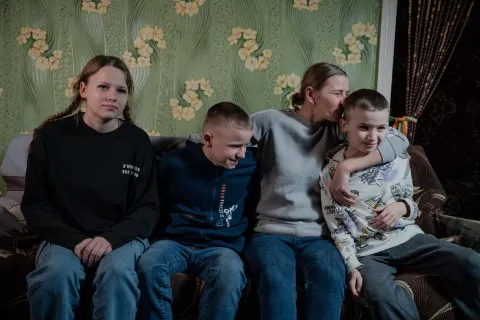
Yana and Liza (10) and Tykhon (8)
The family is on their way back to Kyiv after spending several days in Lviv, where they did not have to deal with blackouts for the first time in months.
“At home we had power cuts for 12 hours, sometimes even 24. In winter that’s very hard. My children treat it almost like normal. They were born during COVID. They don’t remember a stable time,” said Yana.
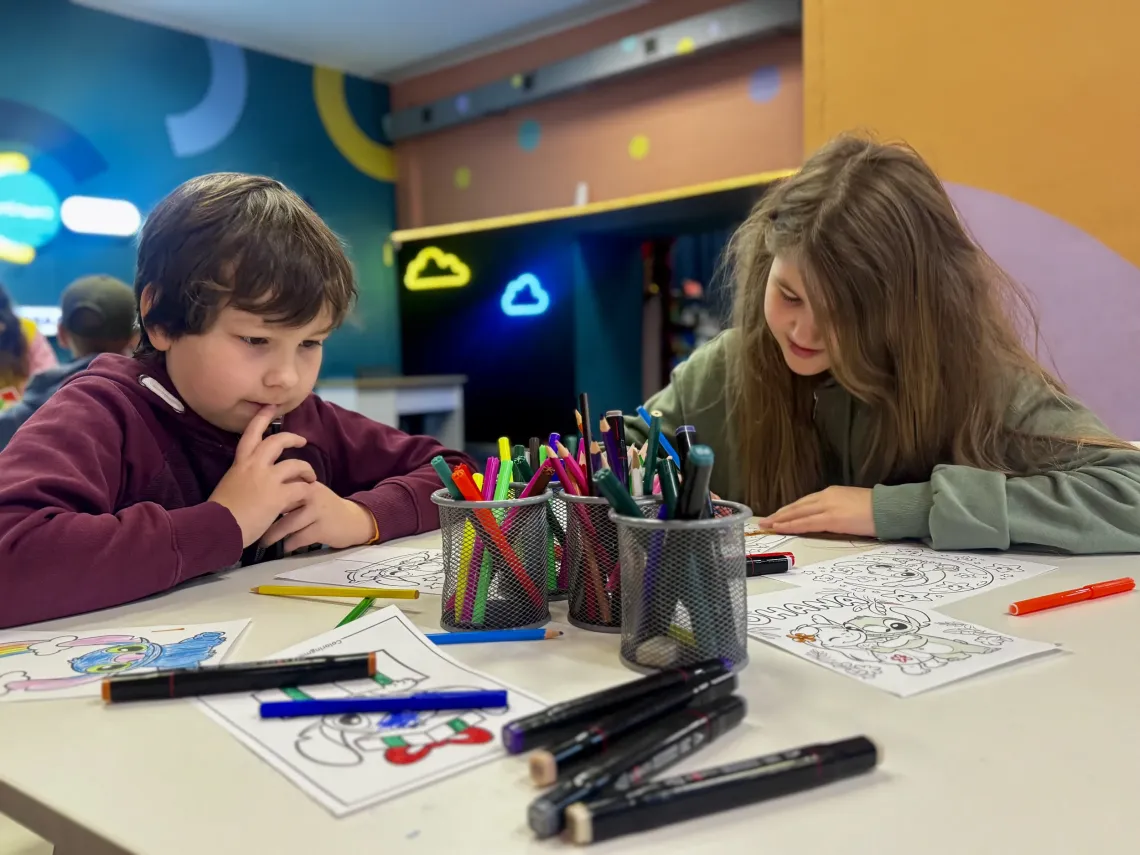
With locations across many railway stations in Ukraine, Spilno Spots are not just a pit stop or arrival point for children. It’s also a comfortable start to a long journey.The moment the family entered the Spilno Spot in the Kyiv central railway station, the children enjoyed the many activities there, like the foosball table, busy board and games. Yana pauses when she speaks about 2022: their months in Poland, the support they received from UNICEF, the cash assistance that helped them get through that uncertain period.
“We could have stayed abroad. We chose to return. But here in Lviv it’s calmer than Kyiv. Sometimes we think about moving here,” she said.
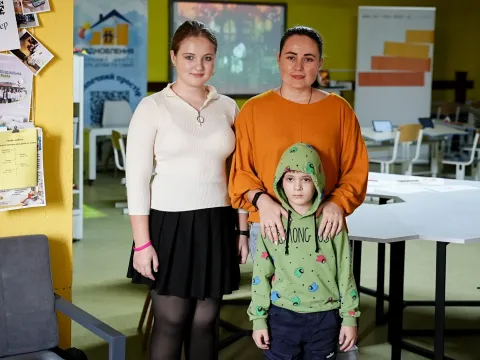
Alla and her son Rostyslav (7), returning to Nikopol
Alla and her seven‑year‑old son Rostyslav are on their way back to Nikopol after visiting family in Germany, a long journey that involves multiple train changes. They know the Spilno Spot well: they first visited it two years ago and came again this time because Rostyslav asked specifically to return.
Their hometown remains one of the hardest places in Ukraine to raise children. Nikopol faces constant attacks. Schools do not operate in-person classes, so children have to study online, and only in safe spaces.
“Rostyk is in second grade. His older brother Yaroslav is 15 and studies at home too. Schools don’t operate. It’s too dangerous,” Alla explains.
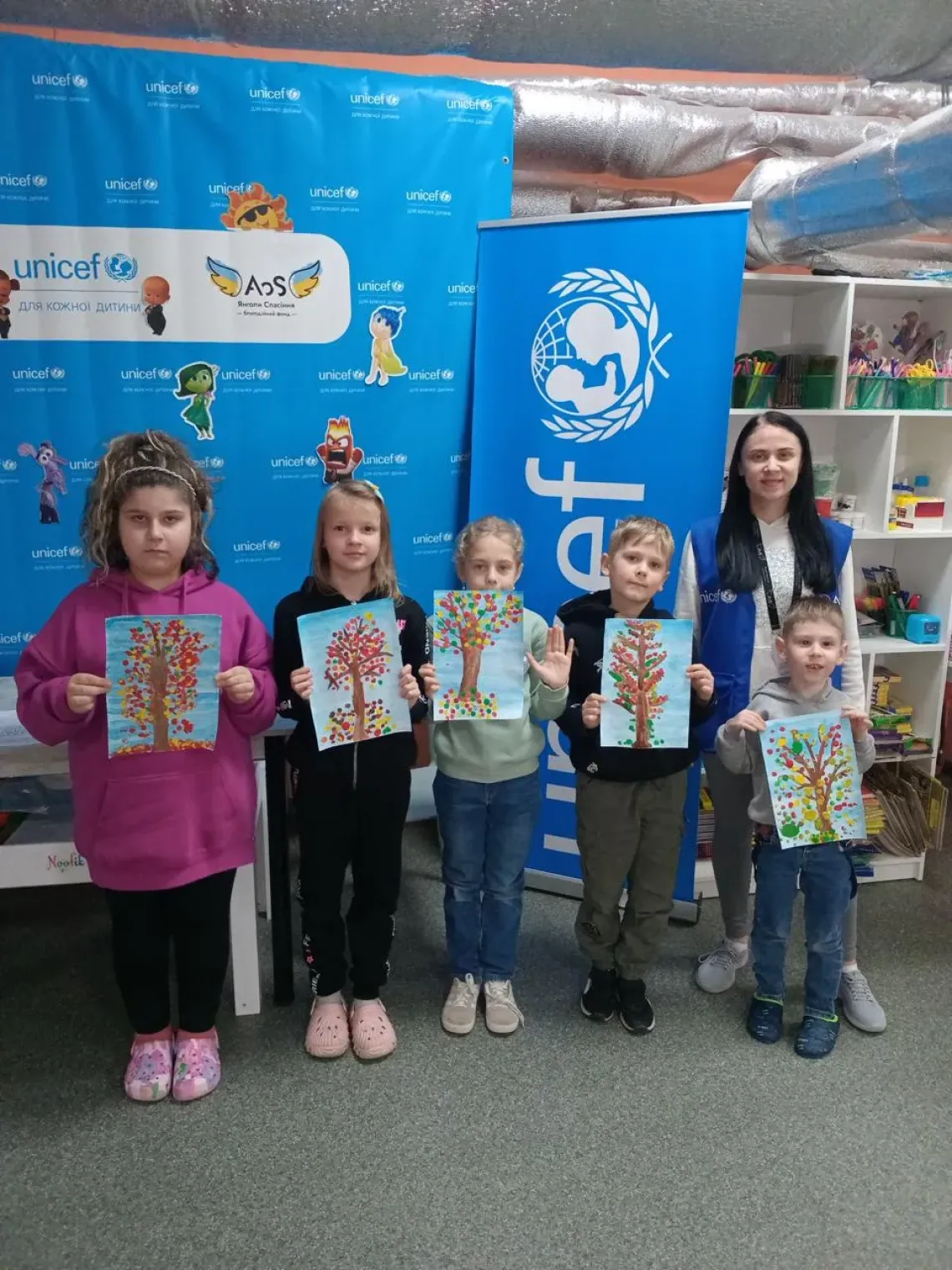
Every Monday, Rostyslav attends a UNICEF-supported child-friendly space in their town, one of the few places where children can gather safely. There, he can attend English or catch-up classes, watch cartoons or simply communicate with his peers.
Electricity in Nikopol often disappears for one to two days after strikes. Generators and battery lamps have become part of their daily routine.
Here at the Spilno Spot, however, everything is powered. Rostyslav immediately runs to the foosball table, then to the UNO cards. "Just like in Germany,” he says, settling into play with Roskolana, another Spilno Spot administrator.
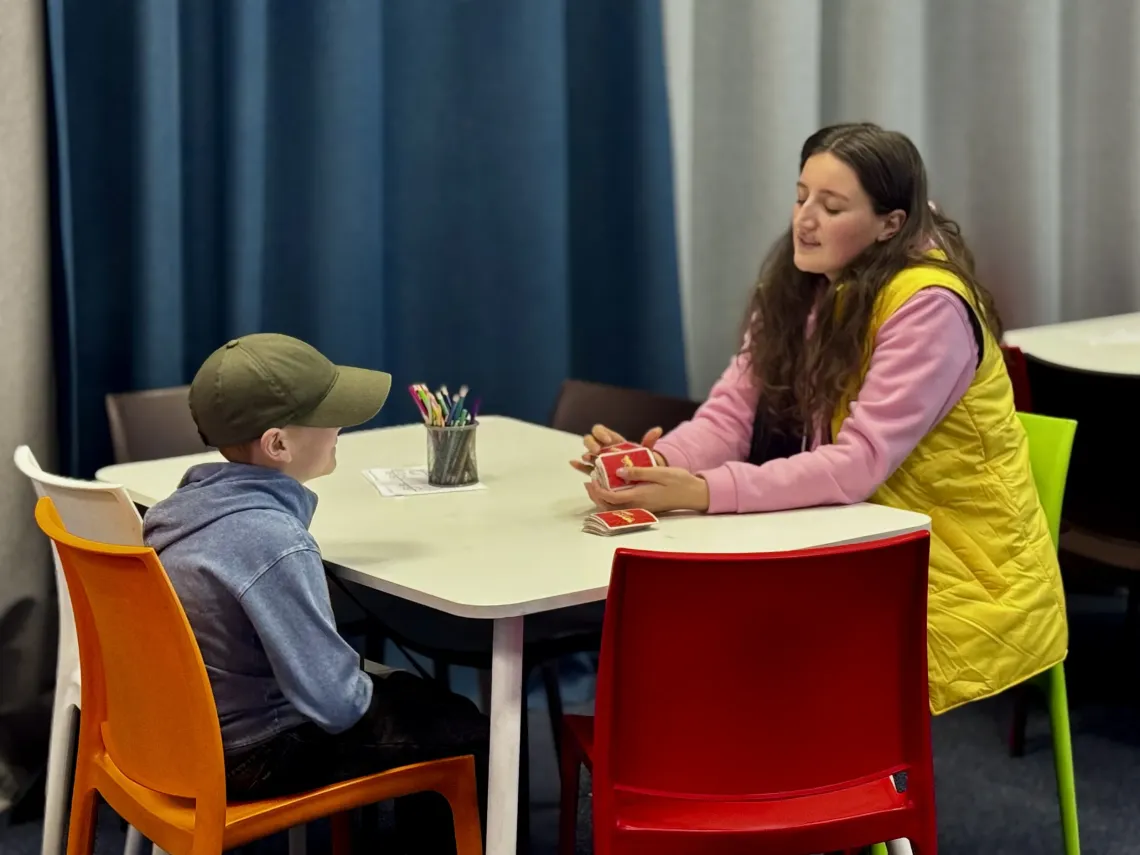
Alla holds a cup of hot tea that the staff offered. “It’s particularly good to have a place like this. You can rest, breathe, think. The children need calm. They need connection. They need to feel safe,” she said.
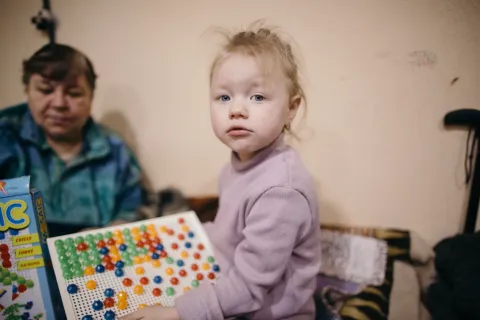
Anya and her daughter Alina (2)
Anya and little Alina are returning from Latvia, where Anya’s parents live, to the Kharkiv region. Their train leaves at 3 p.m., but they arrived at 11 a.m. and have been staying in the Spilno Spot.
“Alina loves it here. She’s been playing non-stop,” said Anya. They are not new visitors. They first visited months ago after someone at the station pointed them to the space.
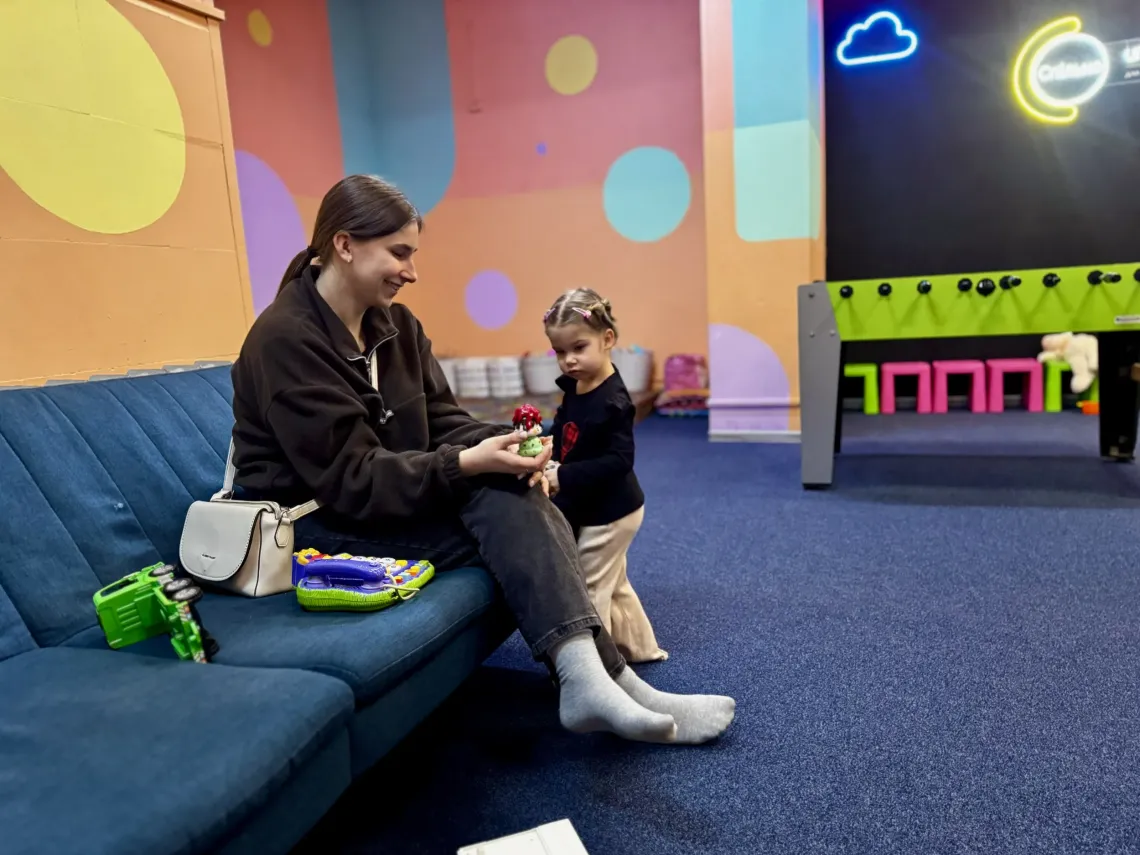
“When we first arrived here, Alina was still in diapers. We had somewhere warm and clean to change her. It meant so much at the time. If this place ever closed, we would be upset. Here they always offer tea, water, kindness. Just sitting in the station is uncomfortable. But here… here we feel at home,” said Anya.
For Anya, traveling with a toddler can be exhausting, and their home is far from stable. In their hometown, electricity is often only available for only two to three hours a day. Sometimes, strikes happen dangerously close.
Alina was born in Latvia, but the family returned to Ukraine. “This time, we were away for a month. But even when it’s dangerous, home is home. Our people, our language — everything is so familiar there,” said Anya.
While the war continues, children need safe spaces on the road
The 2025-2026 winter season has been one of the hardest yet. Across Ukraine, families have endured waves of strikes on critical civilian infrastructure, leaving homes without heating, water or electricity for hours, and sometimes days. Travel today in Ukraine is more exhausting than at any point since the start of the full‑scale war. Trains arrive late or change routes without warning. Families can wait hours or sometimes an entire day in cold halls, crowded corridors or on station floors. Many children get tired from long journeys and sleepless nights, on top of years living under constant alarms and threats to their lives.
In every long journey, from Nikopol to Kyiv, from Latvia to Lviv, Spilno Spots provide a refuge: a space where children and families can pause, breathe, and gather strength before the next part of their journey.
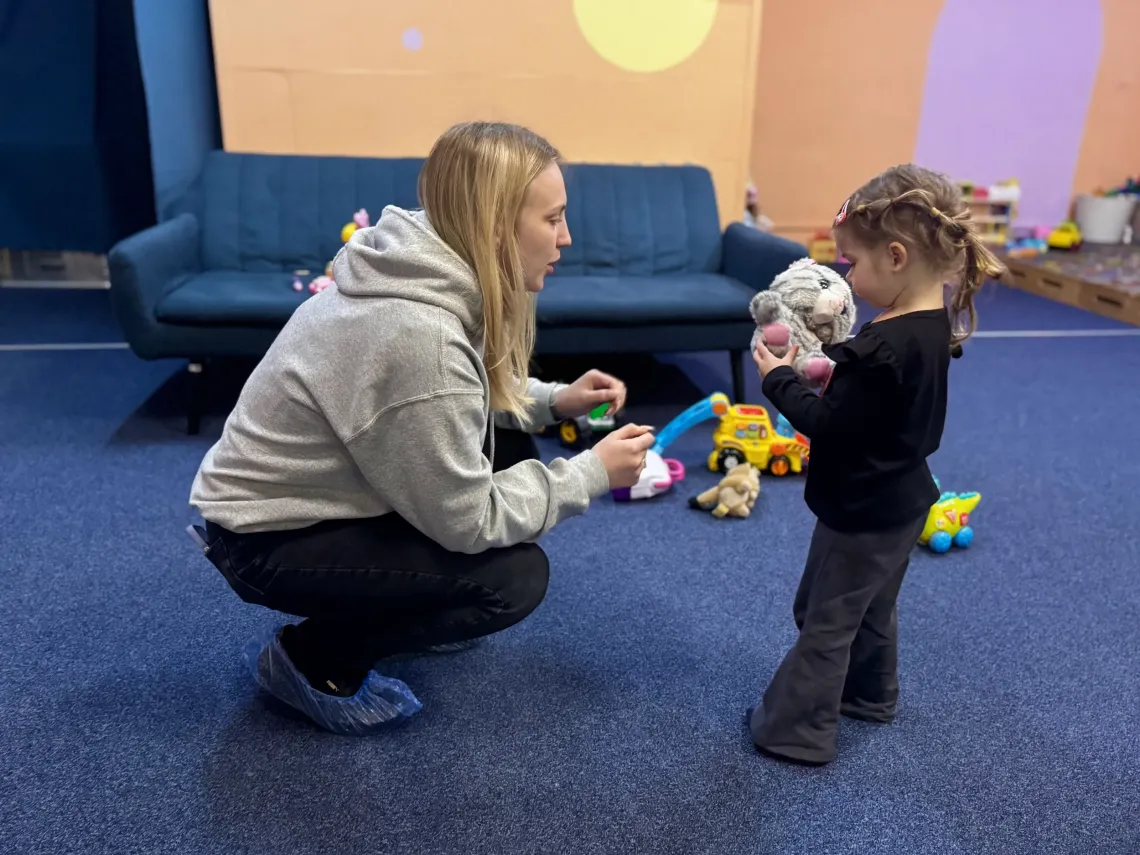
The Spilno Spot in the Lviv railway station is supported by the Government of Norway through the Nansen Support Programme for Ukraine.