Delivering impactful results for every child and young person in Syria 2025-2026
Advocacy briefs

- English
- العربية
A turning point for Syria’s children and young people
For nearly 60 years, UNICEF has stood by Syria’s children, guided by the UN Convention on the Rights of the Child, which Syria ratified in 1993. With six field offices, and 260 dedicated staff, 43 per cent of whom are women, UNICEF, together with its partners, is on the ground strengthening systems, scaling up services in the social sector and delivering life-saving supplies. From education and social protection, to health and nutrition, water, sanitation and hygiene, and child protection, UNICEF is reaching every child, everywhere.
Yet the conflict that erupted in 2011 changed everything. As violence spread and needs deepened, UNICEF shifted its focus, responding to the urgent needs of most vulnerable children and women across the country. Today, Syria remains one of the world’s most complex humanitarian crises. In 2025, 16.7 million people, including 7.5 million children are in need of humanitarian support, 2.45 million children are out-of-school, and 2 million children are at risk of malnutrition. Recent clashes in various parts of the country clearly underscore the fragility of the situation on the ground, a reality made even more dangerous by nearly 300,000 explosive ordnances contaminating the country, placing children’s lives under constant danger.
Despite these immense challenges, and for the first time in over five decades, Syria stands at a historic turning point, one that holds new hope for children and young people. The political transition, new leadership, and renewed focus of ministries and institutions mark a decisive turning point, a powerful moment of hope emerging after nearly 14 years of conflict.
UNICEF’s commitment: Real hope, real action
UNICEF’s priority areas are clear: protecting every child, ensuring access to quality inclusive education, child protection, healthcare and nutrition, water, sanitation and hygiene, and strong social policy systems. These core areas are supported by eight cross-cutting enablers that drive integrated programming and transformation through social behaviour change, prevention of sexual abuse and exploitation, mental health, early childhood education, climate resilience, to gender equality, youth empowerment and accountability to the very communities we serve.

Every child has the right to survive, and thrive
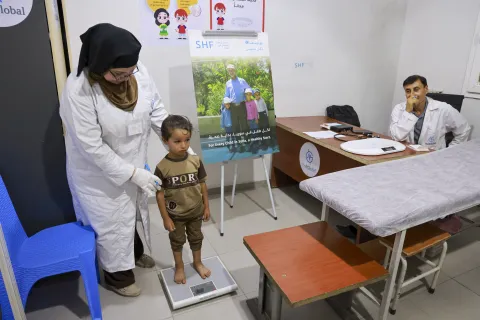
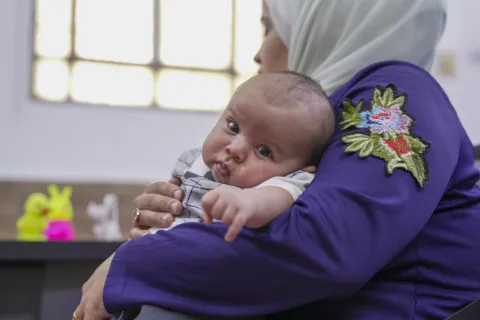
Goal: To reduce preventable maternal, newborn, and child deaths by ensuring every child and woman has access to life-saving primary health care, skilled health workers, and essential vaccines.

Every child has the right to good nutrition to grow, learn, and thrive
Goal: End all forms of child malnutrition to enable every child, everywhere, to survive, grow, and thrive.

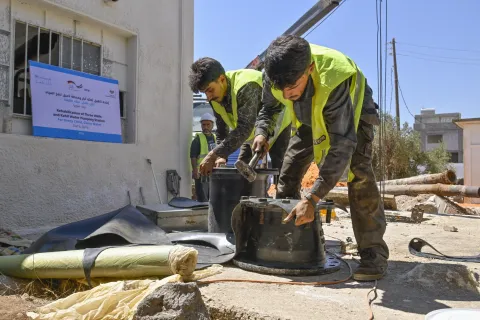
Every child has the right to access safe water, sanitation, and hygiene
Goal: Achieve universal and equitable access to safe and affordable drinking water and adequate sanitation and hygiene.

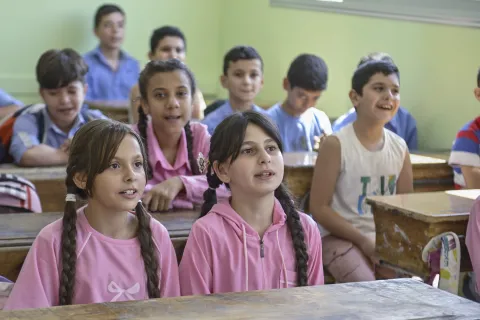
Every child has the right to inclusive quality education
Goal: Every child, including girls, children with disabilities, and the most marginalised, learns through inclusive, equitable, and quality education and builds the skills they need to thrive and shape their future.

Every child has the right to protection
Goal: To ensure that every child is protected from violence, abuse, exploitation, and neglect.

Every young person has the right to learn, build skills, and engage meaningfully in their society
Goal: Ensure that every young person has access to quality learning, acquires relevant skills, and is meaningfully engaged in their communities and society.

Every child has the right to an equitable chance in life
Goal: Ensure a strong, inclusive, universal, shock responsive and financially sustainable social protection system that safeguards every child and family in Syria.

Every child has the right to positive behaviour change that drives equity and lasting impact
Empower children, families, and communities, especially the most marginalised, to adopt and sustain positive behaviours and social norms that advance children’s rights, well-being, and equity.

UNICEF Syria/2025
Highlights
For nearly 60 years, UNICEF has stood by Syria’s children, guided by the UN Convention on the Rights of the Child, which Syria ratified in 1993. With six field offices, and 260 dedicated staff, 43 per cent of whom are women, UNICEF, together with its partners, is on the ground strengthening systems, scaling up services in the social sector and delivering life-saving supplies. From education and social protection, to health and nutrition, water, sanitation and hygiene, and child protection, UNICEF is reaching every child, everywhere.