A journey shaped by motherhood and breastfeeding
UNICEF supports mothers with the knowledge, skills and care needed to exclusively breastfeed and improve nutrition outcomes during a child's most critical early years

Jaramana, Rural Damacus - For years, Leen worked as a health educator, helping mothers understand the importance of breastfeeding and giving their children a healthy start in life. Yet it was only after becoming a mother herself that she truly understood the challenges many women face.
“The sleepless nights, physical demands and emotional commitment of breastfeeding gave me a deeper appreciation of the perseverance required,” said Leen, a physician at a UNICEF-supported health and nutrition centre in Jaramana, Rural Damascus. What she once taught through professional experience became something she lived every day.

“Breastfeeding is more than providing nutrition. It is an act of love that requires patience, strength and support.”
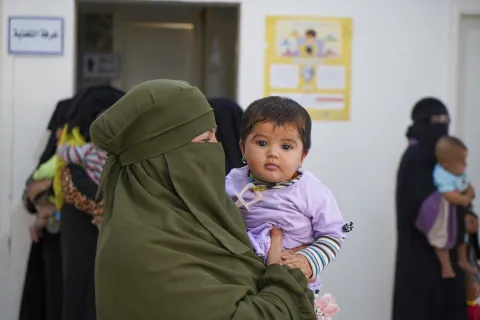
Since 2022, Leen has been supporting mothers and children at the UNICEF-supported centre. In a country where years of conflict have strained health services, displaced families and disrupted access to reliable health information, many women arrive seeking guidance on a range of concerns. Some struggle with breastfeeding positions or attachment. Others worry that their babies are not receiving enough milk. Many seek reassurance as they navigate conflicting advice from family members and traditional beliefs.
Recognising that a single counselling session is often not enough, Leen introduced a tracking card system to monitor mothers’ progress and ensure they receive continued guidance throughout their breastfeeding journey. The approach enables health workers to better understand each mother's concerns and provide tailored support when it is needed most.
“Traditional beliefs can also affect feeding practices. Some families believe newborns need sugar water, herbal drinks or other liquids in addition to breast milk,” Leen explained. “Through UNICEF-supported awareness sessions and individual counselling, mothers learn about the benefits of exclusive breastfeeding, which supports healthy growth, brain development and immunity during a child’s earliest months.”


The impact of this support is clear. Today, most mothers visiting the centre exclusively breastfeed their babies during the first six months of life without unnecessary supplements. They also receive practical guidance on breastfeeding positions and proper attachment, helping them overcome common challenges and continue breastfeeding with confidence.
For many mothers, access to trusted advice and ongoing support can make a significant difference, particularly in communities that continue to recover from years of crisis. By combining technical knowledge with empathy and lived experience, Leen helps mothers navigate challenges and build confidence in caring for their children.


At the end of each day, after supporting other mothers through their breastfeeding journeys, Leen returns home to her own daughter with an even deeper appreciation of the bond breastfeeding creates between mother and child. Her experience as both a mother and a health professional allows her to connect with the women she supports in a uniquely meaningful way.
Through UNICEF-supported maternal and child health services, health workers like Leen are equipped with the knowledge, tools and resources needed to help mothers make informed feeding decisions and overcome common breastfeeding challenges.
By investing in frontline health workers and strengthening maternal and child health services, UNICEF is helping more children receive the healthiest possible start in life, while building stronger health systems for families across Syria.
Since the beginning of 2026, UNICEF's nutrition programme in Syria has provided guidance on optimal infant and young child feeding practices to nearly 250,000 caregivers. Through these efforts, nearly 480,000 children under five, pregnant women and breastfeeding mothers have been screened for malnutrition, while more than 700,000 mothers and children have received essential micronutrients. In addition, approximately 3,400 children with severe acute malnutrition have received lifesaving treatment. These vital activities were possible because of the support of the Governments of Australia; and Canada; the European Union; the Foreign Commonwealth and Development Office (FCDO), the Government of France through the French Ministry for Europe and Foreign Affairs (FIFSAN), the Governments of Japan and Korea, The Swedish International Development Cooperation Agency (Sida), the Syria Humanitarian Fund, UNICEF National Committee for the United States, and the United States Government.