Investing in schools, unlocking futures

UNICEF-supported rehabilitation is improving schools across Syria, helping more children access quality education in safe and welcoming environments

Two girls wearing pink school uniforms sit together in class with boys in blue and more girls in pink school uniforms.
UNICEF/UN0928357/Wissam Bashour
22 September 2026

 Jaramana, Rural Damascus As children return to school for the new academic year, students at Bunat Al-Hadara School in Jaramana, Rural Damascus, are returning to a safer, more inclusive and more welcoming learning environment following UNICEF-supported rehabilitation. 

Today, the school serves around 830 boys and girls in primary education. For years, deteriorating infrastructure affected both learning and safety. Damaged doors and windows, leaking roofs, uneven stairs, inadequate sanitation facilities and worn-out prefabricated classrooms created daily challenges for students and teachers alike.

UNICEF-supported rehabilitation addressed many of these challenges and transformed the school environment. The intervention included repairing and replacing classroom doors and windows, waterproofing roofs, improving stairs and playground areas, rehabilitating prefabricated classrooms, and painting the school with colourful, child-friendly artwork.
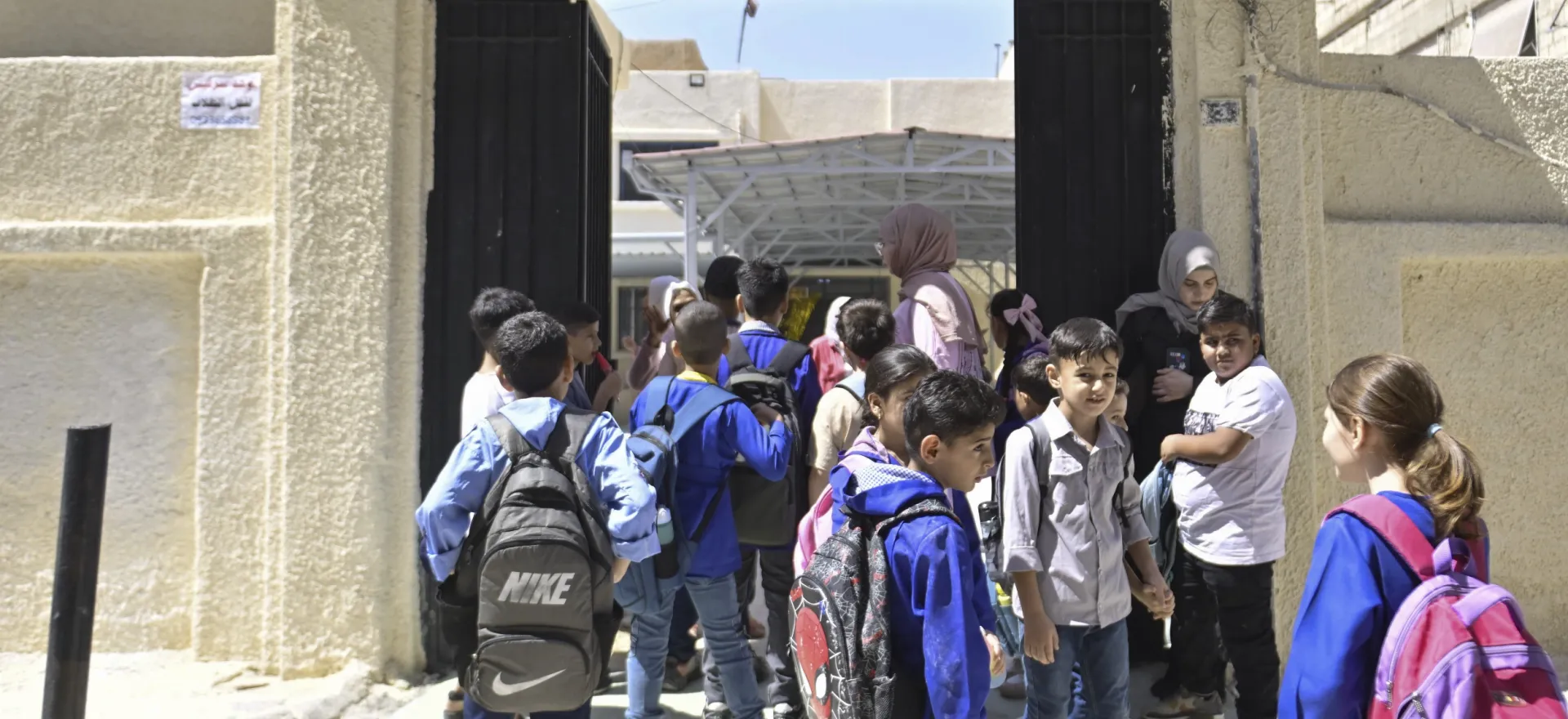
Children wearing school uniforms walk through a large entrance in a wall.
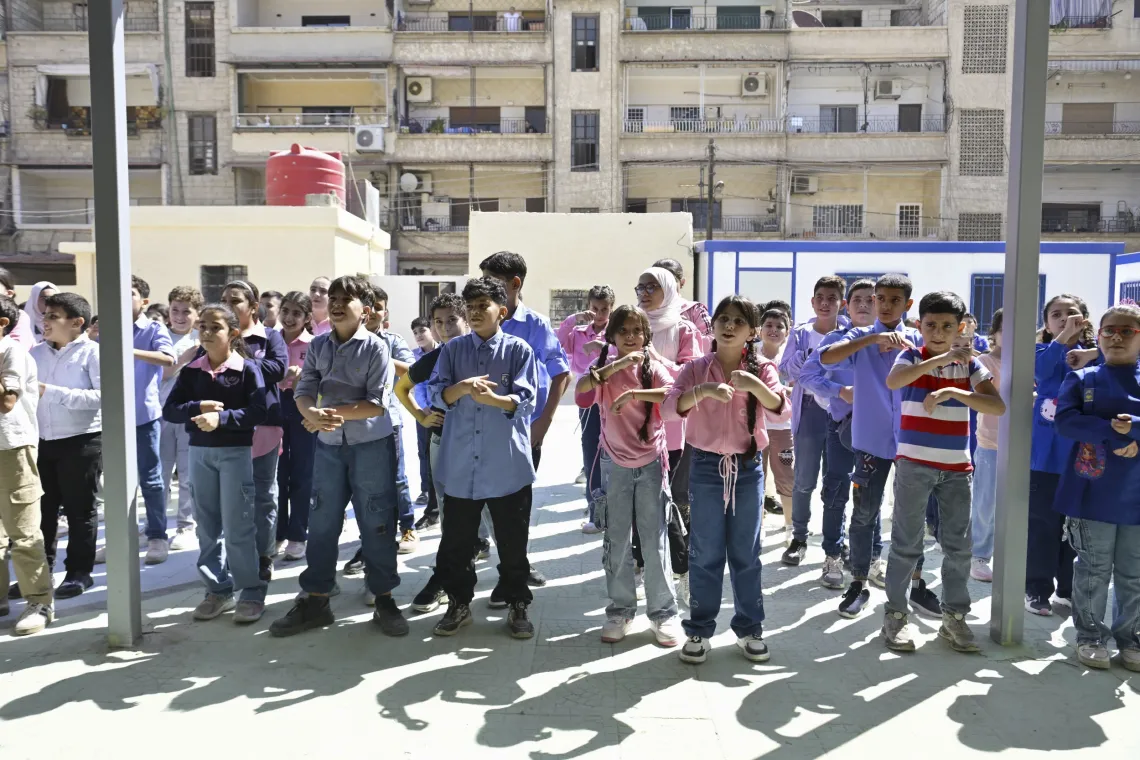
Children take part in physical exercises in a courtyard.

The rehabilitation also strengthened essential services and accessibility. A solar power system was installed, sanitation facilities were expanded, including an accessible toilet for children with disabilities, and ramps were added to improve access. School furniture and sunshades were also repaired, helping create a more comfortable and supportive learning environment.

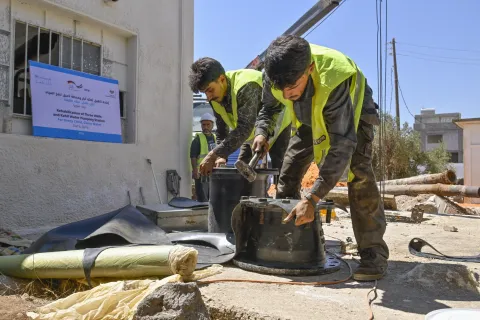
A group of young people who had received UNICEF-supported vocational training contributed to the work. Youth from displaced and host communities gained hands-on skills in trades such as electricity, plumbing, welding and aluminium work before applying their newly acquired knowledge to improve the school. 

For the young people, it was an opportunity to gain practical skills while contributing directly to a learning space used by hundreds of children in their communities.

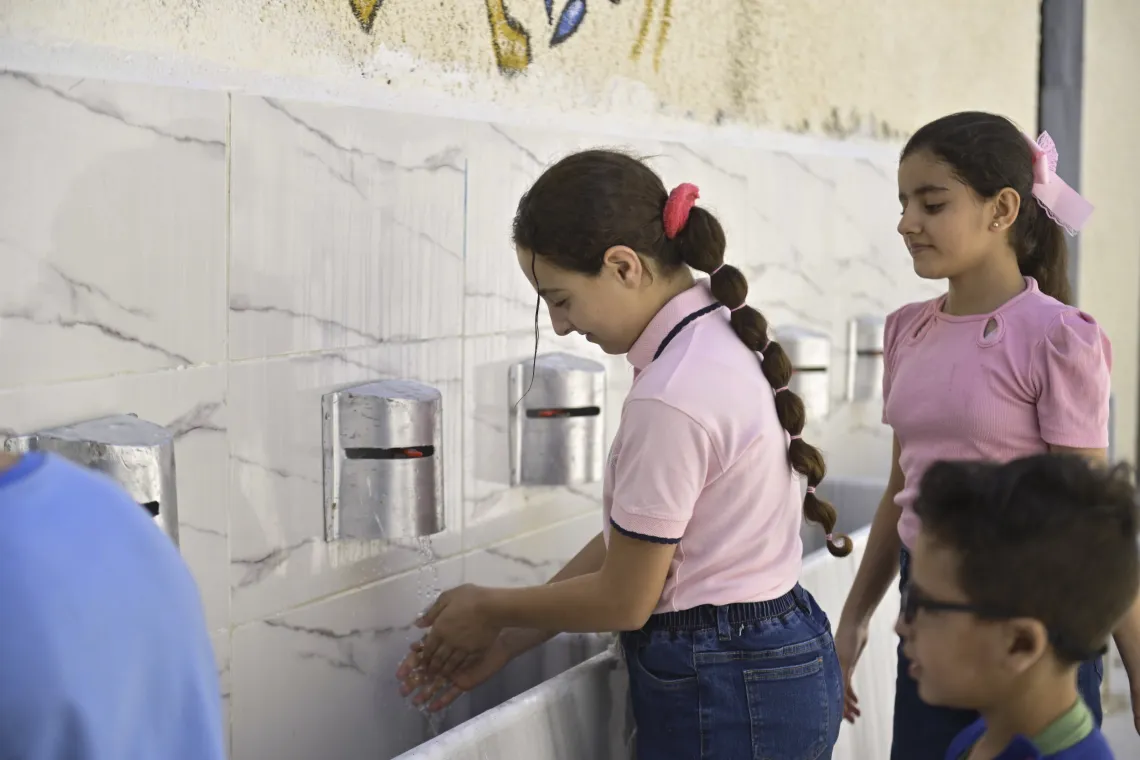
A girl with a long-platted ponytail and wearing a school uniform, washes her hands at a handwashing station, with her friend looking on. A girl with a long-platted ponytail and wearing a school uniform, washes her hands at a handwashing station, with her friend looking on.
UNICEF/UN0928361/Wissam Bashour Children wash their hands at UNICEF-rehabilitated Bunat Al-Hadara school in Jaramana, Rural Damascus.
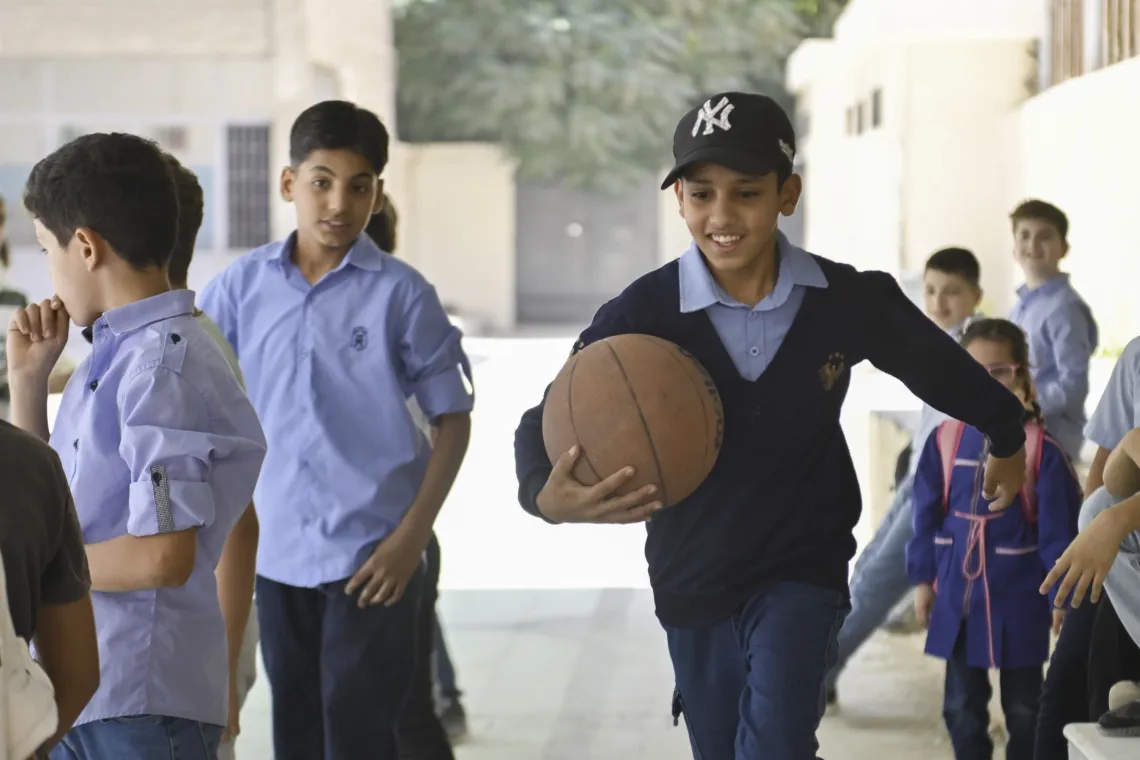
A boy with a basketball under his arm runs past his classmates outside class in a school courtyard. A boy with a basketball under his arm runs past his classmates outside class in a school courtyard.
UNICEF/UN0928355/Wissam Bashour Grade 6 students take part in a sport session in UNICEF-rehabilitated Bunat Al-Hadara school in Jaramana, Rural Damascus.
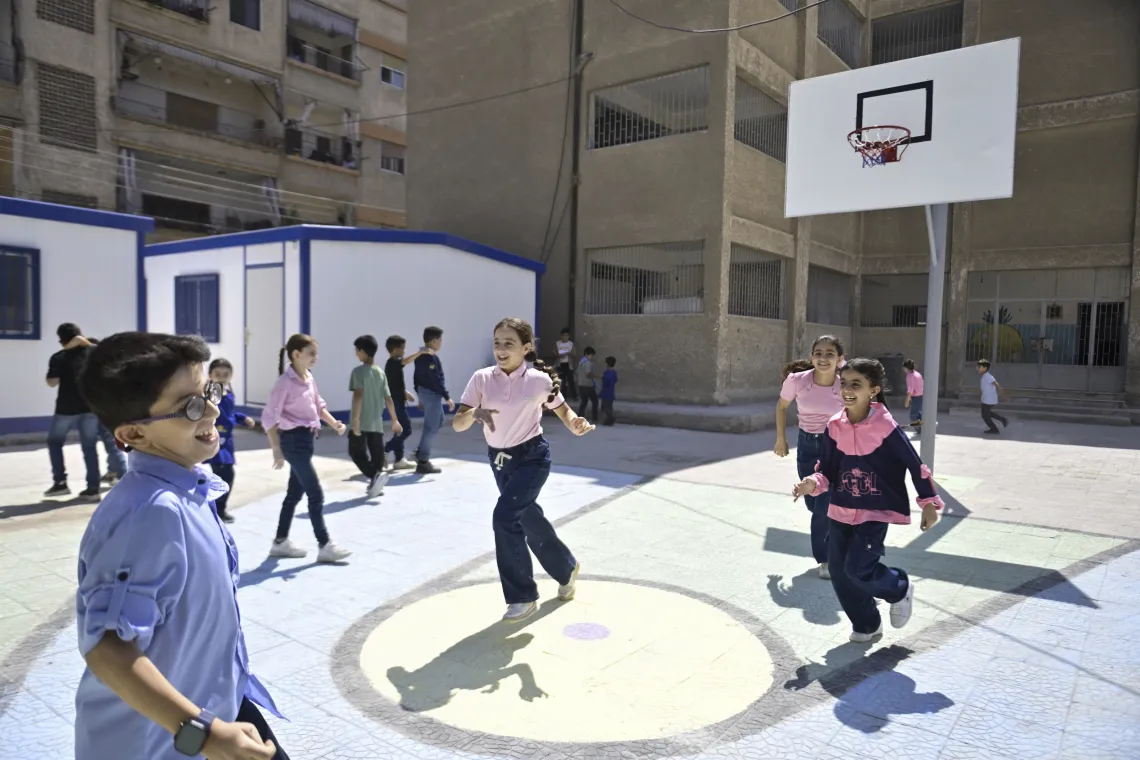
Children wearing school uniforms run and play in a courtyard on a basketball court. Children wearing school uniforms run and play in a courtyard on a basketball court.
UNICEF/UN0928363/Wissam Bashour Students play in the yard of UNICEF-rehabilitated Bunat Al-Hadara school in Jaramana, Rural Damascus. Mwana, school principal, said “Before the rehabilitation, the conditions were extremely difficult. The potholes in the playground affected both the safety of the students and the learning process.”
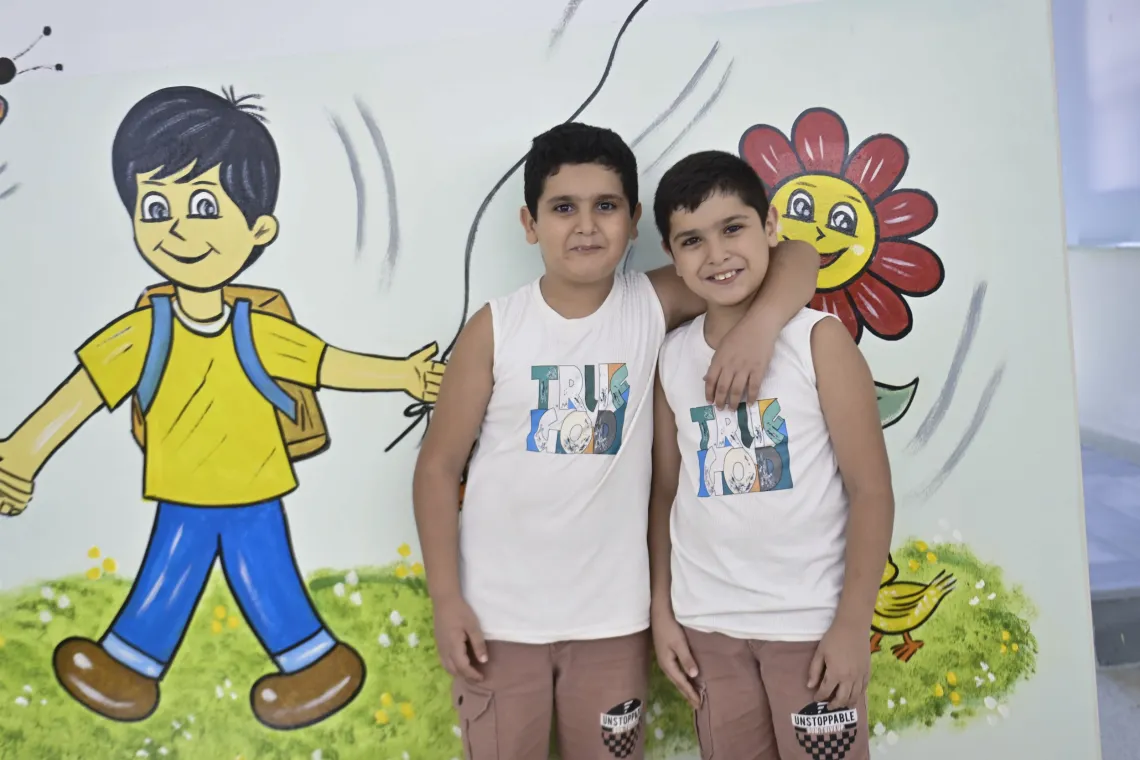
Two similar looking boys with one arm around the others shoulder pose for a photo in front of a colourful mural. Two similar looking boys with one arm around the others shoulder pose for a photo in front of a colourful mural.
UNICEF/UN0928365/Wissam Bashour (From left to right) Adam and his brother Joud, 12, in a corridor of UNICEF-rehabilitated Bunat Al-Hadara school in Jaramana, Rural Damascus. Joud said “Although we are twins, we have different favourite sports. I enjoy playing football, while Adam prefers basketball. Sports time is our favourite part of the school day."

These improvements come at an important time as the school welcomes increasing numbers of students, including children whose families have recently returned to the area, children returning to education after dropping out, and those transferring from other schools. 

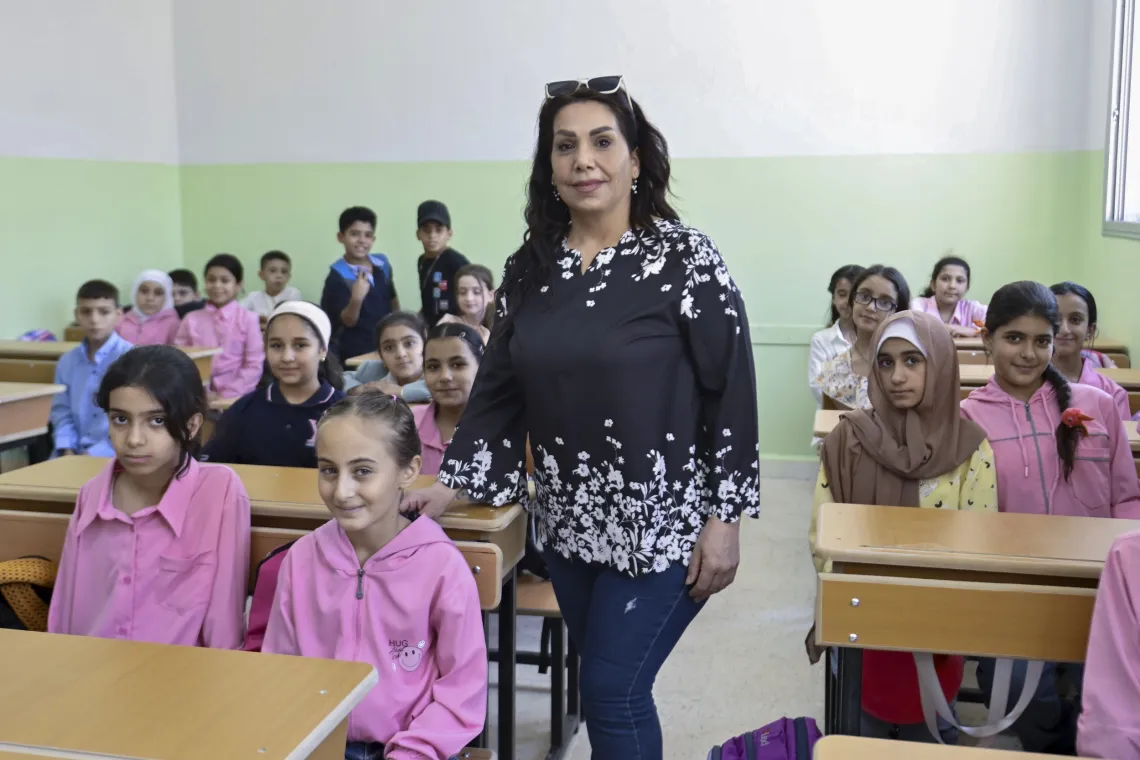
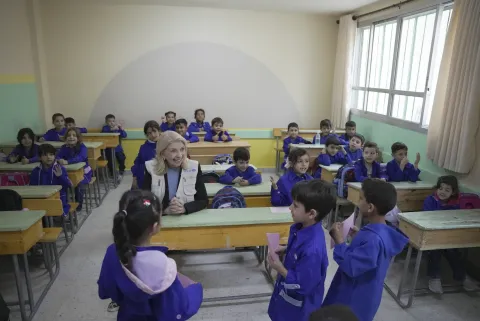
A female teacher stands behind in the isle of a classroom filled with girls and boys wearing pink and blue school uniforms. A female teacher stands behind in the isle of a classroom filled with girls and boys wearing pink and blue school uniforms.
UNICEF/UN0928356/Wissam Bashour Teacher Aida with her students in their classroom at UNICEF-rehabilitated Bunat Al-Hadara school in Jaramana, Rural Damascus. “This school year feels completely different. The classrooms are bright, clean and welcoming, which has made teaching so much more fulfilling and given the children a renewed enthusiasm to learn,” she said.
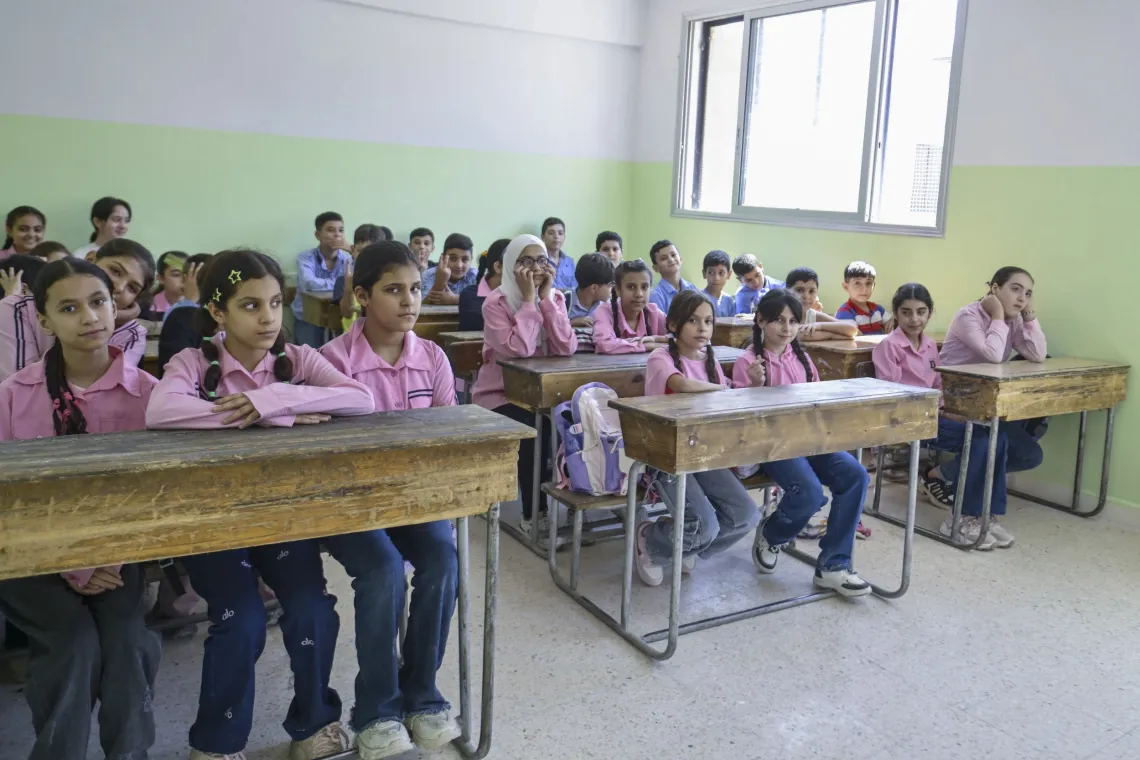
Girls wearing pink and boys blue school uniforms sit at desks in a classroom. Girls wearing pink and boys blue school uniforms sit at desks in a classroom.
UNICEF/UN0928362/Wissam Bashour Children in their classroom during a lesson at the UNICEF-rehabilitated Bunat Al-Hadara school in Jaramana, Rural Damascus.
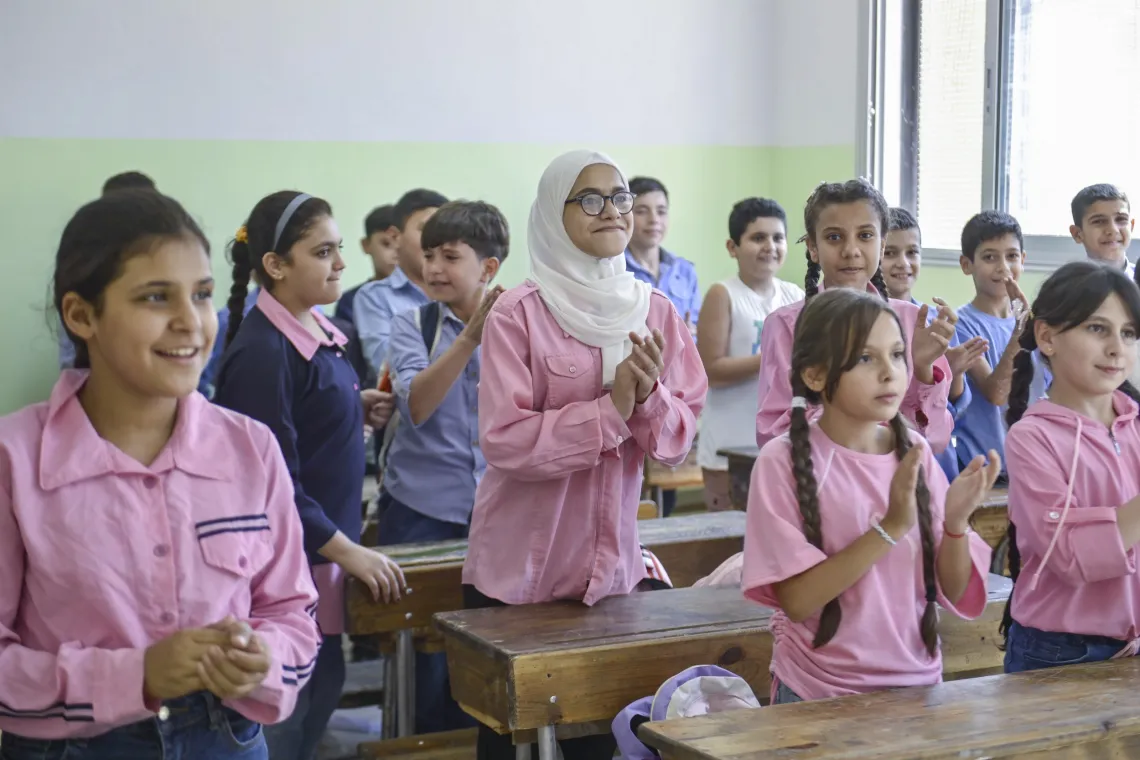
Children stand behind their desks in class. Girls wearing pink uniforms and the boys blue. Children stand behind their desks in class. Girls wearing pink uniforms and the boys blue.
UNICEF/UN0928351/Wissam Bashour Hala, 13, with her classmates, participates in an activity in their classroom at UNICEF-rehabilitated Bunat Al-Hadara school in Jaramana, Rural Damascus. “I am in Grade 6 and will move to another school next year. I am happy to see the school where I grew up transformed into such a beautiful and welcoming place,” she said.
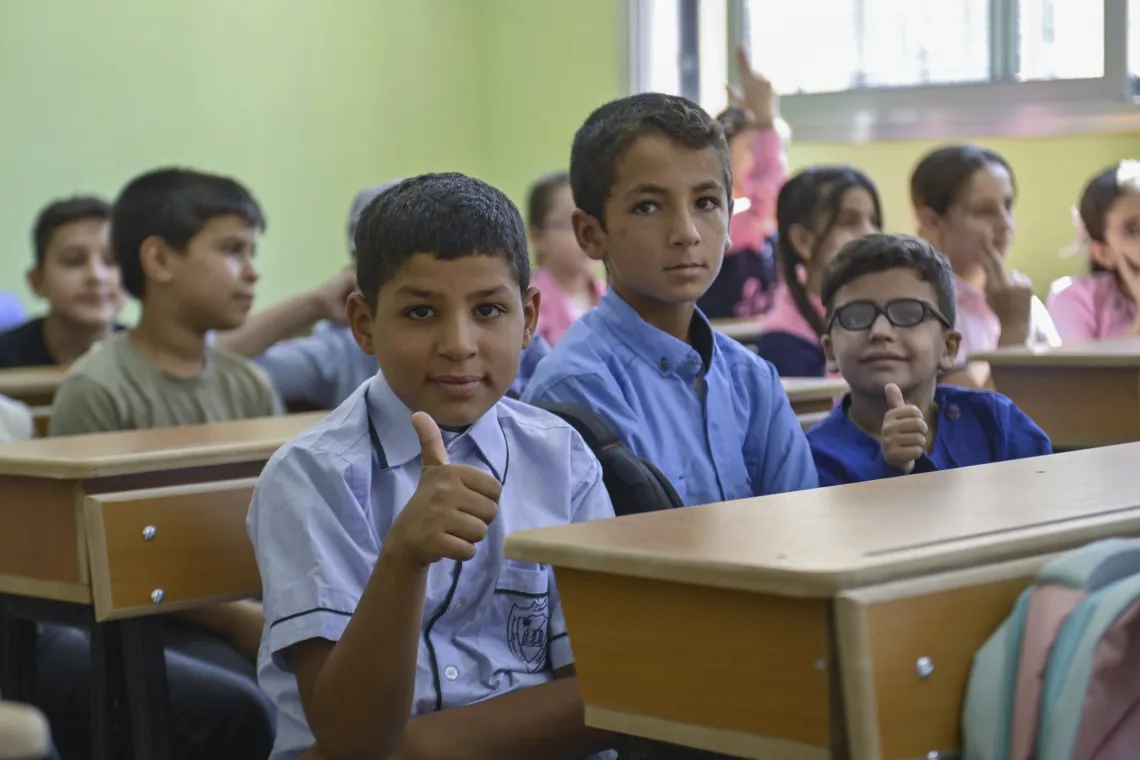
A boy sits next to two others at a desk in a class. They all wear blue school uniforms. A boy sits next to two others at a desk in a class. They all wear blue school uniforms.
UNICEF/UN0928350/Wissam Bashour (From left to right) Abbas, 11, Hasan, 12, and Ali, 8, during a group activity in their classroom at UNICEF-rehabilitated Bunat Al-Hadara school in Jaramana, Rural Damascus. “I want to become a construction worker in the future, like my father. I liked the plants in the yard and the colourful walls inside. Our school is beautiful this year,” Abbas said.

For the school principal Mwana, the difference is already visible. She describes the start of the academic year as joyful and reassuring, with students, parents and teachers all benefiting from a safer and more supportive learning environment.
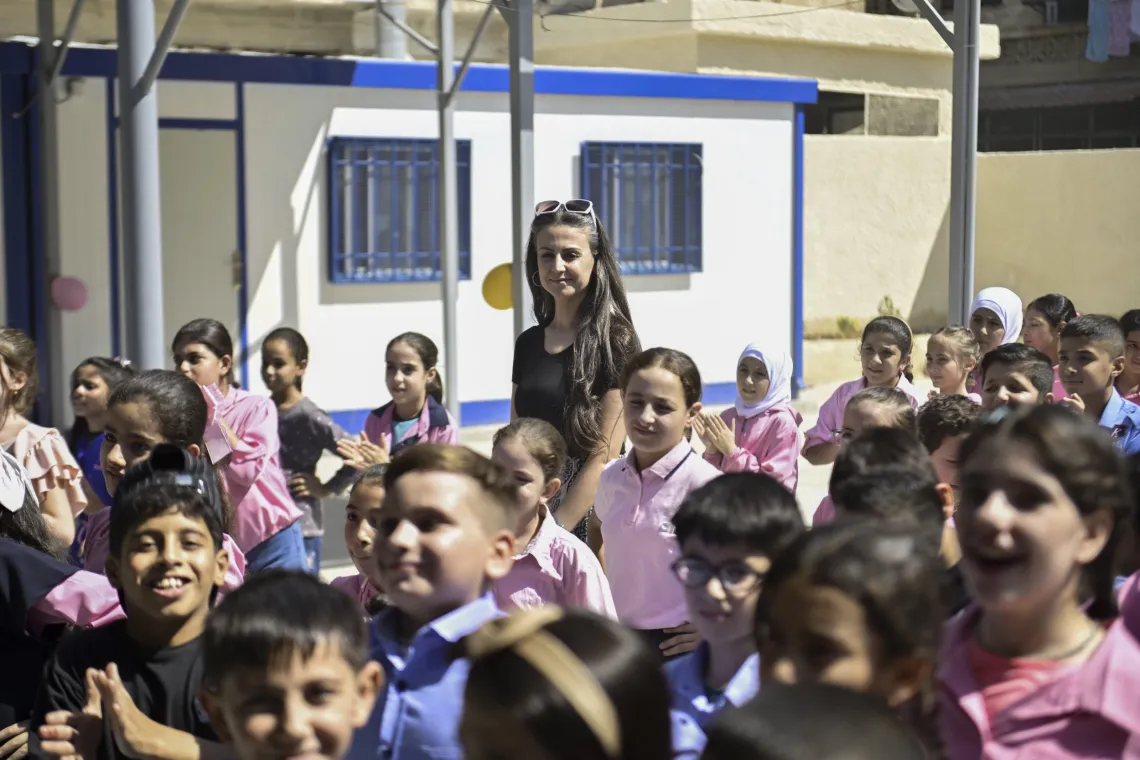
School principal stands behind children during an assembly.
UNICEF/UN0928354/Wissam Bashour Mwana, School principal and children during the morning assembly before they head to their classroom.

"Before the rehabilitation, the school's condition made learning difficult. Leaking roofs, damaged facilities and unsafe spaces disrupted classes, especially during rainstorms when students had to be moved into already crowded classrooms,"

Mwana, principal

As classrooms fill once again, Bunat Al-Hadara School is opening its doors to a new school year with renewed hope, providing children with a better place to learn, grow and thrive.

Since January 2026, UNICEF with partners have rehabilitated 54 schools across Syria, improving learning conditions and expanding access to education for thousands of children. These critical investments in children's futures have been made possible thanks to the generous support of from EU Humanitarian Aid; the Foreign Commonwealth and Development Office (FCDO); the German Federal Ministry for Economic Cooperation and Development (BMZ) through the KfW Development Bank; the Global Partnership for Education (GPE); the Governments of Denmark, Italy, Norway, Sweden, and Switzerland under the UN Joint Programme on Urban and Rural Resilience (UNJP); and Governments of Japan and Korea.