Solar power brings brighter classrooms to students
Through sustainable energy solutions, UNICEF is helping children access quality learning opportunities

Al-Bardeh, Rural Damascus – Across Syria, years of conflict have damaged schools and placed increased pressure on those that remain operational. Many schools now run two shifts to accommodate more children, extending the school day into the late afternoon and increasing the need for reliable electricity.
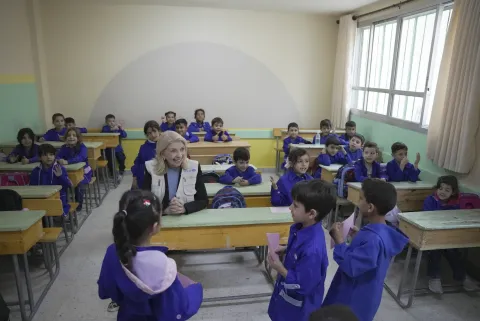
At 8 Kanoon Al-Awal School in Rural Damascus, frequent power cuts made teaching and learning particularly challenging during the afternoon shift. In winter, fading daylight left classrooms dark, making it harder for students to see the board and follow their lessons. During warmer months, fans often stopped working, leaving classrooms uncomfortable for students and teachers.
With support from the UNICEF National Committee in Spain, UNICEF installed a solar power system at the school, providing a reliable and sustainable source of electricity and helping create a safer and more comfortable learning environment.
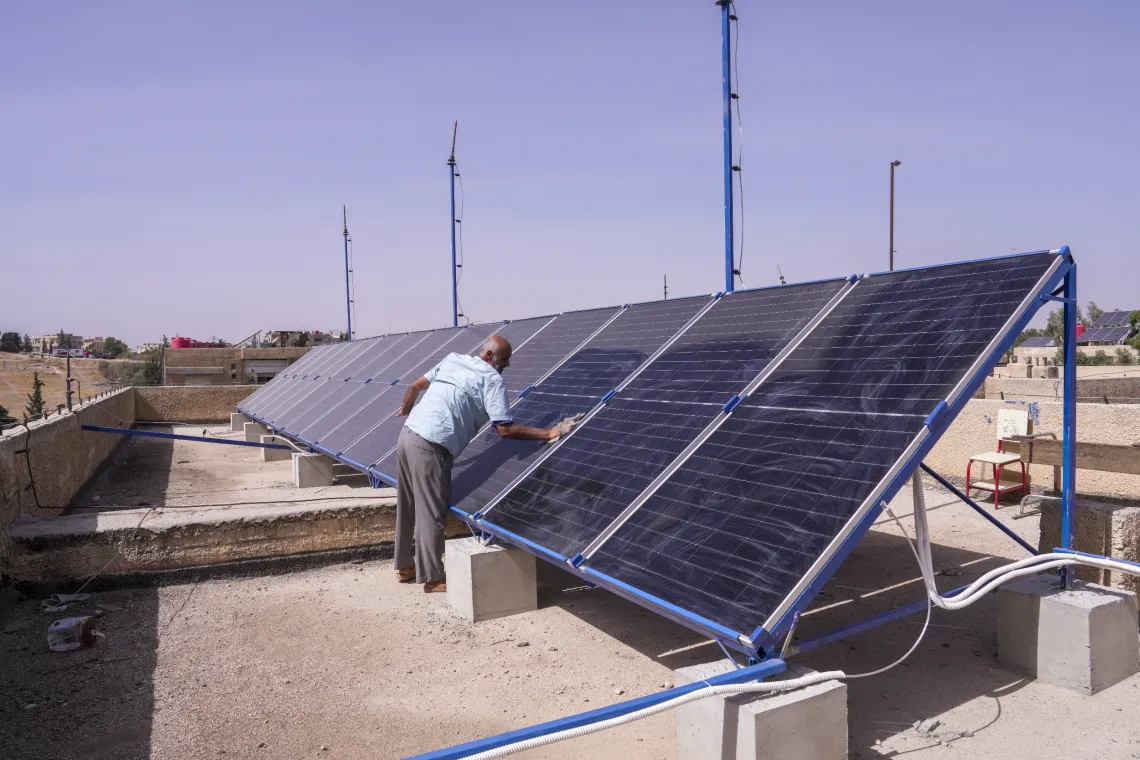
For Amal, the principal of the afternoon shift, the difference has been significant.
“The solar system has made a huge difference for us. Before, we often had no electricity, particularly during winter. The classrooms were dark, and students struggled to see what teachers were writing on the board. Now, teaching and learning have become much easier,” says Amal.
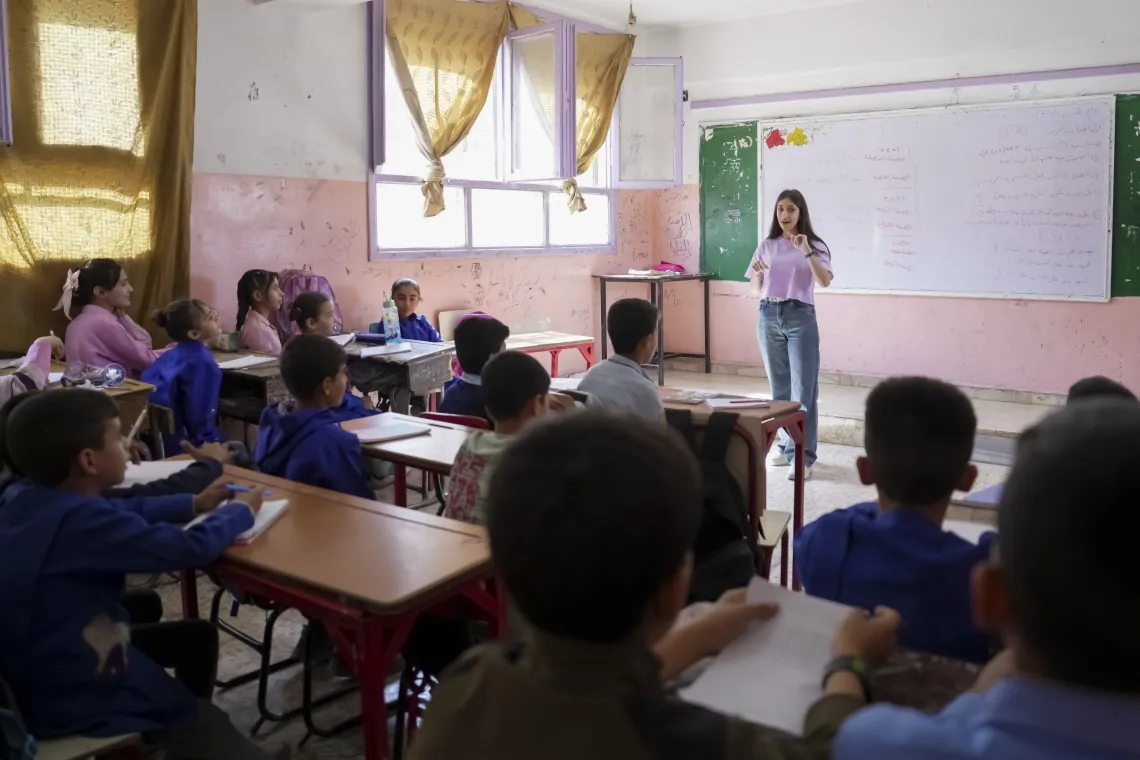
Reliable electricity has also brought other parts of school life back into use. The electric bell and public-address system are working again, helping staff organise students, make announcements and support school activities.
“The benefits go beyond lighting and fans. Now we can organise the students more easily, share announcements and give students the opportunity to recite or address their classmates. It is difficult to describe how much this has helped us,” Amal adds.
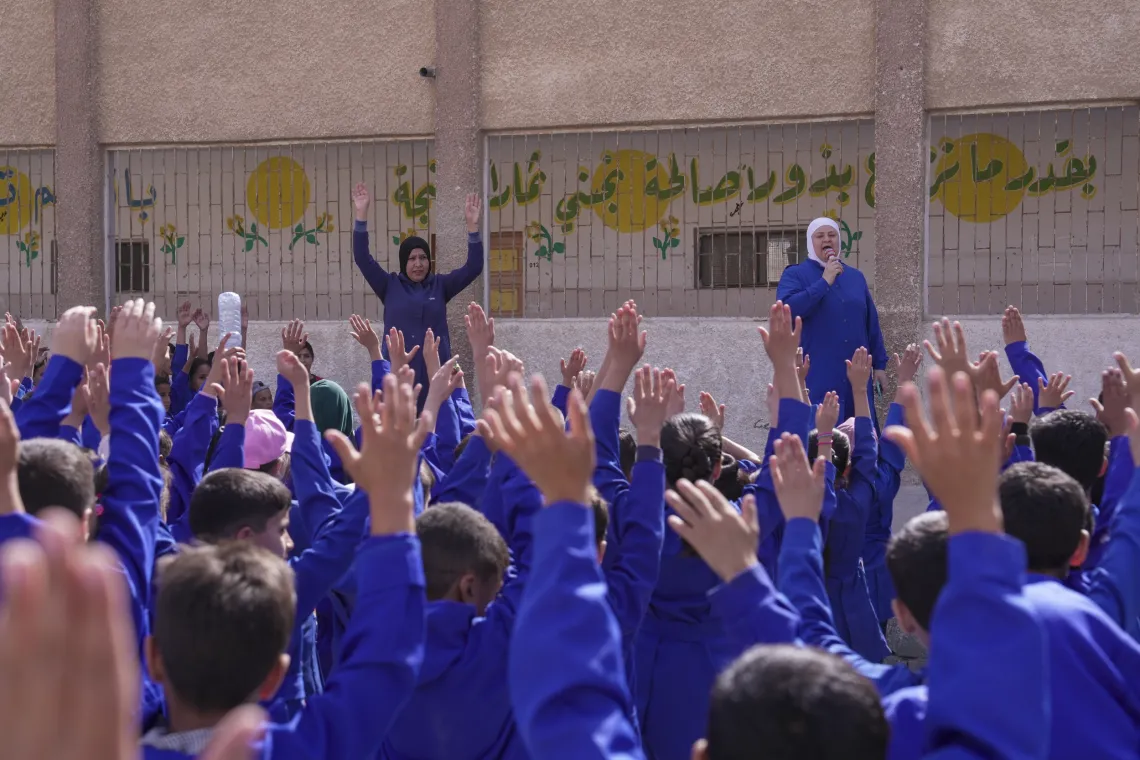
Around 750 students currently attend the afternoon shift at the school, including 100 children enrolled in Curriculum B classes. Curriculum B is an accelerated learning programme supported by UNICEF that helps children who have missed out on education catch up with their peers.
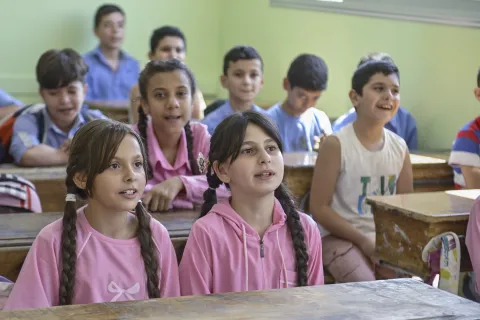
For 11-year-old Mirna, the change is easy to see. “School is more comfortable this year. We have light in our classrooms, and the fans are working,” she says.
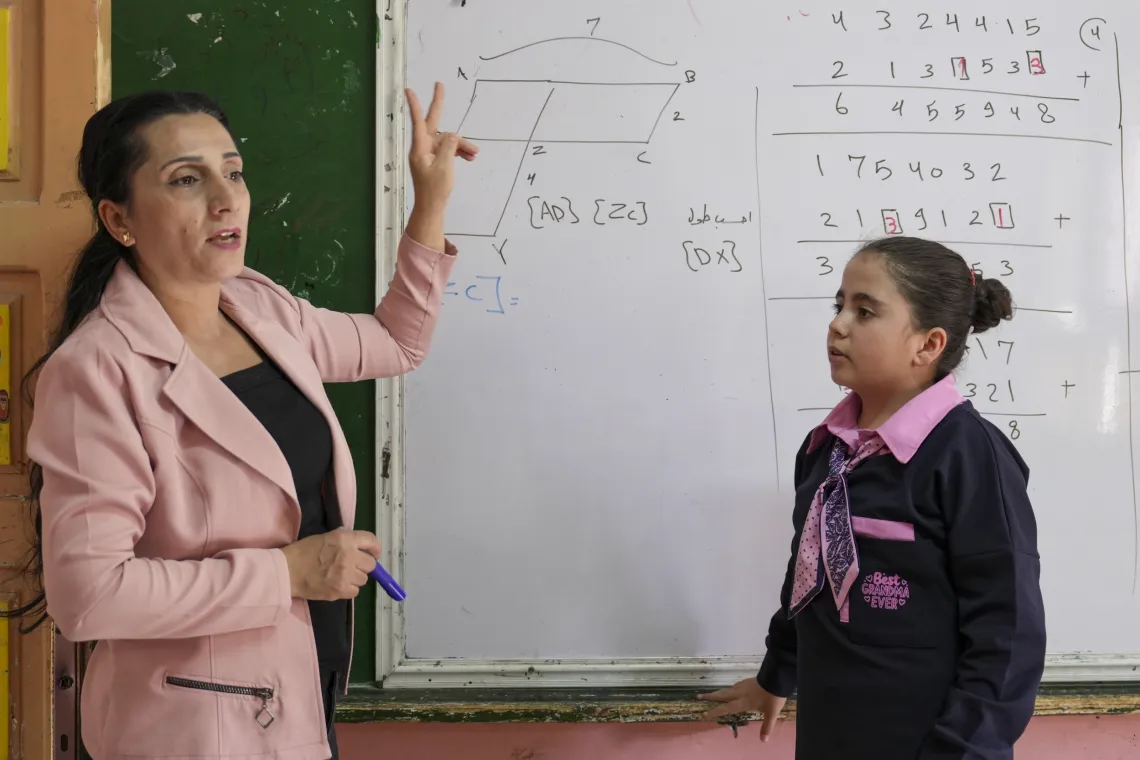
The school is one of five where UNICEF, with support from the UNICEF National Committee in Spain, has installed solar power systems in five schools, three in Rural Damascus and two in Dar’a.
The systems provided electricity for classroom lighting and other essential school functions. In some schools, they also support equipment such as printers, administrative computers and computer laboratories.
By helping schools maintain reliable electricity throughout the day, solar power is creating better conditions to learn, participate and make the most of every school day.