A lifeline for returning families in Yarmouk Camp
UNICEF supports children and women with life-saving health and nutrition services as families return, recover and rebuild their lives

Yarmouk Camp, Damascus – In Yarmouk Camp in Damascus, hope is slowly taking root again after years of conflict and displacement. Once the largest Palestinian refugee community in Syria, the area is now seeing families gradually return to their homes, determined to rebuild their lives despite the widespread destruction that has affected their neighbourhood.
As more families return to Yarmouk, access to quality health and nutrition services remains essential, particularly for children, pregnant women and new mothers.
In March 2025, a UNICEF-supported health and nutrition centre opened in the community, bringing integrated services for children and women together under one roof.

UNICEF/UN0887877/Johnny Shahan

UNICEF/UN0887876/Johnny Shahan
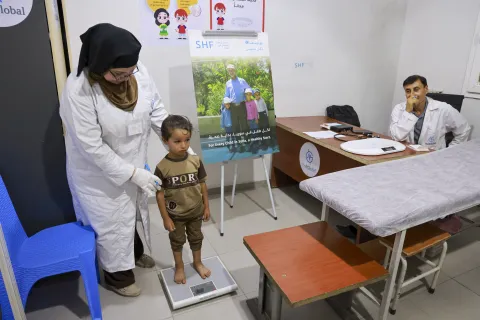
Ali, 8, undergoes a height measurement during a nutrition screening.
"I was so happy when the doctor told me I had grown since my last visit. I can't wait to come back and see how much taller I get."
Ali, 8

UNICEF/UN0887882/Johnny Shahan
Ali, 8, and his mother, Dima, listen as Marwa, a paediatrician, provides guidance during a consultation at a UNICEF-supported health and nutrition centre.
"I have three boys, and whenever they are unwell, this is the place I trust to bring them for care. The support we receive here gives me peace of mind and helps my children recover and stay healthy."
- Dima, mother
At the centre, children receive regular health check-ups and nutrition screenings, helping identify malnutrition and provide timely treatment. The facility also distributes life-saving nutrition supplies, including preventive and therapeutic supplements for children, pregnant women and breastfeeding mothers, helping prevent and address malnutrition before it becomes life-threatening.

UNICEF/UN0887878/Johnny Shahan
Rawaa, a health educator, conducts an individual awareness session with Heyam on the benefits of breastfeeding.
"As I enter the ninth month of my pregnancy, these sessions are helping me prepare for my baby's arrival. I am learning how to give my child the care, love and nutrition they need to grow healthy and strong."
- Heyam
For women and mothers, the centre offers maternal and reproductive health services, with a focus on antenatal and postnatal care. Throughout pregnancy and breastfeeding, mothers receive the support they need to protect their own health and give their children the best start in life.

UNICEF/UN0887871/Johnny Shahan

UNICEF/UN0887872/Johnny Shahan
Marwa, a paediatrician, examines Nour, 9 months.
"During my pregnancy with Adam, I regularly visited the centre for check-ups and received essential vitamins. Today, it fills me with joy to bring him here for his very first visit. The care and support we received during my pregnancy continue now as he begins his own journey in life."
- Ithraa, mother

UNICEF/UN0887873/Johnny Shahan
Marwa, a paediatrician, measures baby Adam’s weight during a health check-up.
"Every child has the right to timely, quality healthcare that supports their healthy growth and development. Through regular check-ups, early screening and timely care, we can help children get the best possible start in life."
Marwa, paediatrician
The centre also provides individual and group awareness sessions that promote positive health and nutrition practices. Mothers and caregivers learn about breastfeeding, complementary feeding, maternal nutrition, hygiene and infant and young child feeding (IYCF) practices, gaining practical knowledge to support their children's healthy growth and development.

UNICEF/UN0887880/Johnny Shahan

UNICEF/UN0887870/Johnny Shahan
A health worker conducts a nutrition screening for Nour, 9 months.
"I always bring my grandchildren to this clinic. The health workers are kind and caring. They always take the time to answer our questions."
- Maysoon, grandmother
UNICEF/UN0887872/Johnny Shahan
Marwa, a paediatrician, examines Nour, 9 months.
"There is a growing need for services like ours as more families return to the area and access to healthcare remains limited, particularly for children. Our goal is to ensure every child receives the care they need to grow and thrive."
- Marwa, paediatrician
To further strengthen access to care, UNICEF provides essential medicines for children and women, helping remove one of the most common barriers faced by vulnerable families.
As families continue to return to Yarmouk, this UNICEF-supported centre is helping restore vital health services, strengthen community resilience and support families as they rebuild their lives and look toward the future.
In Syria, since January 2026, with support of the Government of the United States, UNICEF reached more than14,600 children and approximately 7,200 women in Palestinians communities across Syria with health services. More than 5,000 children under five years and over 1,500 pregnant and lactating women were screened for malnutrition and those in need of treatment were recommended the needed nutrition supplies. Health workers provided nearly 3,900 caregivers with individual consultations and group awareness sessions on infant and young child feeding, hygiene practices and keeping safe from communicable diseases.