“This vaccine will bring back hope for us all”
Meet our experts - Keang Sok, Supply Officer with UNICEF Cambodia, on what the arrival of the COVID-19 vaccines means for her community and the country.

How did you feel when the first COVID-19 vaccine doses landed in Cambodia?
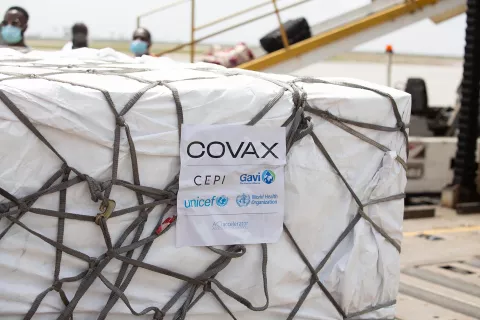
It was an extremely exciting moment. For me, my family and community. It was a symbol of hope. This vaccine will help keep communities safe, help us bring back the economy, open schools for children and allow them the freedom to play like before.
Currently, because of the school closures, children have had to do distance learning and have missed the opportunity to interact with their friends and teachers. This vaccine has brought hope for us all. We can have the freedom to travel and visit our friends and family while we continue to follow public health measures such as mask wearing and social distancing.
How are you involved in the ongoing roll-out of the COVID-19 vaccines?
Since 2020 and the onset of the COVID-19 pandemic, we have been extremely busy supporting the delivery of supplies for both regular programming and the COVID-19 response. Working closely with the Health Programme Section, we support our Government counterparts on supply and logistics arrangements, helping determine potential issues and bottlenecks and solve these.
For example, we identified a lack of capacity in cold storage. There is limited space in existing cold facilities for vaccines and most is already used for routine childhood vaccines. When larger quantities of the COVID-19 vaccines start to arrive, there may not be enough space in the cold room to store them. To solve this, UNICEF went to market to identify companies that have the capacity to offer cold storage as well as transportation within Cambodia. Now, the long-term agreement has been finalized and signed and the country is well prepared to receive vaccines when more become available.

What makes COVAX unique compared to other major missions or projects you have been involved in with UNICEF?
I could tell that this was something unique when I went to the airport to receive the COVID-19 vaccines. When you go to pick up routine vaccine deliveries, you do not see Government delegations, donors, or every single media in the country. Every TV channel was live-streaming the vaccines’ arrival! Also, it impacts every single person in the country so everyone is anxious to know when the vacancies are getting here, how they will be delivered. It is the largest and the fastest supply operation in the history of vaccines, and so it demands a lot of planning, coordination, and cooperation with different stakeholders. This has been crucial to ensure that everyone is well informed and well prepared to help receive the vaccine and start the roll-out successfully.
[The COVAX Facility] is a critical and life-saving mechanism, and I hope people will remember this.
What is the biggest challenge you are facing in rolling out the COVID-19 vaccines?
The demand and the ability to supply the vaccines are not compatible, there are currently not enough vaccine doses available. The low supply has also made it difficult to provide an overview to the Government of when the next shipment is expected. Which means the country cannot yet prepare a plan for how to receive the upcoming vaccines.
In 20 years, how would you like people to tell the story of the COVAX Facility to children and young people?
I would like for people to remember that the COVAX Facility provided life-saving vaccines to my country, a lower middle-income country, helping with funding and building countries’ capacity to receive and distribute the vaccines.
Through the COVAX Facility, as UNICEF, we ensure that a fair share and allocation of vaccines go to low- and lower middle-income countries. This is the most important part of COVAX. Without it, I cannot imagine how countries without their own resources or money could buy the vaccines for their people. I cannot imagine how low-income countries could get the vaccine into their countries. This is a critical and life-saving mechanism, and I hope people will remember this.