From waste to livelihoods, ‘ReChas’ take recycling to the next level
In Cape Town’s Mitchells Plain township, young ‘Recycling Champions’ (ReChas) are educating and incentivizing the community to divert waste from landfills, improving the local environment and economy at the same time.
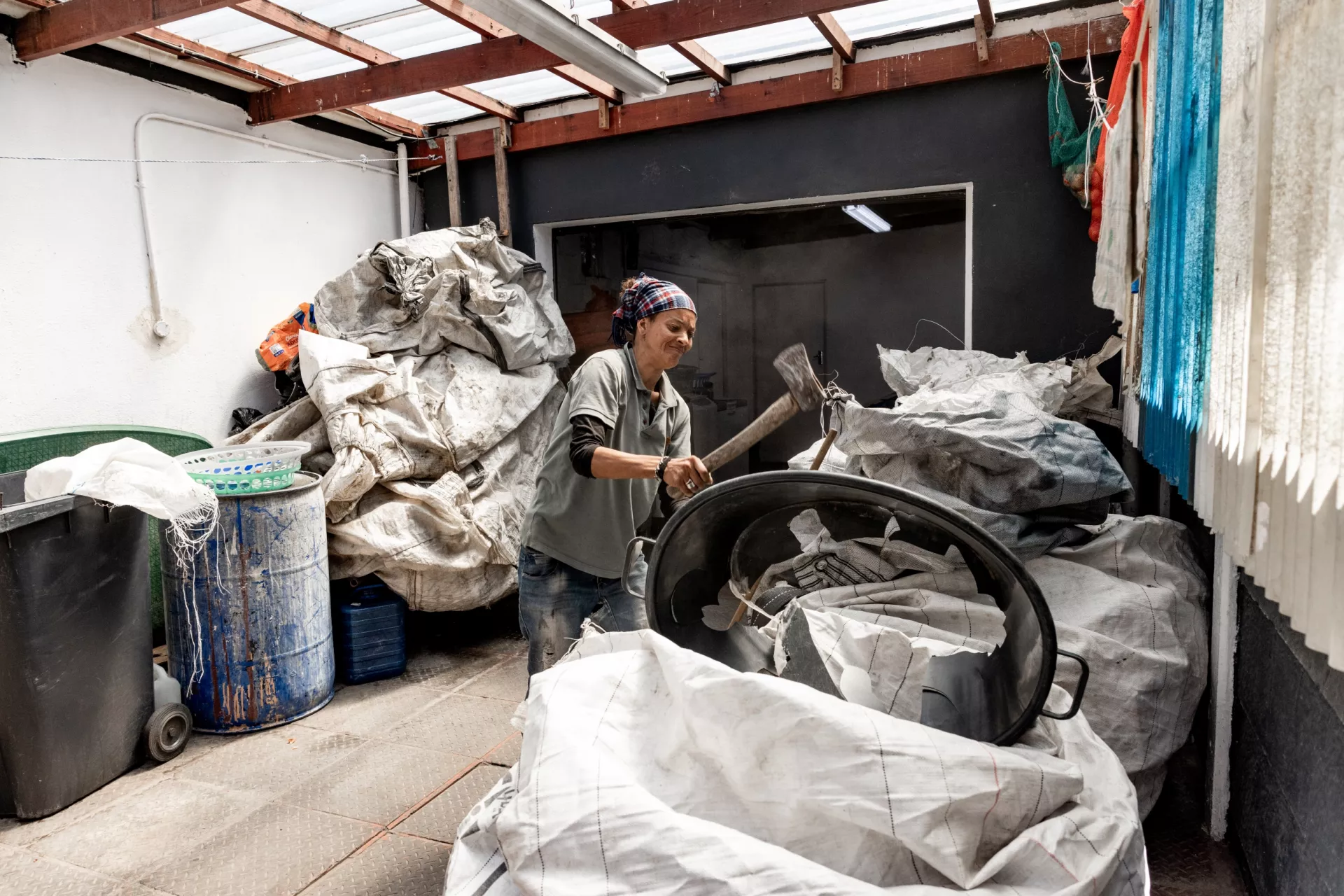
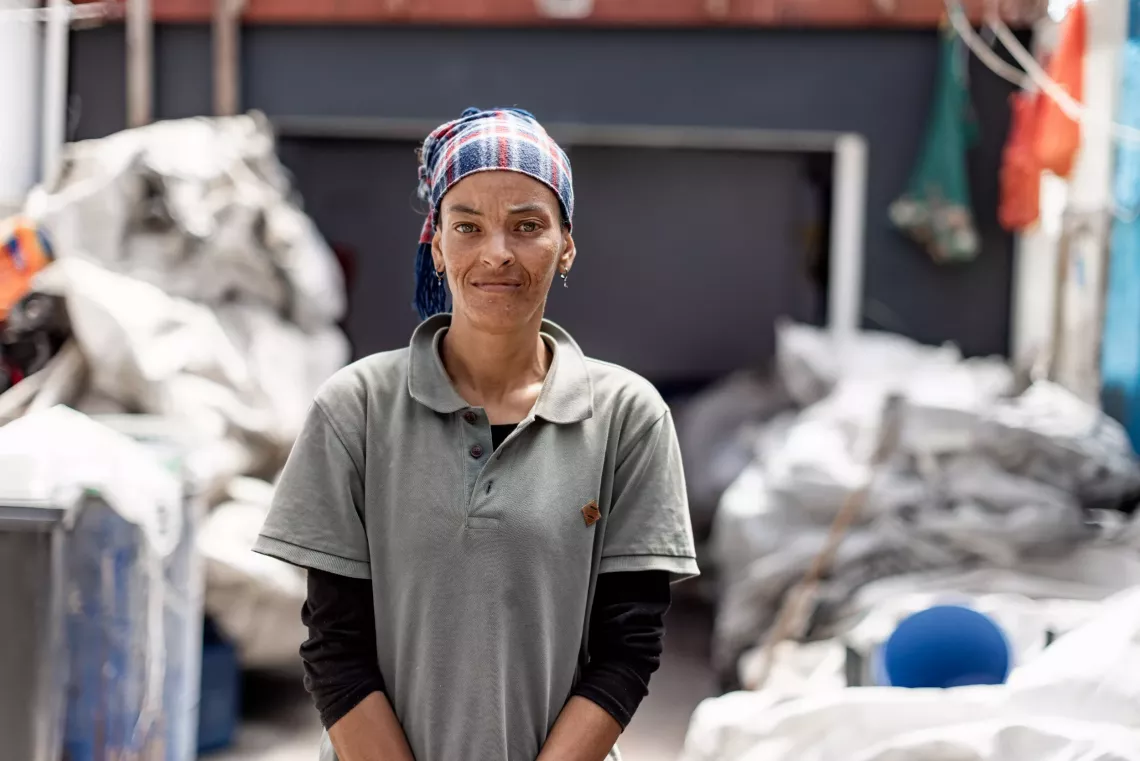
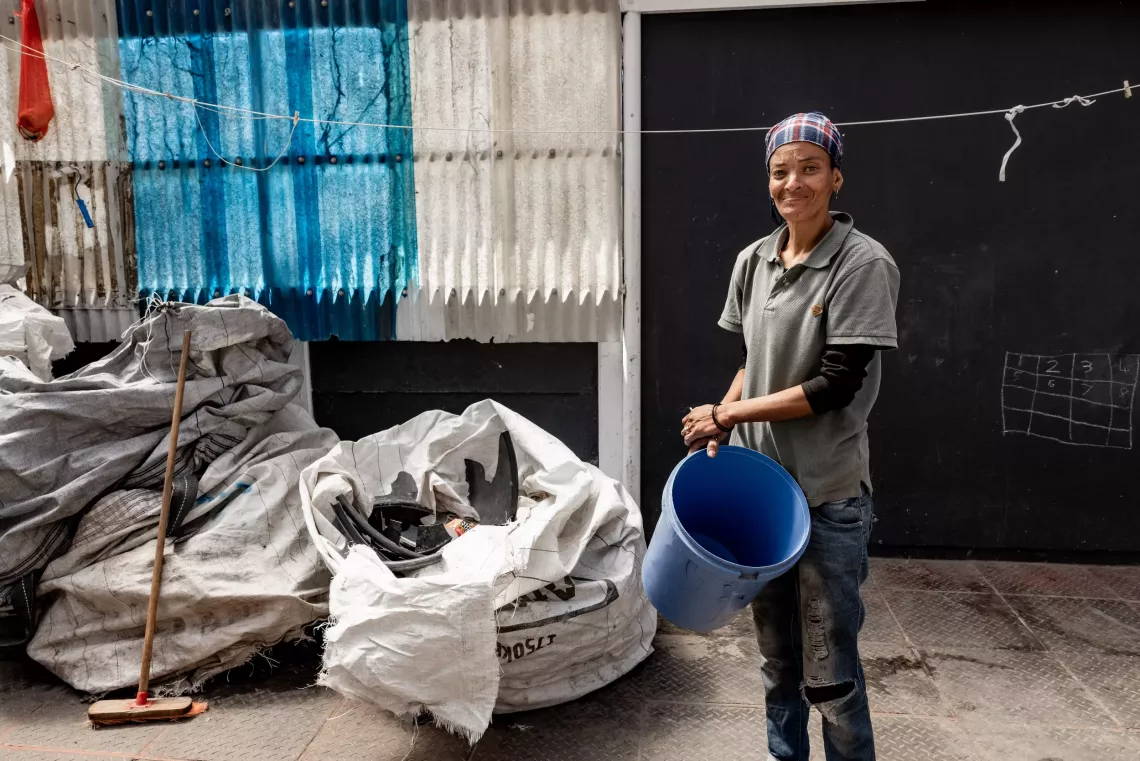
In the yard of a Mitchells Plain home, Shevon frantically swings an axe at a large plastic bucket. “This is why I love my job, it’s good for my mental health as well,” says the 38-year-old mother of two, as shards of plastic fly off into a large polyester trash bag.
After years working as a waste picker across one of Cape Town’s largest townships, Shevon is now an assistant to one of thirty ‘Recycling Champions’ (ReChas) sorting, preparing, and selling selected waste for recycling. “Plastic and aluminium take years to decompose, you have to care about the space you’re living in,” she says.
Shevon now receives a regular stipend selling the recyclables on to a third-party who further prepare the waste for export, upcycling, and re-use. In the process, she’s improving the environment and not only her own well-being but that of her children. “My son came to me asking for new clothes for his Matric (exam) celebration and I was able to help him buy a suit,” she states proudly.



Environmental, economic, and social impact – a holistic approach
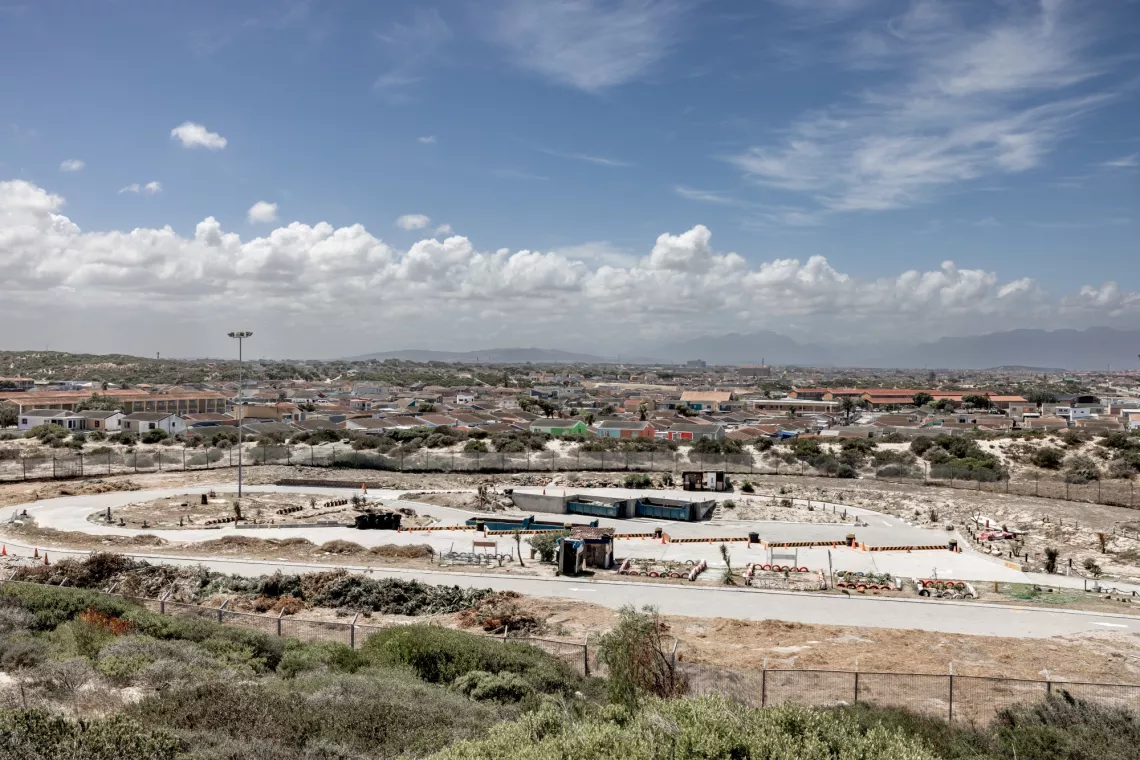
Born and bred in Mitchells Plain, Zach leads the project from the RLabs base in the heart of the community. “We’re trying to address environmental and social aspects together,” he explains. “So, we came up with a model and idea to look at how we get households to really start recycling and to divert more waste-at-source from landfills that can’t cope,” he adds.
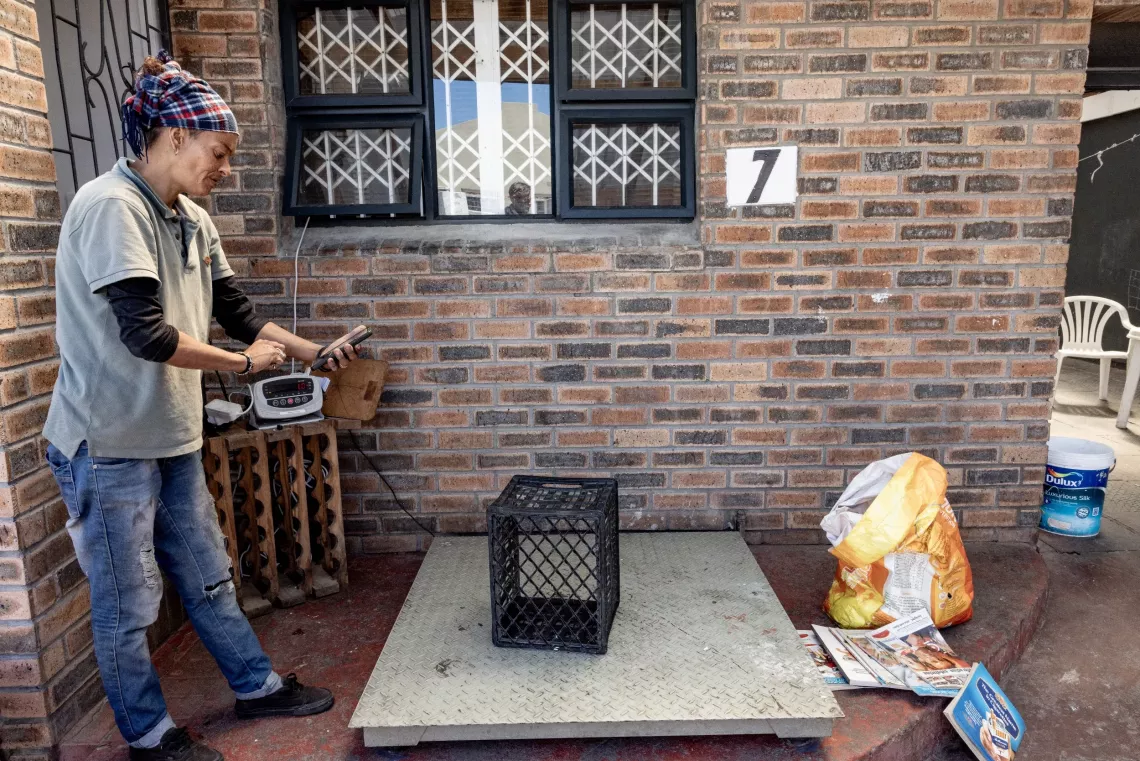
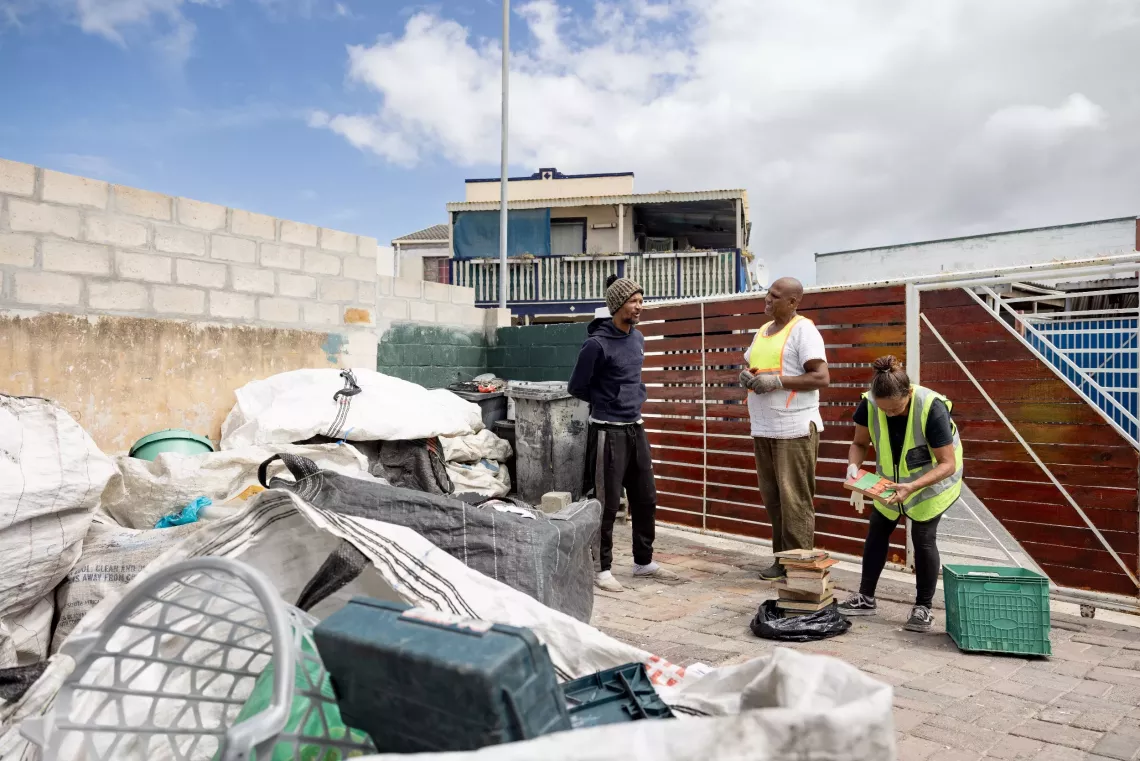
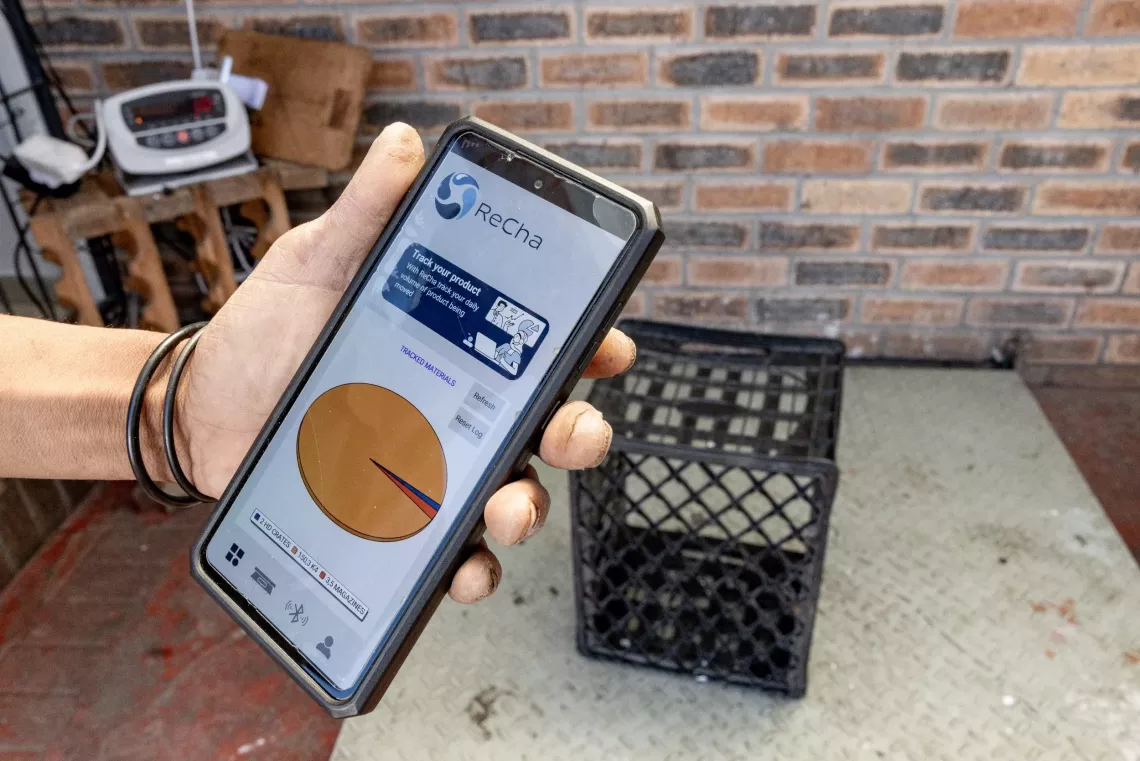
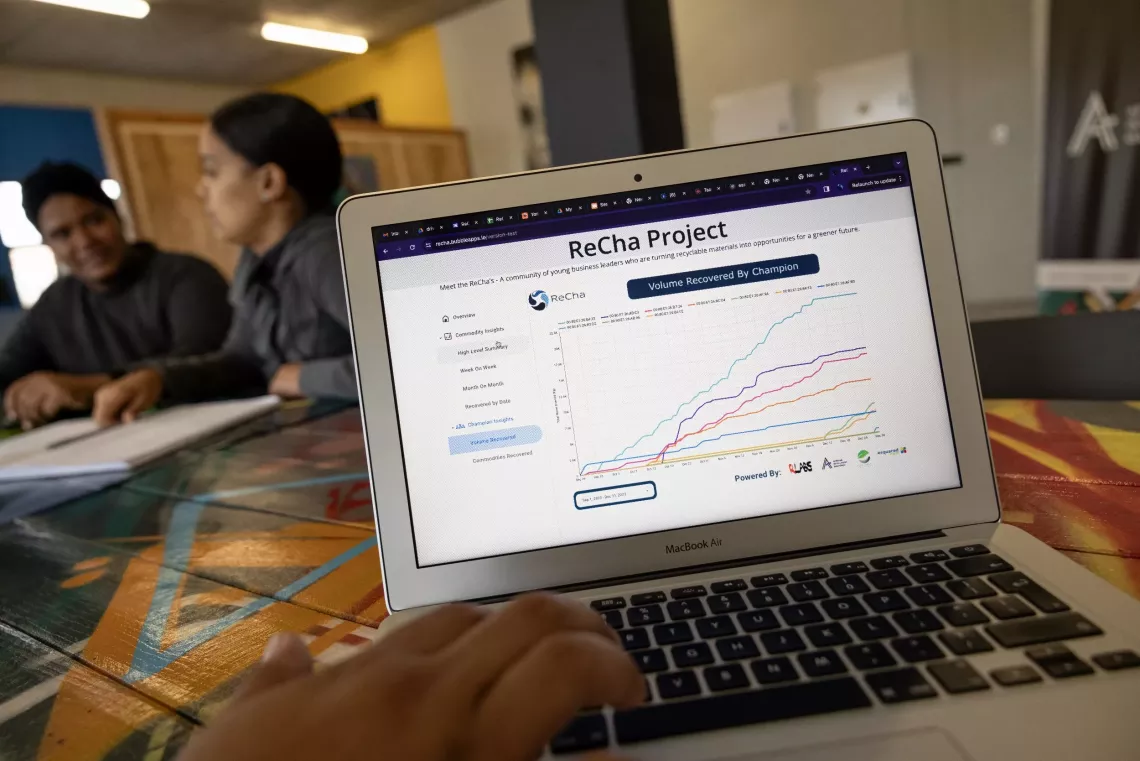
The ReCha programme was the result and now provides local youth with business training, operations support, and education about recycling potential. The ReChas are kitted out with specially designed scales, including a mobile app and hardware built in to record the amount and type of waste collected at source. This helps to prepare the waste for upcycling and to calculate how much is owed to the waste pickers, or anyone, who turns up to drop off recyclable waste.
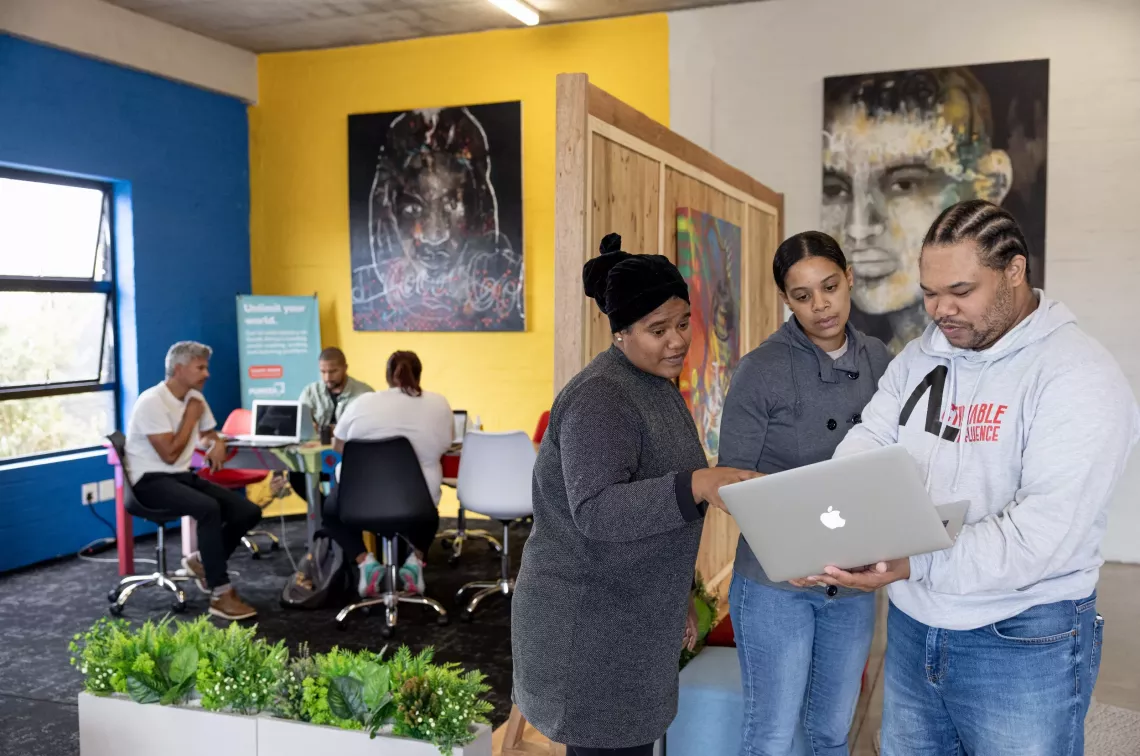
“The ultimate goal is to bridge the gap in the recycling and waste management sector in South Africa. We look to increase recycling rates, reduce waste in landfills, lower greenhouse gas emissions, promote local economic growth, but more importantly to us improve livelihoods,” says Zach.
Shevon is one of the older ReCha assistants and came equipped with knowledge about the recycling environment from her years as a waste picker. But the project draws in a range of young people eager to play their role in nurturing the environment and their entrepreneurial mindsets. “Just a smile and an eagerness to learn, gives them access to our ReCha opportunity,” says Zach, when asked about the competencies needed to become a ReCha.
Taking ReChas to the next level
The project’s unique approach in empowering the local community helped it win the UNICEF and imaGen Ventures, ‘Sustainability Innovation Challenge’, that rewards green initiatives globally with seed funding to continue advancing their innovation.
Improved logistics and efficiency are the result for the ReChas. “The cost of fuel is high, and we need an additional trailer to take the trash to the third-party,” Zach explains, describing how the ZAR200,000 reward will support their operations.
There are also grand plans for the programme moving forward. “The goal now is to establish sixty ‘ReCha Nodes’ across the area, scaling-up from ten that currently exist, since the project started in September 2023,” he says, referring to the yards or spaces where the recyclable materials are collected. “Our audacious goal is to get a material recovery facility up and running,” he adds, which would mean not only collecting but also preparing and selling on the recyclable waste for a new life.



The green economy in action
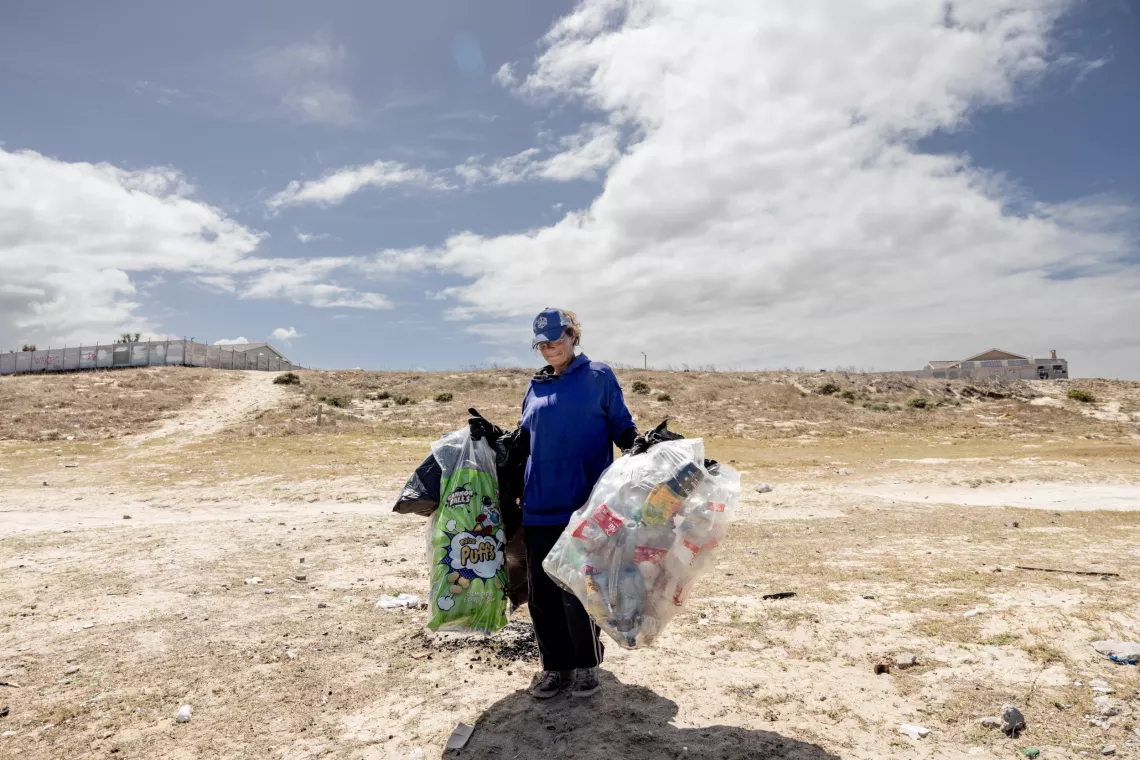
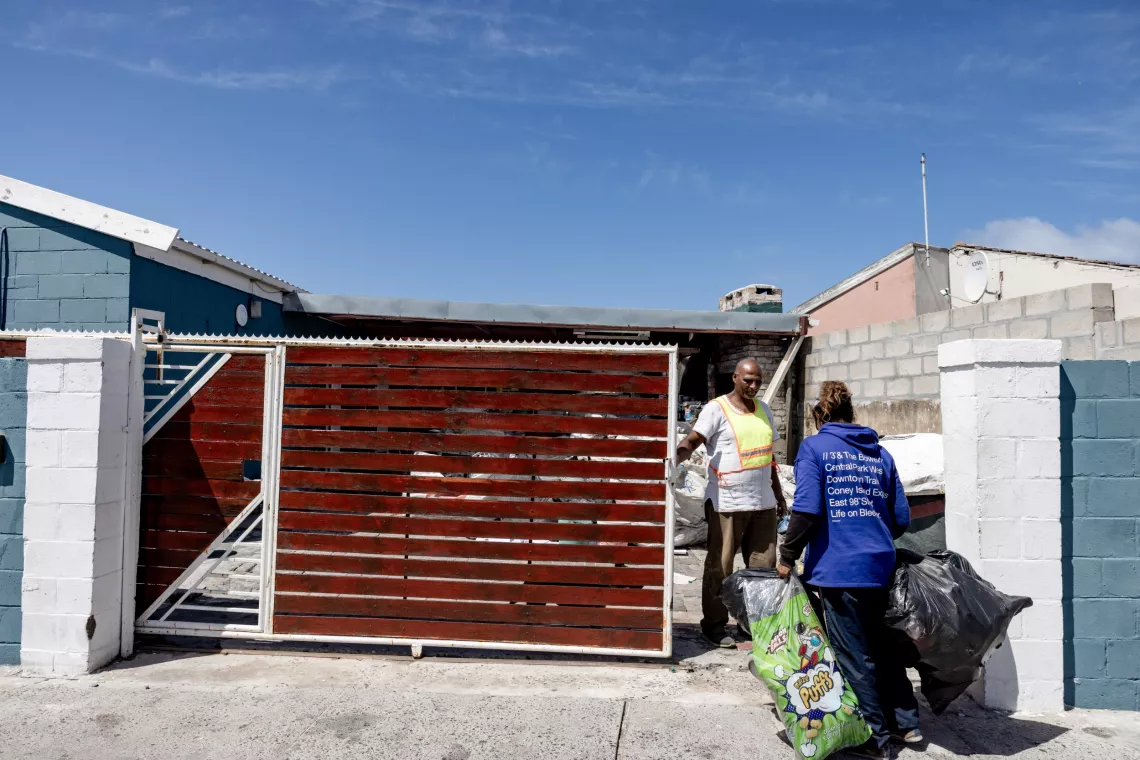
A short drive away from the yard where Shevon is working, Muna, a local waste picker, appears from over a hill carrying two trash bags. She’s heading to a ‘ReCha Node’ to trade in her recyclables. It’s where 28-year-old Shandre lives, described as a “champion of ReChas” by Zach for diverting about 27,000 kg of waste from landfills since last December.
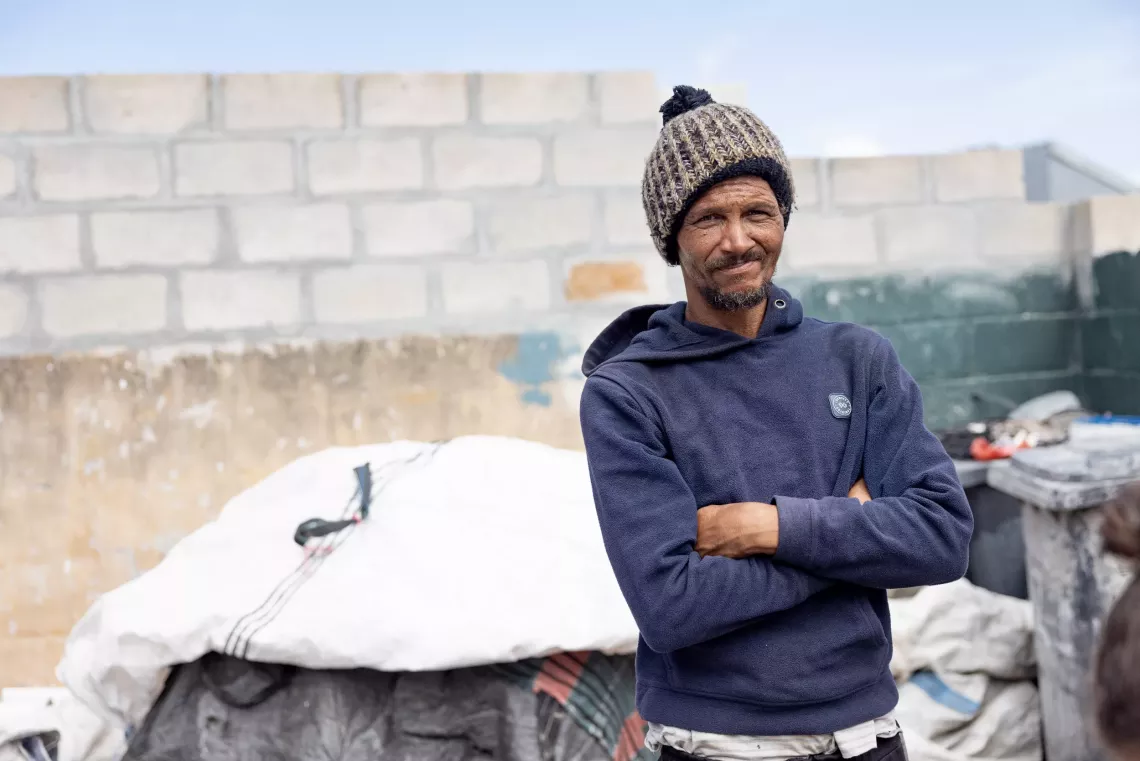
She’s out collecting her children from school, but Calvin, a fellow ReCha is there, and he weighs the trash. “This paper here is too wet,” he explains to Muna as he re-calculates the payment and hands over cash. This is the green economy in action on the ground where it’s making a difference.
“During December [school holidays], we encouraged all the young ones with school books to recycle if they couldn’t be used and to collect cans, it was so rewarding they can get pocket money and it keeps them doing something constructive – telling our people that there is a better way than gangsterism,” says Calvin, referring to the high rates of violence in the area.


The green economy could play a critical role in helping to tackle South Africa’s infamously high youth unemployment rate. A UNICEF South Africa U-Report poll in late 2021 showed that 85% of young people who responded were hopeful to some degree that the green economy could be a source for future work. According to the International Labour Organization (ILO), some 100 million jobs worldwide could be created in the sectors of sustainable energy and circular economy by 2030.
That’s why UNICEF’s global ‘Green Rising’ initiative is bringing together public, private and youth partners to mobilise millions of young people – at a grassroots level – to become climate champions by volunteering on environmental issues, advocating for climate action and being skilled for and taking jobs in the green economy.


“In the beginning, I was like what am I getting myself into,” says Zach, reflecting on the rapid progress of the ReCha programme. “But as time went on, I kept learning, reading up on research to understand what’s going on with recycling, the circular and green economy, my heart is here,” he adds.
Since it was established in 2018, imaGen Ventures has provided young people in 60 countries with entrepreneurial skills to catalyse social and environmental impact and economic growth to create a more sustainable future. This has been possible thanks to Accenture’s generous support, including to South Africa.