Reaching across borders to save the lives of newborn babies in Rwanda
Through a UNICEF partnership with specialists from the United Kingdom, doctors and nurses in Rwanda are building skills and learning to use new equipment so they can better care for infants and mothers.

- English
- Kinyarwanda
MUHIMA, KIGALI, Rwanda - Imagine you are a nurse working in a small hospital. It is crowded, with too many patients and too few doctors.
You are about to help a young mother give birth to her first baby. The baby has come several weeks too early, and you know this will be a risky delivery.
During labour, something goes wrong, and you must act quickly to save the life of the mother and her child. You are frustrated, unsure what the problem is. Your hospital lacks the medical equipment you need to take action.
Too often, doctors and nurses in Rwanda are not strangers to situations like these. In Rwanda, over 40 per cent of children who do not survive until their fifth birthday are within their first month of life. Doctors and nurses often lack the training and equipment to identify problems, and to save the baby’s life if something goes wrong.
Dr. Friyana Mackenzie and Kimberley Shepherd are paediatric specialists from the United Kingdom and are part of the first cohort of neonatal mentors in Rwanda. Recruited through UNICEF Rwanda’s partnership with the Royal College of Paediatrics and Child Health in the UK, these mentors spend six months working alongside Rwandan doctors, nurses and midwives, transferring invaluable skills. UNICEF also facilitates the placement of the mentors, choosing hospitals with a high case load of deliveries.
“We work very closely with the doctors and nurses every day, teaching them how to resuscitate, stabilise, and care for newborn babies,” adds Kimberley.

“We have learnt to recognise a baby who is very sick. The mentors have also taught us the best and fastest interventions to save the baby’s life.”
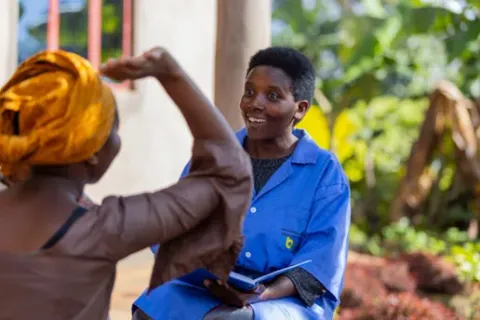
Valentine is not only a neonatal nurse, but one of the first trained “champions” of the clinical mentorship programme. As a steadfast mentee of Dr. Friyana and Kimberley, Valentine is now equipped to commute her knowledge and skills to other Rwandan health care professionals, creating a ripple effect of amplified ability to save lives.
The champions will continue the training that Dr. Mackenzie and Ms. Shepherd have delivered to help make the project sustainable.

But mentorship alone cannot save lives. Private sector companies, such as Takeda Pharmaceuticals through the Japanese Committee for UNICEF, are supplementing the mentorship programme by providing essential medical equipment to hospitals in need. This equipment, such as machines for monitoring vital signs like pulse and respiration, bridges the critical gap between having knowledge and the ability to put it into practice.
“To have a national impact, this project needs to be expanded to include additional hospitals. We need more volunteers, and more medical equipment for hospitals,” says Maharajan Muthu, Chief of Health at UNICEF Rwanda. “But for now, we are delighted to see the positive impact the volunteers have made so far.”
When asked if she has noticed improvements from the programme, Valentine is assertive. “We have really moved to another level of care.”