Devoted Community Health Workers Fight Polio Vaccine Misinformation
Engaging Dedicated Community Health Workers as a Pillar for Successful Polio Vaccination Campaign in Rwanda

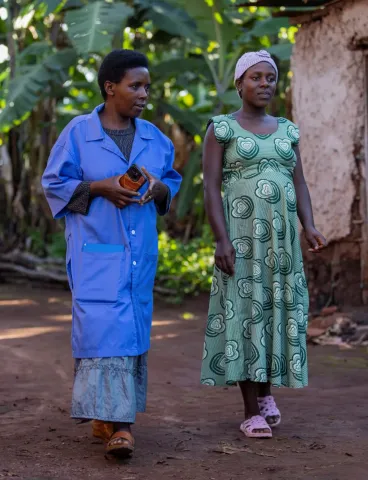
Amid relentless walks across steep hills, enduring rain, and covering extensive distances, tireless Community Health Workers (CHWs) diligently visited households, ensuring every child within the targeted age group received the vital polio vaccine drop. These CHWs initiated a heartening ritual of exchanging hugs and joyful greetings at the day's end, marking an unprecedented level of dedication to the vaccination campaign.

Nsabimana Alphonse, 57, a CHW at Nyange Health Center in Musanze district, serving Gasoroza village, felt fatigued yet immensely proud after a day of mobilizing the community.
Reflecting on his efforts, he sighed, "From dawn till dusk, we mobilize the community, navigating streets, visiting homes, through markets and parking lots; it was an arduous day, and finding children at home was indeed challenging."
Despite challenges, Alphonse's perseverance yielded results. "Some families staunchly refused vaccination, but today I successfully convinced and covered five families who initially declined," he shared, recounting how he used a personal story to sway hesitant parents. "I shared the story of my sister, Murekatete, who was crippled by poliomyelitis when she was a child. This narrative struck a chord, making them wary of Polio as a real threat that could affect their children."
UNICEF, in collaboration with Rwanda Biomedical Center and partners, trained Community Health Workers in risk communication and community engagement before the campaign commenced. The risk communication strategy spanned all 30 districts of Rwanda.
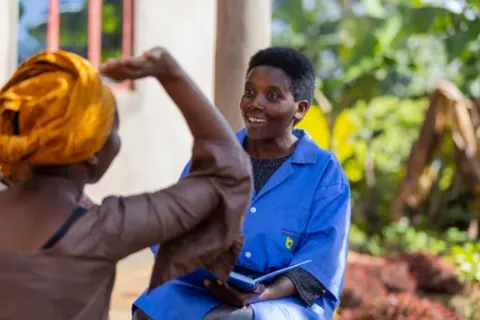
These CHWs emerged as the most trusted community figures, utilizing their relationships to provide essential services, support, and care. Leveraging social media and door-to-door visits amplified the dissemination of crucial information.
Olivier Murara, the CHW Supervisor from Ruhengeri Referral Hospital in Musanze District said: “We heavily relied on CHWs to provide comprehensive coverage to many communities”.

Recognizing the significance of an informed populace for vaccination success, concerted efforts engaged all stakeholders to mobilize and educate communities. Social mobilizers, from national to decentralized levels, played a pivotal role in widespread awareness, complementing technical preparations for an effective campaign.
Nyiramana Annonciate, 28, a mother of two under 7, initially hesitant, allowed vaccination in the second round after CHW persuasion. "I didn't prioritize vaccination due to fears of its adverse effects, but after the CHW explained its crucial role in preventing polio, I consented this time," she explained.

Contrary to the first round, an extended team involving District Health Promotion Officers, Health Promotion and Supervision Division, and Technical Working Group supervisors played a pivotal role in supportive supervision during the second round. Using Open Data Kit (ODK) for monitoring Supplementary Immunization Activities (SIA), results indicated a decrease in reluctance to vaccinate from 225 households in the first round to 147 in the second, mainly due to a 3% decline in religiously motivated refusals.
CHWs played a central role in reaching diverse communities and ensuring broader coverage. District Health Promotion Officers and Supervisors enhanced decentralized monitoring, utilizing vans and megaphones for critical vaccine messages.
Alphonse expressed gratitude, "I appreciate the Ministry of Health and UNICEF for equipping us with knowledge and skills. Without their efforts, convincing reluctant community members would not have been possible."
Rwanda's vaccination campaign exemplifies the power of community dedication, influential figures' involvement, and committed stakeholders' pivotal roles. Its success provides a blueprint for sustaining and strengthening responses to public health emergencies.