Learning about the world, together
Two sisters, two different rhythms, the same dream

- English
- Română
In a village in Neamț County, Elisabeta plays a toy organ with emotion. She is six years old, loves music, and is not afraid of new things or people. Next to her is her younger sister, Nadia, who is four years old and follows her everywhere. The two are very close and often play together, under the watchful eye of their mother, Cristina.
Elisabeta and Nadia live with autism spectrum disorders. For Elisabeta, the difficulties were apparent from the beginning: she spoke very little, had pronunciation problems, and difficulties understanding and integrating into a group. Only recently, with the start of therapy, has she begun to say more words, but she still cannot form sentences and is not ready to go to school. She also needs surgery to improve her speech.
Nadia, her younger sister, faces similar challenges. She also has language delays, coordination difficulties, and finds it hard to respond verbally in certain situations. Her progress is faster because she started therapy earlier, but the road ahead is long for both of them.
Their mother is a personal assistant and takes care of the girls full-time. The family is also supported by their grandmother, and the situation is even more delicate because their mother's sister, an adult woman, suffers from a mental illness that makes her dependent on the family's help. Despite all the difficulties, Cristina has never given up.
"I want them to be independent in their lives. To be able to say what they want, to manage on their own, not to depend on anyone when I'm no longer around."
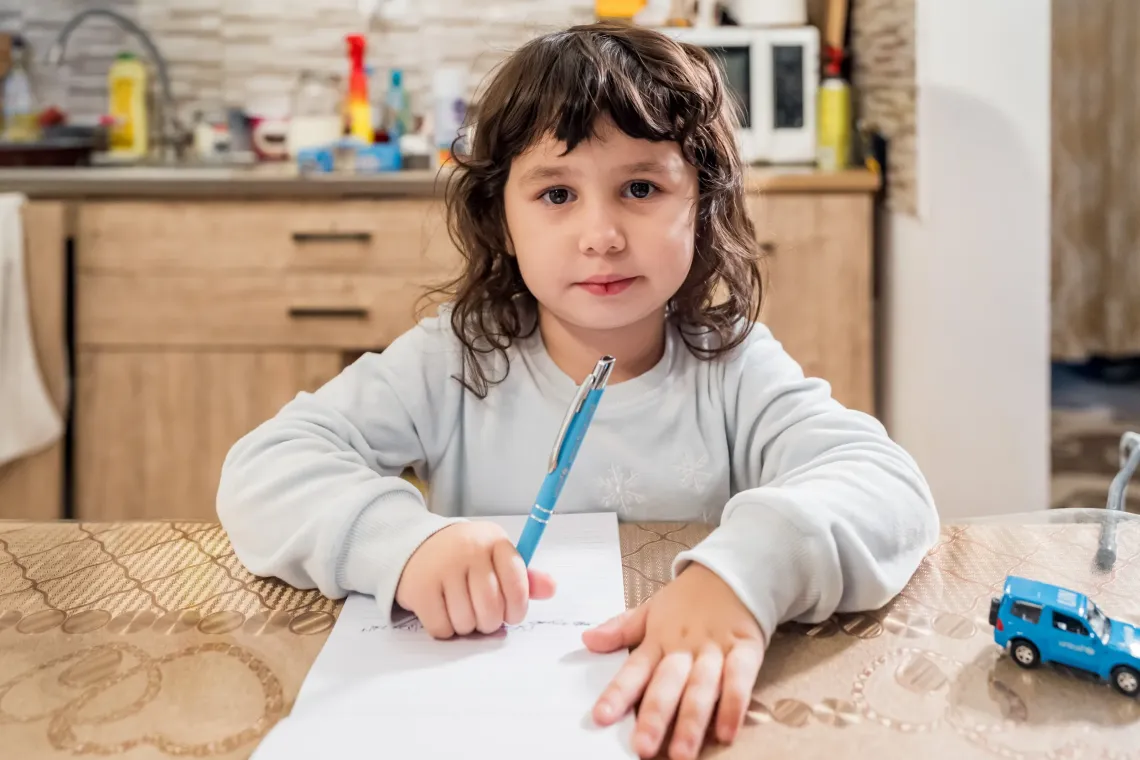
Today, Elisabeta can count to ten, write letters and numbers with her mother's help, sing the English alphabet, and has the patience for activities that require concentration. She enjoys participating in therapy, playing at kindergarten, with her sister, and with the family cat. Both girls can recover, and constant access to services is essential for their progress to continue.
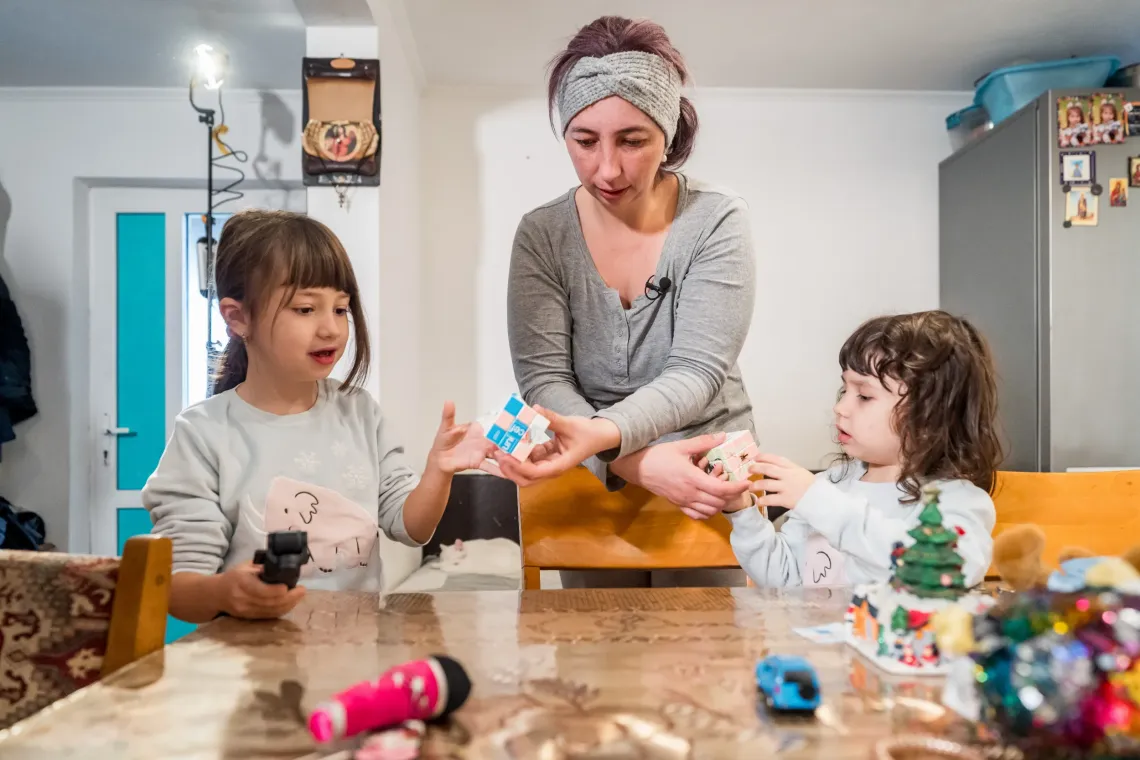
They need therapy for motor skills, coordination, and cognitive development, individual therapy, speech therapy, specialist monitoring, and adapted educational support. This will prepare Elisabeta for school enrollment. All of this means time, travel, and costs that are difficult for the family to sustain.
Dumitrița, the community social worker, is with them every step of the way. She has helped the family with the necessary documentation for disability classification and obtaining benefits, and she visits the family regularly for monitoring. This support not only gives them access to services, but also the assurance that they are not alone.
Every child has the right to be supported, to learn, and to have a real chance at a better future. The presence of social workers in rural communities, where support is hardest to come by, is essential for these rights to become a reality.
UNICEF in Elisabeta and Nadia's life
Today, you can make a difference for Elisabeta, Nadia, and other children like them. The support provided by social workers helps vulnerable families move forward and build a more secure future.
Enter now on www.elisabeta.unicef.ro and set up a monthly donation. Help Elisabeta, Nadia, and other children access the services they need with the help of social workers. Thank you!