After the Storm, a New Way to Calm
In the county of Galati, Romania, the children of a community impacted by floods learn resilience with the support of UNICEF’s MindMe kit.

- English
- Română
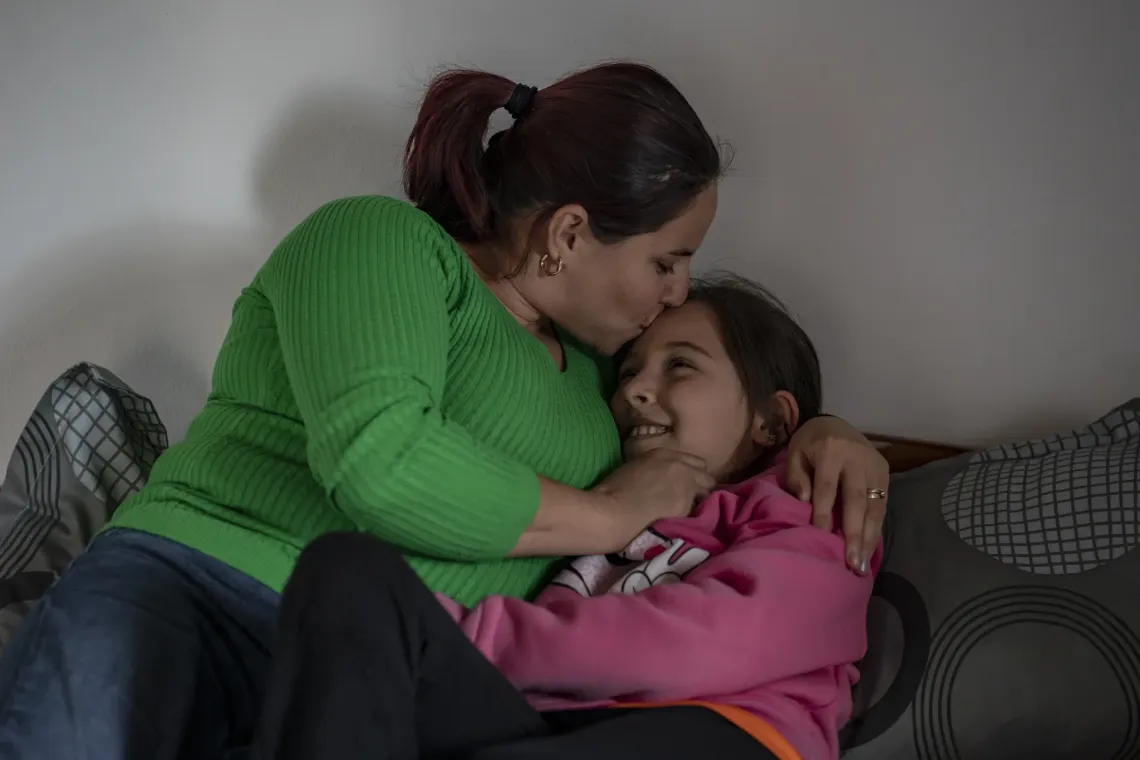
When the waters started rising, in Cudalbi, in September 2024, mother woke 9-year-old Andreea and her younger brother up and took them to stay with the neighbours. When they returned home, a week later, they dismantled the swollen furniture and threw it out. The feelings the children, and the mother, had during those days, were not so easy to let go of.
“It took more than half of a year… Even now, if it rains, they get under the blanket and put their heads against me tight,” says Gherghina, who has been doing her best to keep her children safe in a situation she has never been through before.
Anxiety is a global struggle deeply affecting children
In September 2024, unprecedented floods displaced thousands throughout Eastern Romania, and washed away homes, livelihoods and a sense of security.
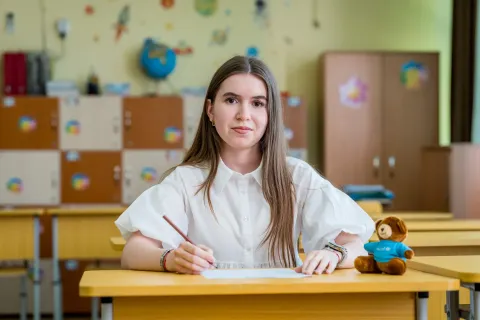
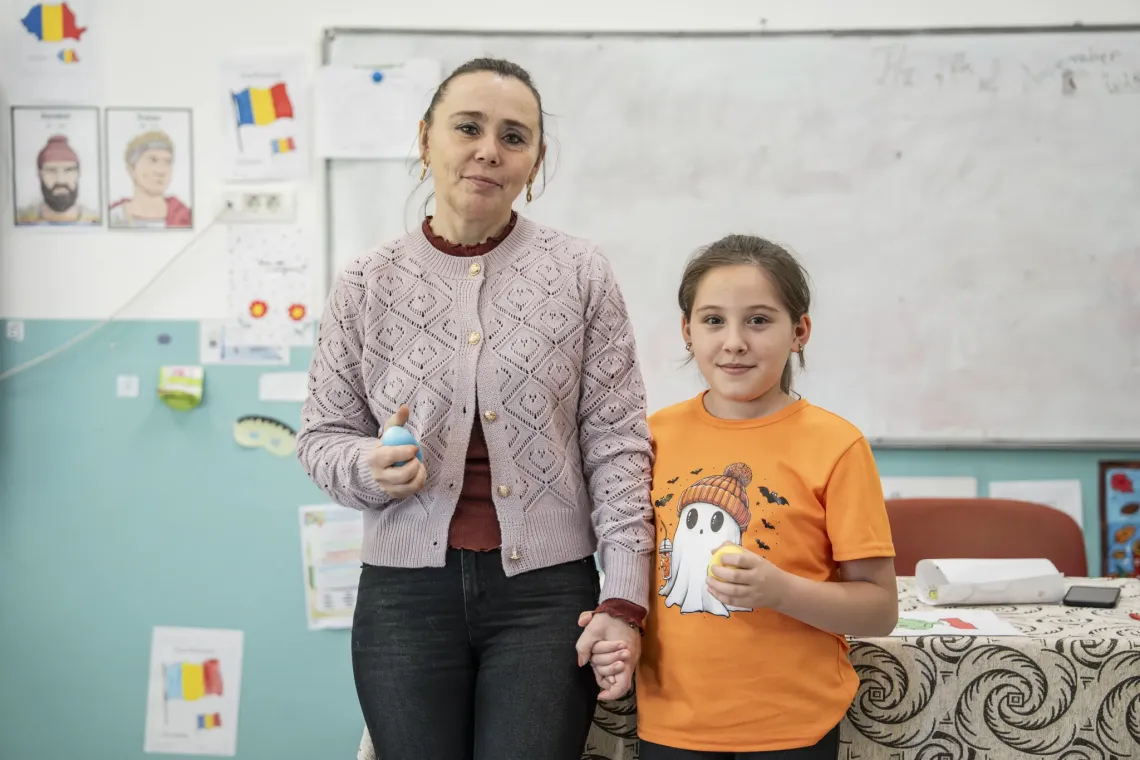
Since then, when it rains, children in Andreea’s class look worried outside the windows, ask the teacher when it will end and if she knows where their parents are. “It has been very hard emotionally. We do our best to overcome this emotional obstacle. Generally, every rainfall we have the same problem. Even I have the same problem,” says Andreea’s teacher, Mioara Botezatu.
Mental health resources during emergencies are not easy to access, particularly in rural communes such as Cudalbi, Galati. Investment in mental health remains staggeringly low worldwide, with two thirds of all countries allocating less than 1% of their health budgets to mental health. And without a clear response, emergencies like the floods in Eastern Romania can cut deep into the futures of generations of children, adding to an already looming issue: globally, one in seven adolescents lives with undiagnosed mental health issues.
For all children, a new kind of lesson: calm and wellbeing
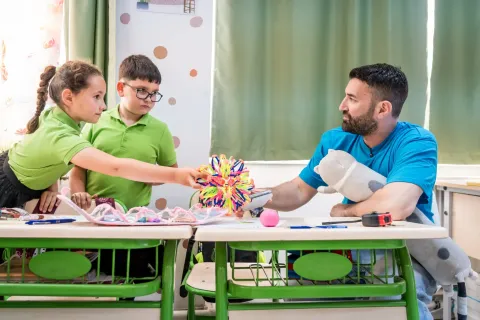
How do you give children who saw life change so dramatically overnight a sense of new hope and security? UNICEF’s response is to equip frontline workers like Mioara Botezatu with MindMe, a first aid toolbox for emotions such as fear, anxiety or overwhelm. She and other teachers in the county of Galati have been piloting MindMe in the classroom to offer children aged 6 to 18 a chance to destress and learn through play.
To make sure the kit would respond to the children and the caregivers needs, UNICEF experts went to Galati in February and November 2025. Through rounds of workshops and tests, experts, teachers and children co-created the kit to fulfill the intended purpose: to help children cope, recover and build resilience. A full collection of wellbeing heroes emerged: stress balls, huggable plush kittens, heavy blankets, coloring books, emotion roleplay dolls, silence headphones, pyramid puzzles and more.
The day Andreea first played with the MindMe toys, she told her mother school had been fun.
In civics class, everyone chose their own toy. "I chose my book and a ball, and while I was coloring, I would hold the ball and do that. And I really liked them. After coloring, I felt very relaxed in the other classes," she says.
A toolkit for emotions in the classroom and beyond, now ready to use
“They are delighted. It worked,” says teacher Mioara Botezatu, who found ways to integrate the toys during other classes too.
Months later, the testing is complete and the MindMe kit is ready for use beyond the pilot schools. Results showed MineMe was instrumental with children of all ages, it promoted teamwork and provided ways to integrate children with disabilities.
MindMe is a step toward a world where every child has the tools to feel safe, supported and understood. UNICEF continues to develop and adapt the kit to the needs of children on migration pathways, children in conflicts or in public health emergencies. Private sector partners can also support this effort. Because every child deserves a healthy mind.