The school where emotions make you rich
In Galați County, children and adults are learning, through a UNICEF-supported project, to foster well-being day by day, at school

- English
- Română
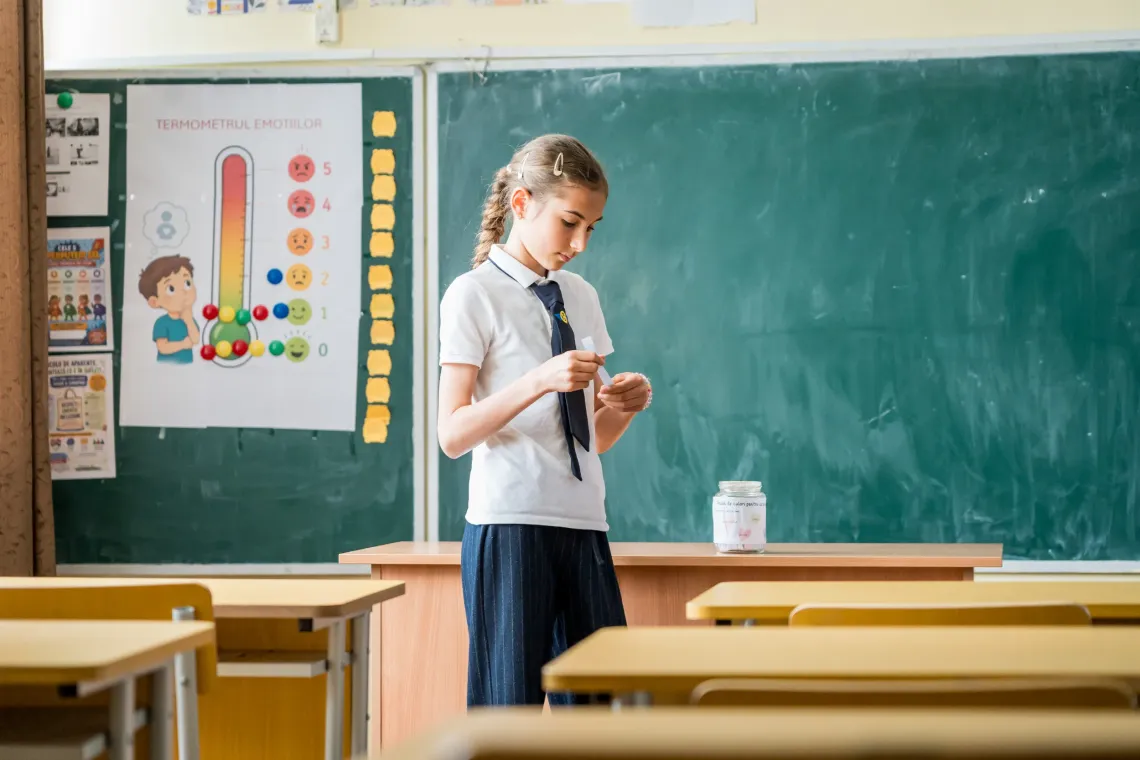
If you're a student at "Grigore Hagiu" Secondary School No. 2 in Târgu Bujor, chances are you'll find a secret note of encouragement from your parents tucked into your backpack; or you'll check the compliment box by the school entrance and find at least one message addressed to you, or maybe you'll write one yourself: a positive affirmation, a happy memory, a reason to be grateful, and slip it into a "gratitude jar" to revisit another day.
Beyond their symbolic value, these small gestures play an important role in shaping how children see themselves and relate to those around them. They don't happen by chance, rather they're part of a deliberate effort to create, day by day, a school environment where every child feels seen, heard and valued. And when experiences like these become part of the school's daily rhythm, they promote well-being and lay the groundwork for learning, trust, and healthy relationships.
"Children come to school with more enthusiasm now, and motivation to learn has grown," notes Oana Roxana Costandache, principal of "Grigore Hagiu" Secondary School No. 2.
This is a valuable achievement, built through teamwork and the result of a project the school has already devoted a full year to, through preparation, training for teachers and the school counselor, and classroom activities.
Its impact, however, reaches far beyond the classroom, into the wider community and into families. This becomes even more evident when compared with where the project began.
Replacing unhealthy behaviours with social-emotional learning (SEL)
In Romania, nearly one in four middle-school students is at risk of experiencing emotional or mental health problems. Children frequently struggle with managing their emotions, face bullying, engage in risky behaviours or develop unhealthy patterns of technology use. On average, they spend four to five hours online every day, often at the expense of sleep and face-to-face relationships.
Faced with these challenges, children need support and guidance to help them develop healthy habits as early and as solidly as possible. When these habits take firm root in a child's behavior, the pull toward unhealthy ones fades significantly.
Schools play a central role in supporting children's mental health and promoting well-being. But what does that look like in practice? How can a school create a safe environment that nurtures a safe environment for the well-being of every child?
The school in Târgu Bujor is one of 20 pilot schools participating in the "Safe and Supportive Schools" project. Here, educators are testing resources and tools based on a whole-school approach designed to promote social-emotional learning (SEL), well-being, and a safe, inclusive school climate for every student. Teachers and school counsellors are learning how to better support students while piloting a range of interventions, from classroom conversations about emotions and role-playing activities to encouraging positive feedback and acts of kindness.
"We want these children to become aware of their emotions, to understand them, and to learn how to manage them," Ms. Costandache adds. Every exercise, role-play, and discussion is framed around the real challenges and changes happening in the children's lives and in their families' lives.
To help students become more aware of other people's needs and better understand what inclusion really means, every child came to school one day carrying their books and notebooks in a shopping bag instead of a backpack, living, if only for a day, a small piece of the reality faced by children who don't have a proper school bag.
More often than not, however, teachers say, the real shift in the classroom came from much smaller gestures, ones the children responded to remarkably well: simply being encouraged to talk openly about how they feel.
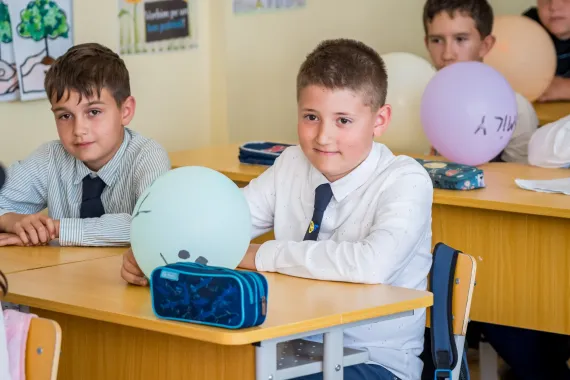
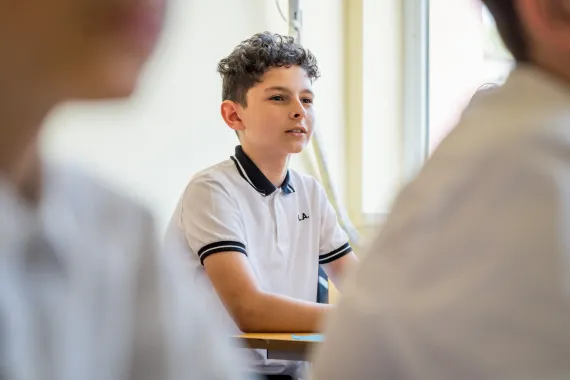
Well-being and mental health: essential for learning
"Before this project, I never asked myself how I was doing, whether I was fine. I didn't even think about having these emotions," says Cosmin, an eighth-grader.
It doesn't take him long to find out. He thinks it over when teachers ask questions in class. Or he talks to his best friend, Cătălin, during break, and things start to click. Since picking up this habit, the two of them argue less and understand each other better. "Before, we'd stay upset for two or three days. Now we sort it out on the spot." Because they understand their emotions better, resolving conflicts has gotten easier too, a positive spiral that's also helped cut down on conflict and bullying.
In class, they've also talked about how time spent online can shape not just their emotions, but their future plans. "The past can come back to affect you," says Cătălin, who dreams of becoming a truck driver like his father. He's seen how videos other teenagers posted as jokes ended up limiting their opportunities down the road. The classroom discussions have made Cătălin and his classmates more responsible, not just about how they use technology, but beyond it too.
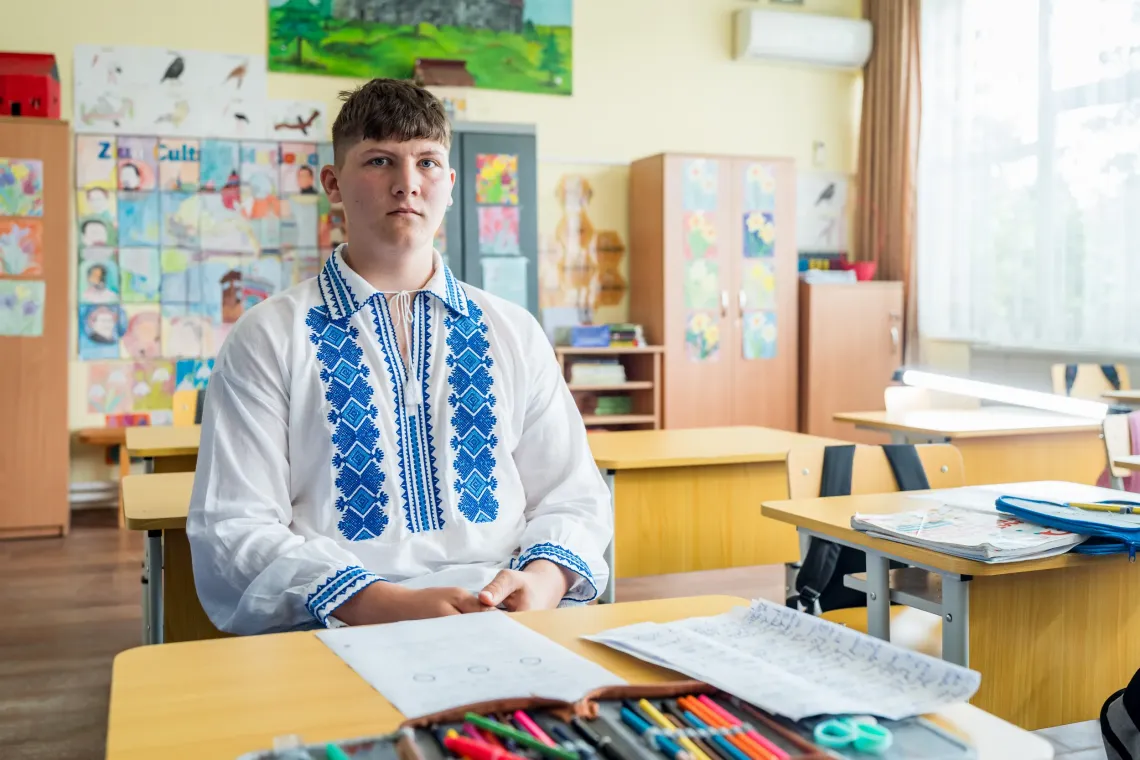
The project has spilled well past the schoolyard. At home, children are sharing news and feelings with their parents like how, after the bag exercise, they opened up to classmates they hadn't been close to before. Or how they feel, and what they feel, toward their own parents.
Diana, mother of two middle schoolers, even received a secret note of appreciation herself. To raise emotionally rich kids, she's realized, takes teamwork: "A little from us, a little from the school, a little from society."
Through initiatives such as "Safe and Supportive Schools", UNICEF promotes a whole-school approach to well-being and mental health, in which students, teachers, school counsellors and families work together to create a positive, supportive school climate that fosters children's social and emotional development.
The Safe and Supportive Schools project is funded by the European Union through the Technical Support Instrument and is implemented by the Ministry of Education and Research, with technical support from UNICEF and in cooperation with the European Commission.