The mental health of children and young people matters: proposals for key measures to improve access to prevention and support
The project "Romania for every child. Emotional balance" was implemented in Romania between 2023 and 2025
- English
- Română
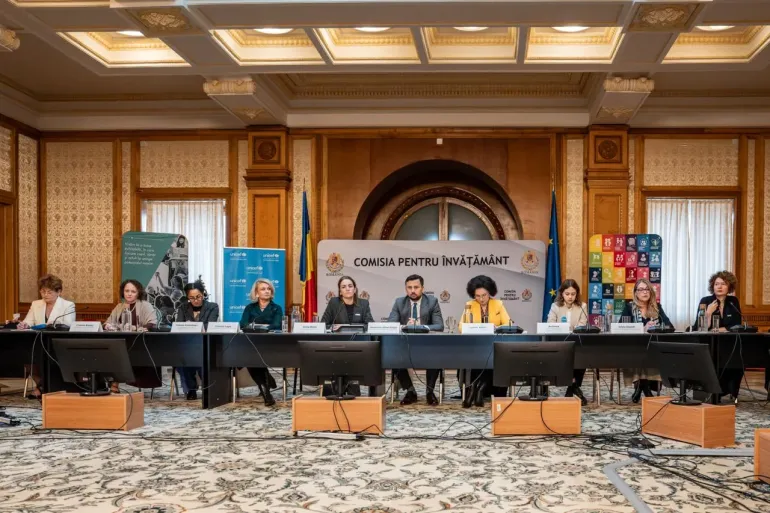
Bucharest, December 9, 2025. The Education Committee of the Chamber of Deputies, the Romanian Angel Appeal Foundation, and UNICEF hosted today, at the Palace of Parliament, the conference to disseminate the results of the project "Romania for Every Child. Emotional Balance," implemented between 2023 and 2025. The event brought together decision-makers, experts, non-governmental organizations, and representatives of children, marking a key moment in the multisectoral approach to children and adolescent mental health.
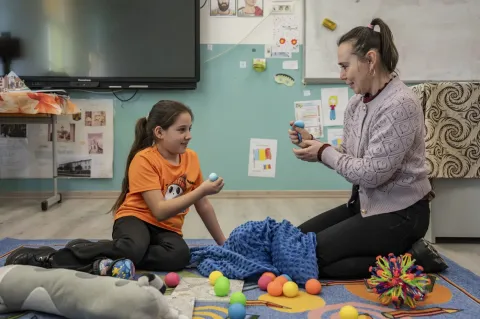
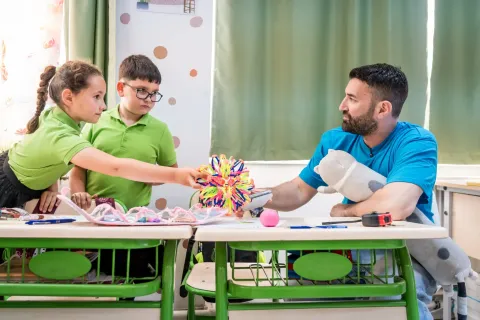
The project aimed to develop and pilot an integrated model in Bucharest connecting schools, families, and health services so that children's and adolescents’ emotional difficulties are recognized and they receive adequate, accessible, and consistent support.
The results of the pilot interventions were presented at the conference, demonstrating the potential for replication and expansion at the national level:
- 475 education professionals participated in certified training programs in mental health and social-emotional learning.
- Over 10,400 students in Bucharest were engaged in social-emotional learning sessions conducted in the classroom by teachers.
- Over 3,000 parents took part in workshops dedicated to emotional communication.
- An online tool for the early detection of possible social-emotional distress was developed and tested, completed by over 4,000 adolescents.
- A digital application was created that brings together resources, activities, and support points accessible to young people.
- Clear protocols for collaboration between schools and mental health specialists were established.
On this occasion, a set of public policy recommendations was also disseminated, aimed at improving access to prevention, early detection, and support in mental health.
One of the important proposals concerns changing the legal framework so that adolescents request and access by themselves psycho-emotional and mental health support services starting with 16 years of age, without requiring the consent of parents or guardians. This measure aims to increase access to psychological support, by reducing the adolescents’ concern regarding the confidentiality of the interactions with the specialists. The proposal brings Romania into line with the standards of many EU countries (such as the Netherlands, Denmark, Germany, and Finland), where the age of consent for psychological services is 16.
A second important proposal concerns the integration of key activities into the National Health Strategy and the Mental Health Action Plan (2025–2030). The recommendations concern education through the development of training and socio-emotional skills, and the introduction of psychoeducation in all stages of education; health, through the implementation of mental health screening integrated into the annual consultation with the family doctor and paediatrician; and parents and the caretakers, through the development of parental education and mental health literacy programs.
"The mental health of children and adolescents should be an objective integrated in the public policies. Today we are taking a decisive step to ensure that the emotional balance of every child becomes a national priority, through the conference hosted by the Chamber of Deputies. The recommendations on improving public policies for children's and adolescents’ mental health, presented on this occasion, are an important starting point for Romanian decision-makers, translating the vision of this project into legislation and concrete resources," said Alexandru Mihai Ghigiu, Chairman of the Chamber of Deputies' Education Committee.
"Mental health is an indicator of a society's future. Communicating directly with those who live this reality every day is key. Only then can we build a system that doesn't react when it's too late, but prevents, protects, and provides support. It is the responsibility of decision-makers to provide children with an environment where their minds can remain safe," said Andreea, a member of the UNICEF-supported Romanian Children's Board.
"Mental health is a fundamental right of every child. UNICEF's project 'Romania for Every Child. Emotional Balance' shows that, through inter-sectoral collaboration, we can create a truly supportive environment for adolescents. UNICEF continues to work with government partners, civil society, and the private sector to use the lessons learned and the set of recommendations so that all children in Romania can benefit from quality mental health services," said Anna Riatti, UNICEF representative in Romania.
"The efforts of recent years show that when children, adolescents, and the adults in their lives have adequate resources, emotional support becomes accessible and integrated, not occasional. The results of the project confirm the potential of a model that connects school, family, and health services, and the Romanian Angel Appeal Foundation will continue to support the expansion of these solutions nationwide so that children's mental health is treated as a shared responsibility," said Silvia Asandi, General Manager of the Romanian Angel Appeal Foundation.
Media contacts
About UNICEF
UNICEF promotes the rights and wellbeing of every child, in everything we do. Together with our partners, we work in 190 countries and territories to translate that commitment into practical action, focusing special effort on reaching the most vulnerable and excluded children, to the benefit of all children, everywhere.
For more information about UNICEF and its work for children, visit www.unicef.org.