Green skills and engagement
Every young person deserves a future they can shape

- English
- Македонски
- Shqip
Today’s adolescents are not just preparing for the future - they are already shaping it.
In North Macedonia, young people are full of ideas, creativity and energy. They care deeply about their communities and the environment, and many are ready to act.
But too often, they are not given the opportunities, skills or platforms to turn that potential into real impact - especially when it comes to one of the defining challenges of their generation: climate change.
The challenge
Young people in North Macedonia are growing up in a rapidly changing world - one that increasingly demands new skills, new ways of thinking and new ways of solving challenges.
The transition to greener, more sustainable economies is accelerating. Yet many adolescents are not equipped with the skills and opportunities they need to be part of this transformation.
Environmental risks are already affecting children’s health and wellbeing, and these pressures are expected to intensify.
In North Macedonia, air pollution remains the single greatest environmental threat to their health, with pollutant concentrations in urban areas reaching up to five times above national, EU and WHO standards — contributing to increased illness and premature mortality.
Looking ahead, climate projections indicate that the country will face a significantly warmer and drier climate by 2050. Heatwaves, floods and droughts will become more frequent and increase in severity.
These environmental pressures are not abstract risks. Exposure to climate-related shocks and deprivation during childhood can have lifelong consequences, affecting health, learning outcomes and future opportunities.
Yet, access to learning opportunities that build practical, future-oriented skills - such as climate literacy, innovation, digital problem-solving and entrepreneurship - remains uneven.
Children and young people are also among those most affected by environmental challenges, yet their voices are not always included in shaping responses.
Many want to act. They want to find solutions, support their communities and contribute to environmental sustainability. But they often lack: the skills to develop solutions, the support to bring ideas to life, and the platforms to influence decisions.
Without action, there is a growing risk: a generation aware of the challenges but not fully empowered to address them.
The solution
UNICEF works with partners, such as schools, communities, institutions and the private sector, to empower adolescents as innovators, problem-solvers and leaders in building a greener future.
At the heart of this approach is the belief that young people are not just beneficiaries - they are agents of change.
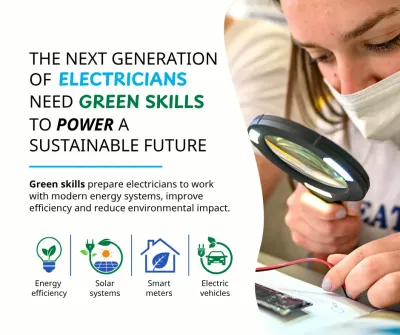
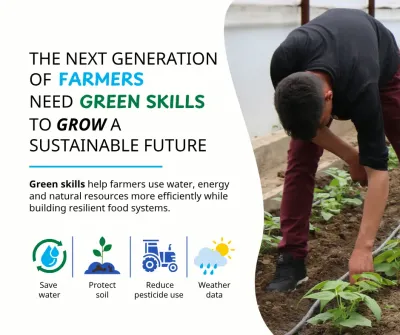
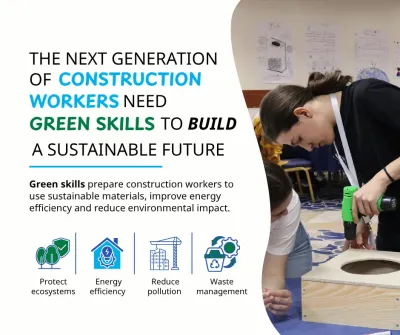
This starts with skills. Adolescents are supported to build green skills, from understanding climate challenges to developing practical solutions that respond to them. These are the skills that will shape the jobs, economies and societies of the future.
Climate action is a central part of this work. Through social innovation programmes like UPSHIFT, young people are supported to design and implement initiatives that address real challenges - from installing energy-generating tiles and passive solar heating systems inside schools to developing digital platforms for organizing local community actions. In doing so, they move from being observers of climate change to active contributors to its solutions, at the same time learning how to think critically, collaborate and lead change.
By creating safe, supportive spaces and promoting engagement in STEM and innovation, UNICEF helps ensure that girls and boys are equally equipped and confident to participate in shaping green and digital futures. UNICEF supports adolescents to participate in climate dialogue, community engagement and youth-led advocacy, ensuring their perspectives help shape local solutions and wider policy action.
At the same time, special attention is given to reaching the most vulnerable adolescents - ensuring that opportunities for skills development, innovation and participation are accessible to all, not just a few.
Partnerships with schools, communities, institutions and the private sector help create ecosystems where young people can develop ideas, test solutions and scale impact.
Young people leading the change
When young people are given the opportunity, they don’t just respond to challenges, they redefine them.
They bring new ideas, new energy and new solutions. They connect global challenges to local action. And they inspire others to act.
By investing in green skills, innovation and youth participation, North Macedonia can unlock the full potential of its young people and accelerate the transition to a more sustainable, inclusive and resilient future.
Because the future is not something young people should wait for.
It is something they should lead.