Living with climate change
What did children and young people from across Nepal share at consultations organized by UNICEF on the impact of climate change on their lives and prospects?
Nepal: "School is where we learn the most about climate change and how to fight it, yet because of climate change, we’re being deprived of our right to quality education," says Tara Prasad, 16, from Rupandehi District.
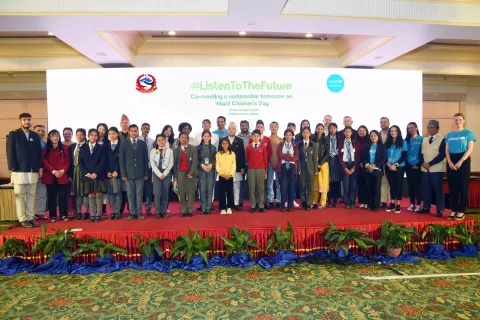
Tara was one of the participants at a UNICEF-led climate consultation held in Lumbini Province. In 2024, UNICEF, in partnership with Chay Ya Nepal – and with support from various youth networks working in climate action in Nepal - organized five such consultations in Sudurpaschim, Madhesh, Karnali, Lumbini and Koshi Provinces.These sessions gave children and youth a platform to voice their lived experiences and concerns about how climate change is disrupting their daily lives.
The sessions were also aimed at empowering young participants as climate advocates, helping them understand the crisis and the role they can play in shaping sustainable policies and actions.
For many participants, the impact of climate change on education emerged as a major concern. Tara, for example, shared how rising temperatures have made even short walks to school challenging.
“I am drenched in sweat by the time I get there,” he says. “The heat also makes it difficult to concentrate in class.”


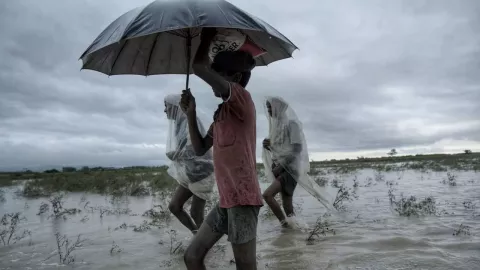
Laxmi, 20, from Khotang, described the dangers students in her community face during heavy rains, when swollen rivers block their paths to school.
“We have to either risk our lives crossing the river or wait at school until the water levels go down,” she says. “It has impacted our lives and education.”
Forced migration due to climate-induced disasters was another recurring theme.
“Relocation was very tough for us. Adjusting to a new environment and finding opportunities was a challenge,” shares Simana, 22, from Rupandehi, on her own experience of having to move following such a disaster.


The mental health impacts of climate change were also brought to light. Ram, 18, from Rupandehi, recounted how a friend’s family, dependent on farming, lost their rice crop to heavy rain.
“The loss caused stress and conflict at home, which affected him mentally. He didn’t want to come to school and seemed sad all the time,” says Ram.


Ankita, 17, from Jhapa, spoke of the trauma of losing loved ones in floods, while Dipson, 15, from Morang, shared the story of a young man who lost his life trying to save a gas cylinder during a flood.
“Children and young people are traumatized by such experiences,” he says.
Discussions also highlighted the challenges faced by marginalized groups and people with disabilities.
“When safe spaces and disability-friendly infrastructure are destroyed by floods, it severely limits access to essential services,” says Pritam, 25, from Morang.


Udip, 20, also from Morang, highlighted the insufficient uptake of innovative technologies that could mitigate the impact of climate disasters.
Referring to the recent Thame glacier outburst, he says, “Preparedness actions could have been implemented if we had used digital technology.”
Participants were unanimous in their assertion that climate change is not just an environmental crisis but a child rights crisis. They urged that their voices to be heard, and their experiences considered when addressing climate change, since the decisions being made today will shape their future.
“Children and young people should be prioritized in discussions about climate change," emphasizes Bandana, 17, from Dhanusha.


Matrika, 16, from Kailali, adds, "Mandatory representation of children in climate policies is essential."
The insights shared during these consultations underscore the wide-ranging consequences of climate change — from disruptions to education to threats to mental health and well-being. Marginalized groups, including those with disabilities, are particularly vulnerable.
Through this initiative UNICEF aims to strengthen young people’s knowledge and skills on climate change and climate action, as well as ensuring their perspectives are reflected in child-friendly climate policies aligned with national and global efforts like the NDC and COP29.
"Children are our future," says Pinki, 21, from Parsa. "Just as we care for young plants, we must invest in children today for a sustainable tomorrow."