

Hope in every drop
How the Amrit Kosh, the human milk bank at the Paropakar Maternity and Women’s Hospital supports preterm and low birthweight newborns, and empowers families
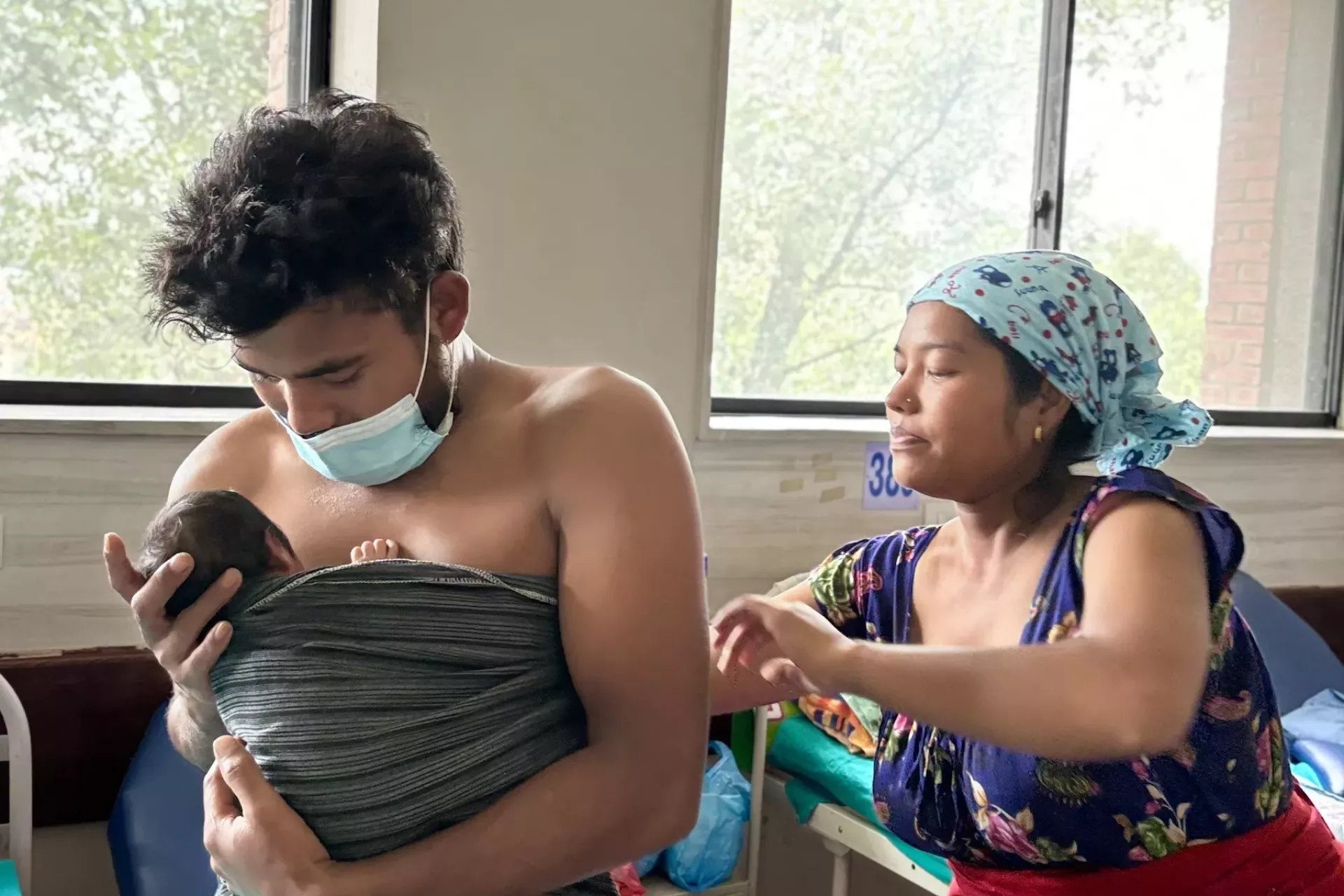
Kathmandu, Nepal: In a corner of the Kangaroo Mother Care (KMC) ward at the Paropakar Maternity and Women’s Hospital in Kathmandu, Prejina Chaudhary and her husband Ajay are enveloped in a moment of tenderness with their newborn son.
As she helps wrap a blanket around her husband and baby, Prejina – originally from Kailali District in the western part of the country - recalls the anxiety she felt when she was informed that the little boy was low birthweight. He was just under 1,700 grams at birth.
“We were so worried, he was so small,” she says.
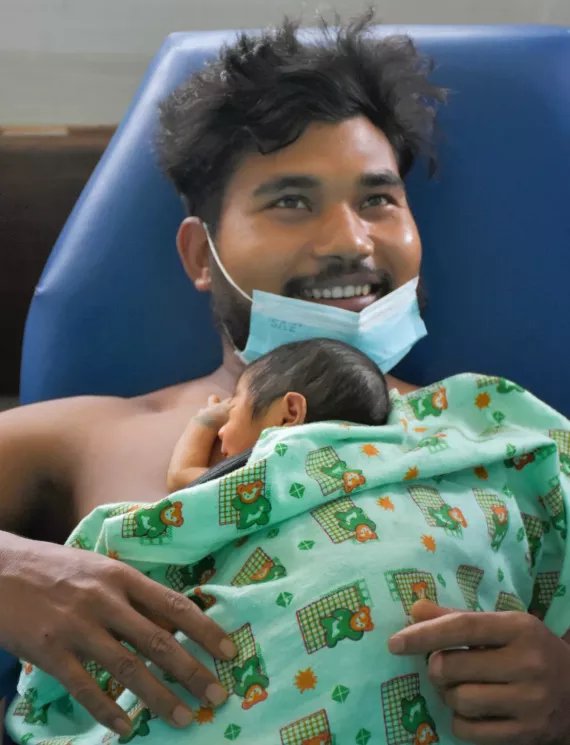
To help the child gain weight and good health, health workers at Paropakar taught Prejina and Ajay how to perform KMC, which favours regular skin-to-skin contact between parents and their little ones.
KMC is one of the most critical, lifesaving measures to improve the survival prospects and wellbeing of babies born too early or too small.For Ajay, practicing KMC has become a part of the family’s daily routine, and one that he enjoys.
“I feel very close to him, and I can tell that he’s getting stronger,” he says.
Although their newborn was low birthweight, Prejina’s ample breast milk supply has been a relief this time around. She remembers the struggles she faced when nursing her first son, who is now six.
“My milk supply was so low back then and it was very hard to breastfeed,” she shares. “We were forced to give him powdered milk.”
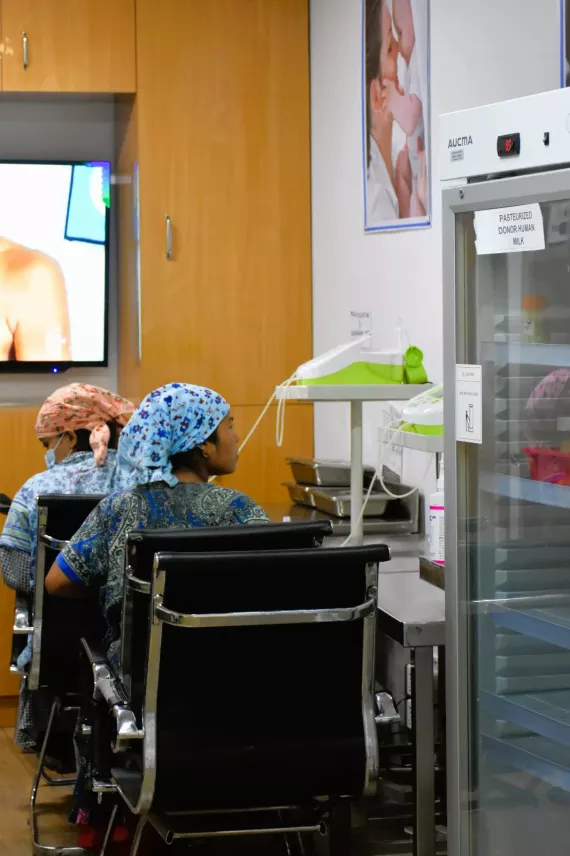
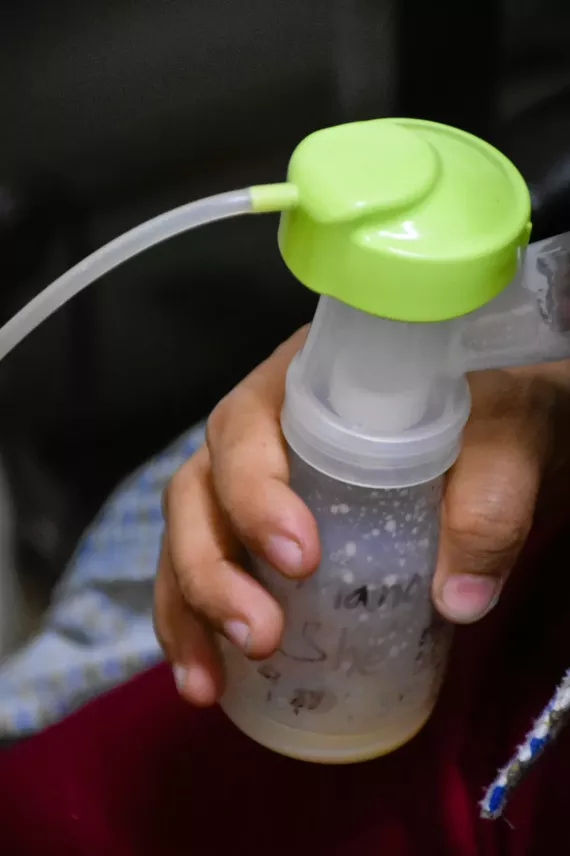
That experience in mind, Prejina decided to become a donor to the Amrit Kosh, the Human Milk Bank established at Paropakar.
The centre was first established in 2022 as part of a partnership between the Government of Nepal, the European Union and UNICEF, and has since also benefitted from the generous support of USAID
At the Amrit Kosh, the process of donating milk is meticulous. It begins with in-depth counseling for potential donors.
After providing written informed consent, donors undergo a thorough medical screening to ensure their milk is safe.
Health workers then guide them through the milk expression process using manual and electric pumps in a dedicated collection room.
The milk is carefully refrigerated, pasteurized and tested before being provided to children in need – those who meet the criteria of being under 1,500 grams at birth.
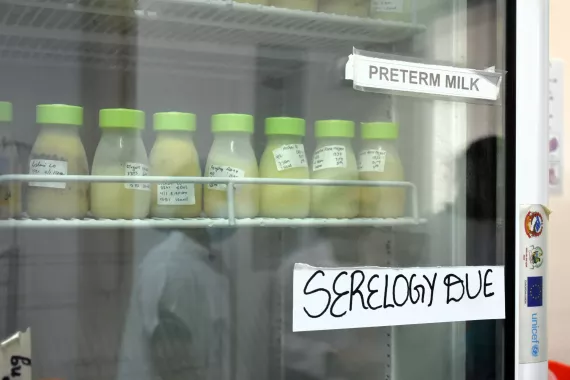
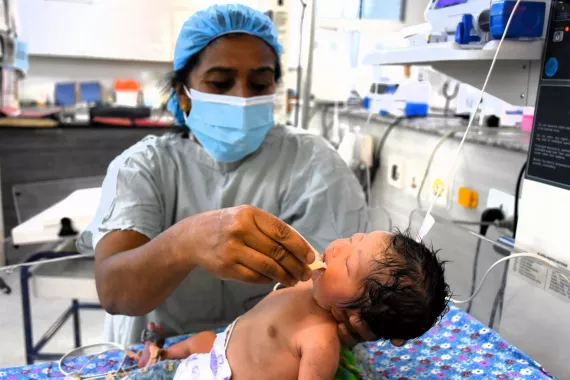
And this is where nursing aide Apsara Bista comes in, helping to feed the donated breast milk to these preterm and low birthweight babies whose mothers might not have started to lactate properly or who are themselves too weak to feed. Apsara, who has been with the hospital for nearly three decades, says that many of the babies she once cared for as a young aide are now working as nurses in the same hospital – something that fills her with pride.
It’s always rewarding to help these little ones get a fighting chance at life.”
Dr. Kalpana Subedi, Chief Consultant Paediatrician and head of the Department of Neonatology at Paropakar, echoes Apsara in highlighting the impact of the Amrit Kosh.
“The milk bank has been a lifeline for so many babies and mothers. We have helped over 2,300 newborns,” Dr. Kalpana
She explains that so far the milk bank has collected over 1100 liters of breastmilk from donating mothers, and that they have begun distributing small amounts to other hospitals outside of Paropakar as needed.
However, she admits that the demand is still much higher than what the bank can currently supply on a daily basis.
“Expanding such facilities across the country would ensure that more mothers and babies receive the support they need, reducing neonatal mortality and promoting healthier outcomes for future generations,” she says.
Such an expansion is currently in progress. USAID, through UNICEF, is supporting the establishment of Lactation Management Units in eight hospitals across all seven provinces, as well as enhancing the capacity of health workers to counsel caregivers on breastfeeding and KMC.
As Prejina sits contentedly by her husband and son, she says she feels grateful for the services rendered to her by the hospital and inspired to give back in whatever way she can.
“In my time, we didn’t have such a facility, so it makes me happy to be able to help other mothers now,” Prejina says.


