UNICEF joins the Government of Nepal in calling for greater investment in children on National Children’s Day

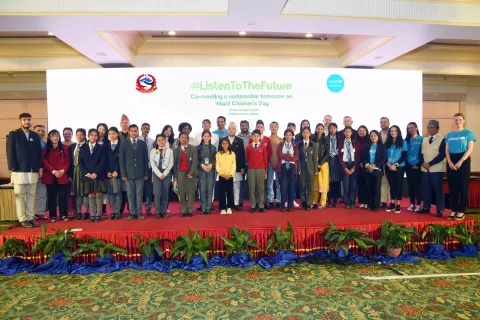
Kathmandu, 14 September 2024 – On National Children’s Day today, UNICEF joins the Government of Nepal in calling for greater investment in children to ensure progress for every child in Nepal.
“Children are Nepal’s greatest asset, and the future depends on the well-being of the next generation,” says UNICEF Nepal Representative OIC Jee Hyun Rah. “It is only fitting that this National Children’s Day, we are all coming together to call for greater investment in children. Without doubt, this is the best investment we can make for our country’s future, and a win-win for everyone – children, families, economy and more.”
Nepal has made significant strides in improving children’s rights and well-being over the years, with UNICEF’s support. For example, there has been steady progress in enabling children to survive and thrive by reducing child mortality rates and stunting prevalence, and increasing net enrolment rate in basic education.
Despite the progress made over the years, there are significant challenges for the most vulnerable children. More investment is needed in the early years, for adolescent girls, and in protecting children from the impacts of climate change.
A quarter of children in Nepal live in households below the poverty line and lack the opportunity to thrive. Therefore, investment in the youngest children is pivotal to unlocking the country's economic potential and breaking the cycle of poverty.
Similarly, investing in the potential of adolescent girls increases economic dividends and brings substantial social and developmental benefits to girls, their families and communities. Every additional year of schooling for a girl increases her future earnings by up to 20 per cent. An extra year of girls’ education cuts infant mortality by 5 to 10 per cent along with huge savings in healthcare.
Lastly, the climate crisis is a children’s crisis. Investments in climate change response targeting children and young people will pay off. UNICEF estimates that USD 1 invested in adaptation may yield up to USD 10 in economic gains.
UNICEF is proud to be the Government of Nepal’s partner and looks forward to a continued strong collaboration for children.
Media contacts
About UNICEF
UNICEF promotes the rights and wellbeing of every child, in everything we do. Together with our partners, we work in 190 countries and territories to translate that commitment into practical action, focusing special effort on reaching the most vulnerable and excluded children, to the benefit of all children, everywhere.
For more information about UNICEF and its work for children, visit www.unicef.org