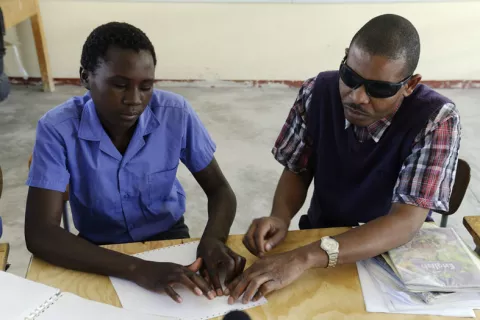
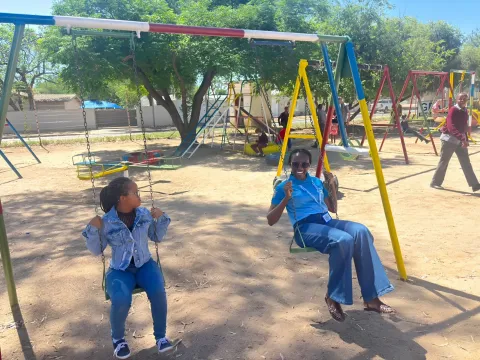
Stakeholder workshop targets removal of barriers on the lives of Persons with Disabilities
“Understanding the Convention on the Rights of Persons with Disabilities: Strategies for effective disability mainstreaming in Namibia”

Windhoek, Namibia, 29 May 2018 - A multi-stakeholders’ National Disability workshop, bringing together representation from Government, the United Nations, Civil Society Organisations, Organisations of Persons with Disabilities, service providers and Academia, begins in Windhoek today. The workshop will focus on identifying progressive strategies towards the removal of barriers and obstacles which negatively impact on lives of persons with disabilities in Namibia.
This workshop, which will run under the theme of “Understanding the Convention on the Rights of Persons with Disabilities: Strategies for effective disability mainstreaming in Namibia” seeks to ensure the full implementation of the landmark global treaty, the United Nations Convention on the Rights of Persons with Disabilities (UNCRPD) and the Optional Protocol of 2007. By coming up with practical interventions for persons with disability to join the mainstream of national development, Namibia will therefore be affirming the UNCRPD commitment to mainstream disability issues as an integral part of sustainable development.
This is an important opportunity for Government and its partners to identify key challenges and barriers faced by persons with disabilities in Namibia in the provision of health, early childhood development, education, economic development or social interaction in the lives of persons with disabilities. The workshop will also focus on proposing recommendations and practical interventions for mainstreaming disabilities in Namibia, adaptable for sector contexts and ensure that platforms for ineteration are put in place to integrate persons with disability fully into society,” said Hon. Agnes Tjongarero, Deputy Minister of Sport, Youth and National Service on behalf of His Excellency Nangolo Mbumba, Vice President of the Republic of Namibia. “Persons with disabilities deserve the same chance to make the most of their lives and to make their voices heard as everyone else in our country,” Tjongarero added.
By bringing together more than 100 stakeholders over the next three days, the UNCRPD will be interrogated further in order reach consensus on practical interventions for mainstreaming disabilities in Namibia. The workshop will also provide suggestions for line ministries and other stakeholders to address the diversity of disability in Namibia as well as help to improve the coordination of disability-related interventions in the country.
Since independence in 1990, Namibia has showcased some best practices in terms of policy and practices to improve the lives of persons with disability and promote the enjoyment of human rights on an equal basis by persons with disability as well as democratic tic a strong political will be placing the affairs and administration of disability affairs in the presidency. Already, the Constitution of Namibia explicitly recognises the inalienable human rights and freedoms of all citizens as well as respect for human dignity, while the National Disability Council Act, (Act No. No. 286 of 2004) further empowers people with disabilities and promotes their inclusion throughout various levels of society.
However, notable gaps remain, and persons with disabilities remain visible among people who experience adverse socio-economic outcomes.
- According to the Namibia Statistics Agency’s Inter-censal Demographic Survey of 2016, there are 108,992 people with disabilities in the country, representing 5% of the total population. Based on World Health Organisation (WHO) and World Bank estimates, the actual number may be as high as 15%. Two thirds of the population of persons with disabilities are living in rural areas, where it is harder for them to access services.
- Namibia’s 2011 Census Disability Report established 87% of children with disabilities between the ages of 0-4 years have never attended early childhood development (ECD) programmes, resulting in them losing out of this most critical stage of building a strong foundation for lifelong learning.
- The unemployment rate of persons with disabilities is 39%, compared to the national unemployment rate of 28%. Likewise, over 48,000 people were inactive in the labour force as a result of disability, totalling 9% of the total inactive population.
- Of the total of 132,544 children who receive social grants, 5,545 of these are children with disabilities below the age of 18 years.
- People with disabilities continue to be deprived the right to a quality education, including to technical and vocational education and training because of lack of assistive technology and disability friendly teaching and learning approaches.
These gaps reflect the level of discrimination, which stems from multiple sources, including inadequate legislative and policy implementation, ignorance, prejudice and cultural norms, which in turn lead to stigma and entrenched social exclusion. The participation of persons with disabilities is further limited by lack of access to the physical environment and to information and communication as well as lack of training for teachers, health care workers and other service providers.
In supporting government interventions, the United Nations is therefore calling on stakeholders, communities and parents to address the existing gaps in the exercise and enjoyment of rights by persons with disabilities and to prioritise actions for their participation and benefiting of any progress that the country will attain within the frameworks of any national or international development agenda. The Sustainable Development Goals (SDGs), for example makes a deliberate call for greater access to development opportunities for all people, including persons with disabilities.
“The changing global development landscape offers a significant opportunity for mainstreaming disability and propelling the progressive removal of barriers and obstacles which impact on the lives and conditions of Persons with Disabilities,” said UN Resident Coordinator (a.i) Ms. Rachel Odede. “Disability does not equate to inability. Therefore, in order for us to create a truly inclusive society that leaves no person behind, active involvement of persons with disabilities is vital – and this starts with ensuring that social, cultural and economic barriers for them are removed,” she said.
Mutual partnership and continued commitment towards protecting the rights of persons with disabilities, will be a key expected outcome to the workshop as the nation endeavours to leave no one behind in the efforts to attain the Sustainable Development Goals and Namibia’s Vison 2030. In order to improve the lives of persons with disabilities, more stakeholders are required to come on board and support government interventions in the spirit of Harambee.
Media contacts
Additional resources

About UNICEF
UNICEF promotes the rights and wellbeing of every child, in everything we do. Together with our partners, we work in 190 countries and territories to translate that commitment into practical action, focusing special effort on reaching the most vulnerable and excluded children, to the benefit of all children, everywhere.
For more information about UNICEF and its work for children, visit www.unicef.org.