Turning a new page in children’s learning
For every child, education

In Myanmar, approximately 4.5 million children nationwide - out of a total of 13 million learners - are estimated to have limited access to learning or are not accessing learning at all, due to the dual crises, of COVID-19 and conflict after the military takeover.
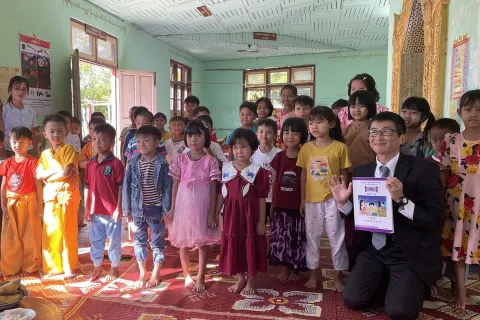
However, a new project, Bring Back Learning to Children and Adolescents, is being rolled out nationally by UNICEF together with partners, including Myanmar Baptist Convention, Karuna Mission Social Solidarity, Metta Development Foundation and Succor Foundation, to help solve some of the problems this has caused.
The Bring Back Learning project, funded mainly by the AEON 1% Club Foundation, has been training and equipping local people to provide their communities with early childhood care and development for pre-schoolers, including advice and help for parents.
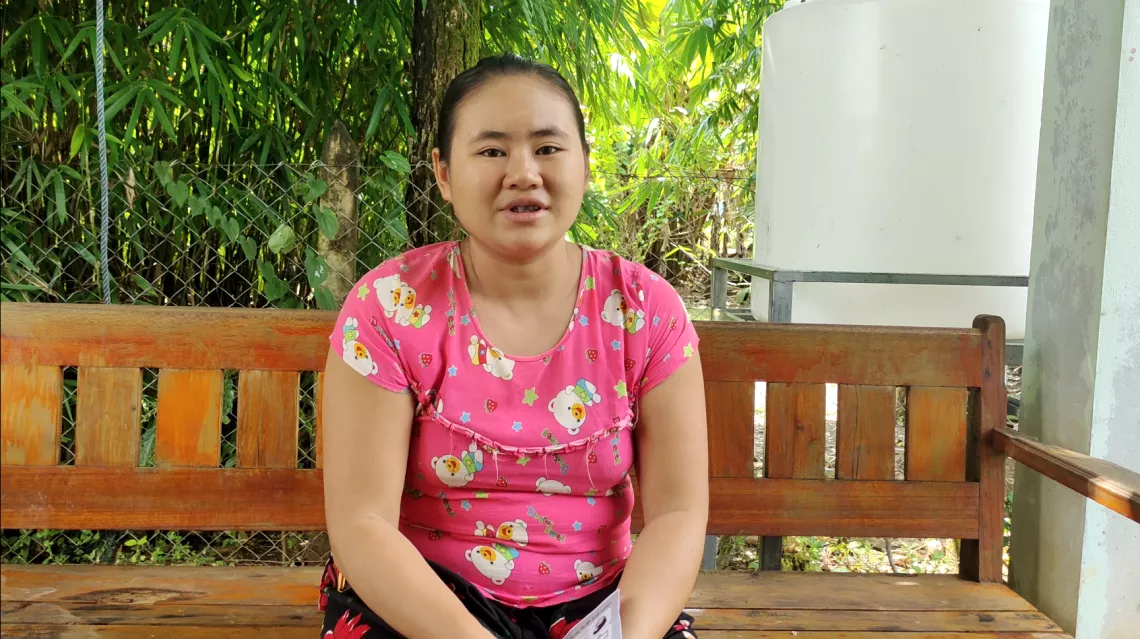
"I have a one-year-old child. I attended the UNICEF training with other mothers from my village. It taught me about child psychology and how to take care of our children. The training has changed our own behaviour as well as that of our children,” said Nan Khin Htay Win, a mother from Hpa An in Karen State. “This project is helping children to learn better. For example, I have learned not to leave a child crying as it hurts their emotional growth. I hope it reaches more families, since children need education more than ever for the good of our community.”
The Bring Back Learning project also provides alternative interim learning opportunities for primary and middle school-aged children. Gha Lar Khe is a community facilitator involved in the project in her village.
“Through the training of this project, parents understand it is not enough just to send their children to school. They now know how to nurture their children and how important it is to give time and provide love, care and support their children in their daily life,” she said.
“We can see that children are very happy and willing to participate in our programmes. They would come to school very early and even on weekends, and they were asking their parents if they were going to school. This project has brought benefits not only to the parents but also to the children in our village. It is very effective and productive for our community, and I would like it to be constantly and continually implemented in upcoming years.”
U Levi, Chair of the project’s committee in the village of Naung Voe Kaung village, praised the project’s wide scope, including the provisions for extended and continuous education for out-of-school adolescents.
“This project benefits the community in many ways. The community facilitators are not only working hard, they also work from their hearts with all their might. With the updated teaching methods, children’s learning is improving. We can feel and see the changes in our children’s lives,” said U Levi.
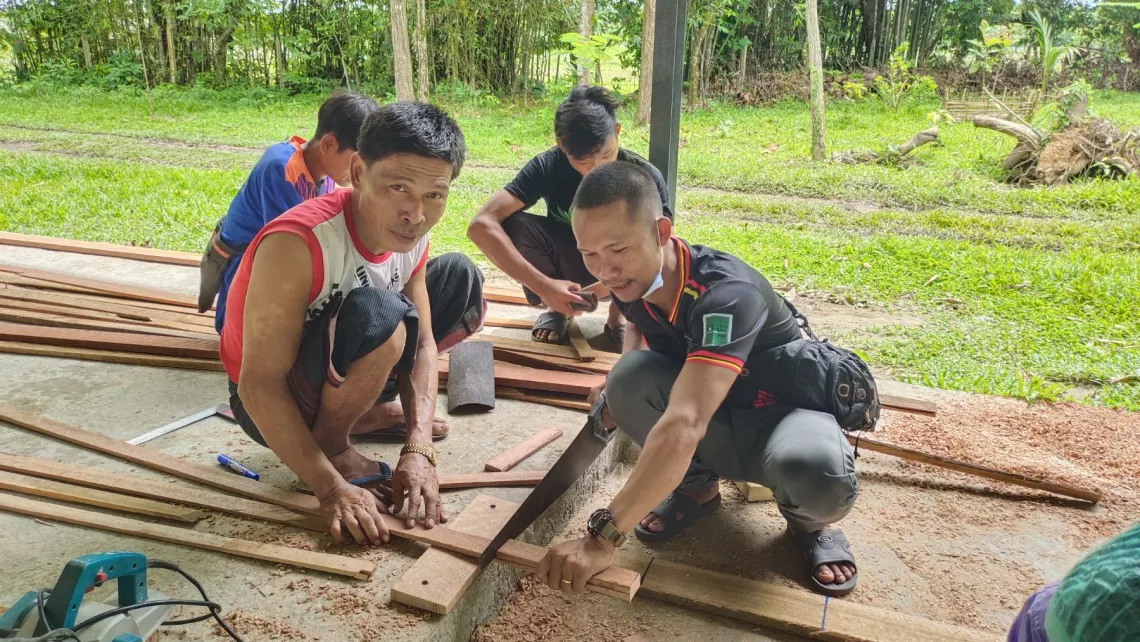
Community leader Mahn Aung Klain from Phar Thar Yay Pu village agreed, adding, “We really love the result of the project, and we would like it to continue.”
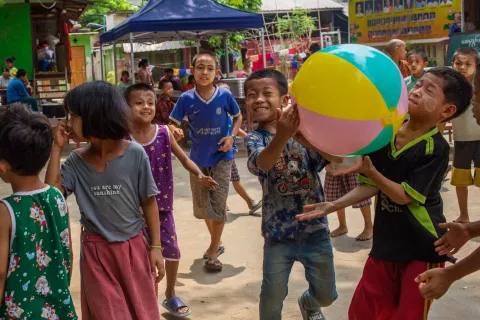
Most importantly, though, the children involved also approve of the project. Fernando, 10, who lives in Paing Yan Village, is happy to take part in this programme.
“I got to meet my friends, play with them and talk with them. And I can ask the teachers about what I do not know and what I want to know,” said Fernando. “They also teach us songs, tell us stories and play games, which is very interesting and amusing for me.”