Sunday Morning Shattered
A Child's Story from Myanmar's Frontlines
- English
- မြန်မာ
An artillery strike landed on ten-year-old A Shao's1 home on a quiet Sunday morning in May 2025, instantly killing his grandmother and embedding shrapnel into his small body that doctors are still working to remove. Six months later, in a displacement camp near Myitkyina, Kachin State, the Grade 3 student still wakes up startled in the night, calling out for his mother as fear grips him in the darkness.
The boy was taking a nap in his family's home in a remote village north of Myitkyina when the explosive ordnance struck without warning. The blast that destroyed their roof and killed his 80-year-old grandmother left him with shrapnel embedded in his back, left arm, and left leg – wounds that continue to cause him pain and require ongoing surgery.
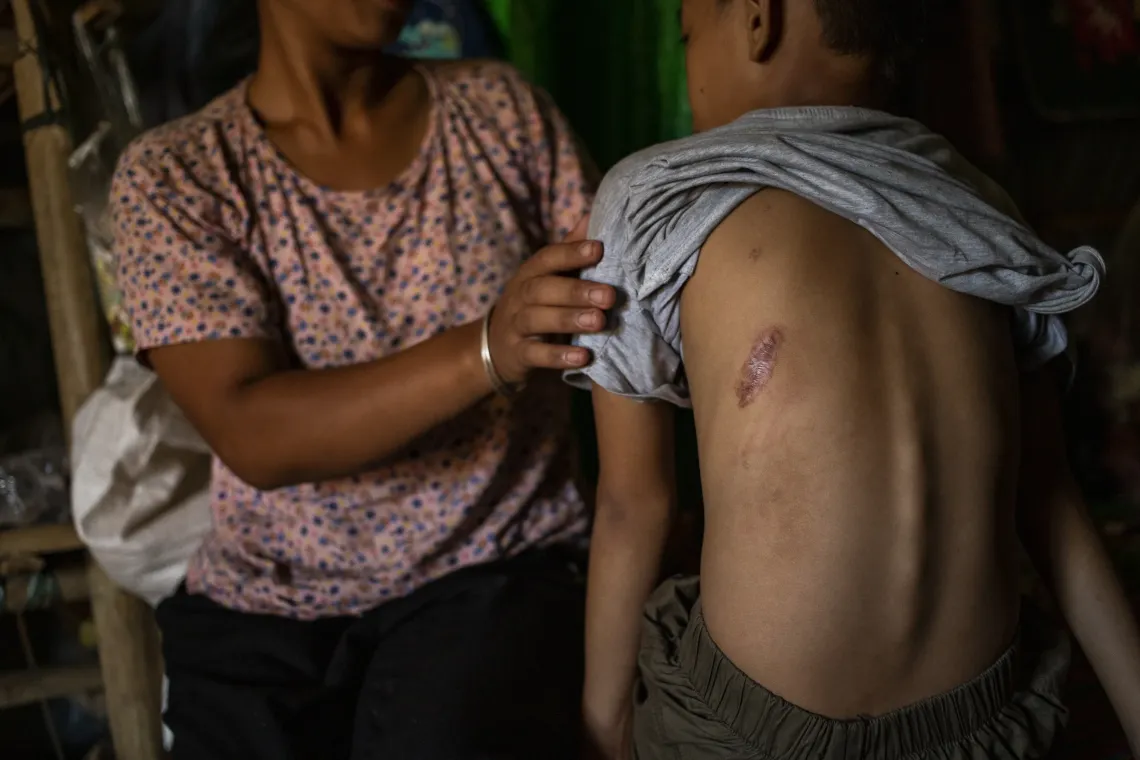
"He often wakes up startled and just calls for me. He doesn't cry. He's scared," says his mother, 28-year-old Ro Nan, of the Lisu ethnicity.
Ro Nan now faces the overwhelming challenge of caring for four children alone, while her injured husband seeks work near the Myanmar-China border. Having been displaced herself at age 17, she now watches her own children experience the trauma of fleeing conflict – a generational cycle that weighs heavily on her.
"Even if I'm scared, I have to pretend not to be, for the sake of my children," she says. "I have to stay strong. I must appear fearless for my children, even when I'm afraid."
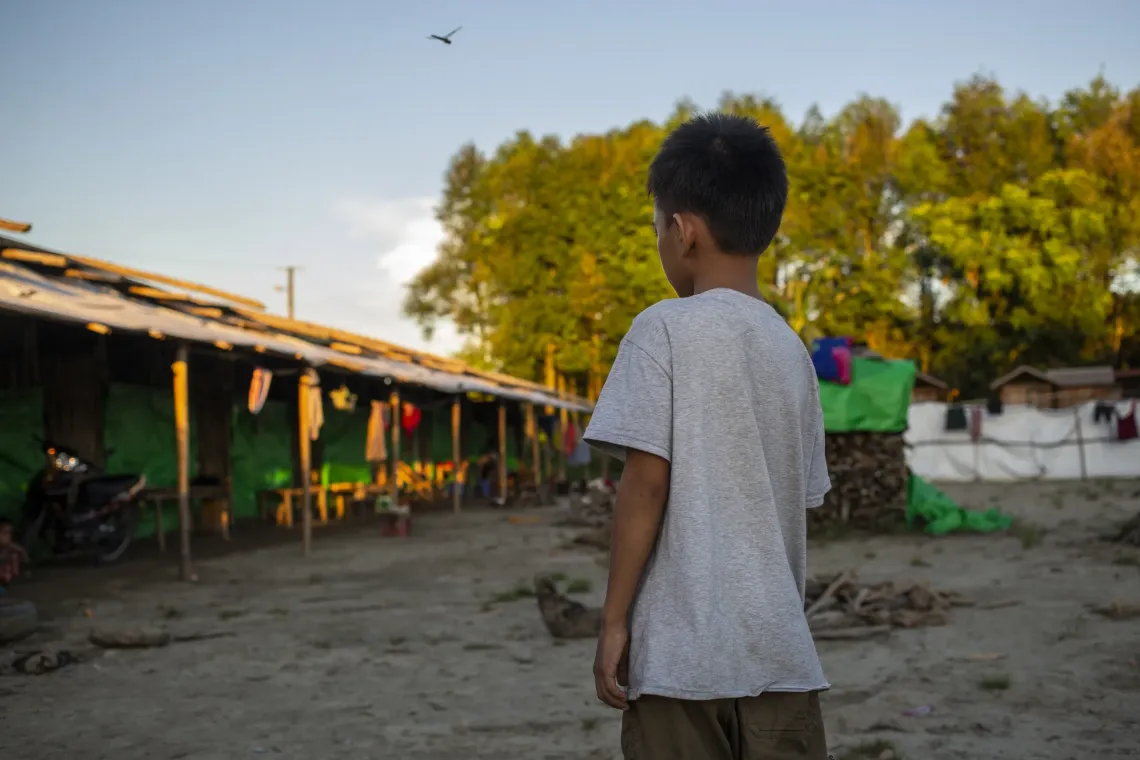
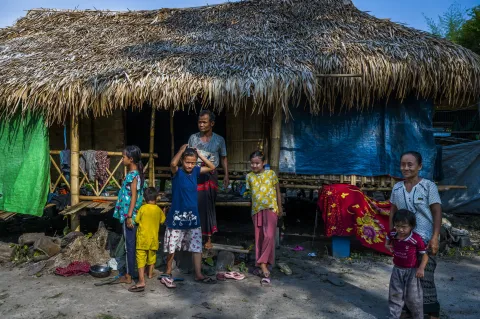
The family now lives in a small camp housing 58 displaced people, where Ro Nan wakes at 5:30 AM daily to prepare meals before sending her three uninjured children to a school nearby. Her eldest son remains unable to attend classes due to his injuries and ongoing medical treatments.
"When the shell fell and exploded, shrapnel were flying everywhere," Ro Nan recalls. "If there was no fighting... if there were no conflicts like this, we could live peacefully, and my children wouldn't be in this situation."
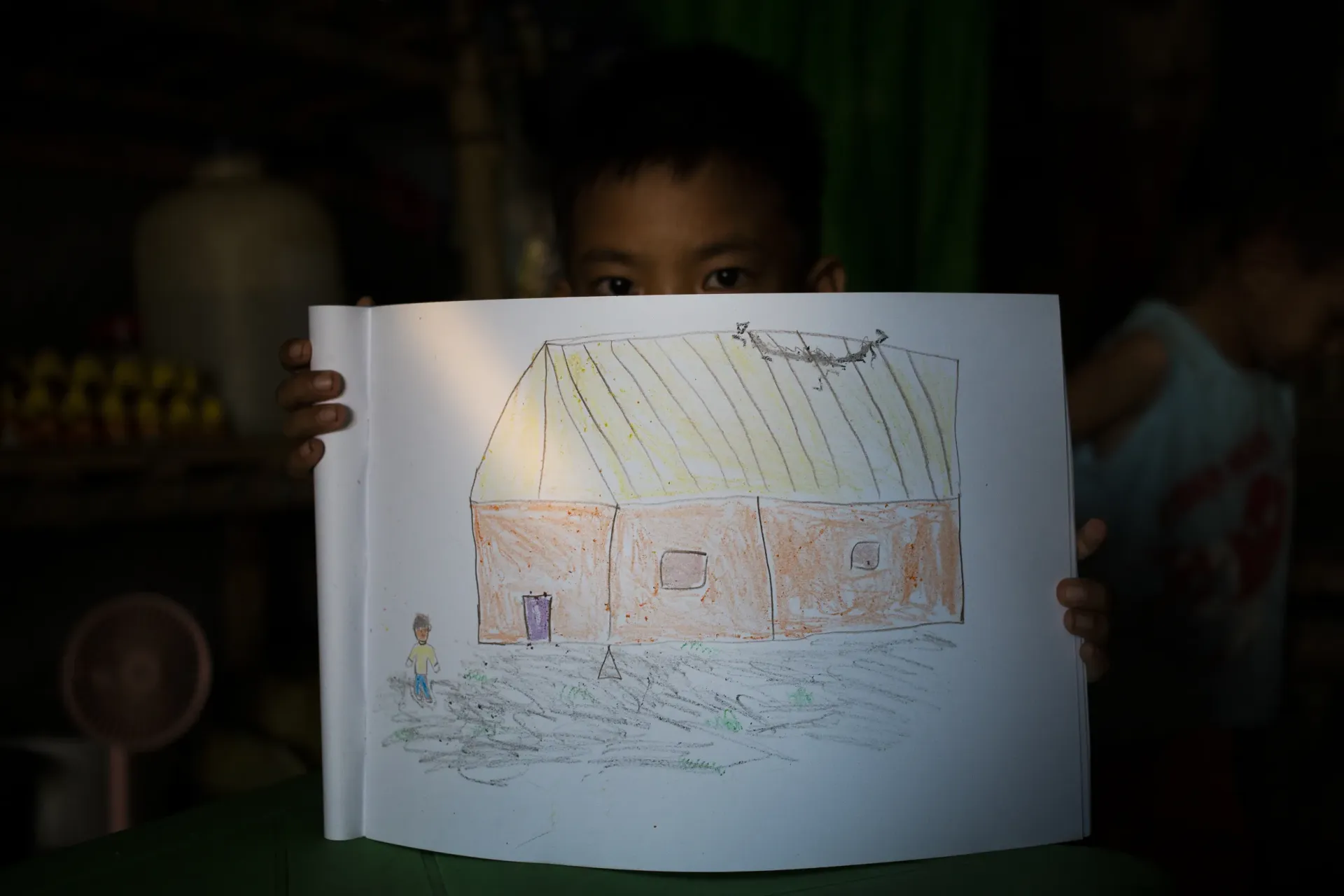
Thanks to generous support from the Republic of Korea, UNICEF is providing comprehensive child protection assistance to children like A Shao. This support enables UNICEF to deliver specialised Child Protection Kits containing essential items specifically selected for children who have experienced trauma. A Shao's kit includes drawing books, crayons, toys, clothing, soap, and other age-appropriate supplies that help restore a sense of normalcy and dignity.
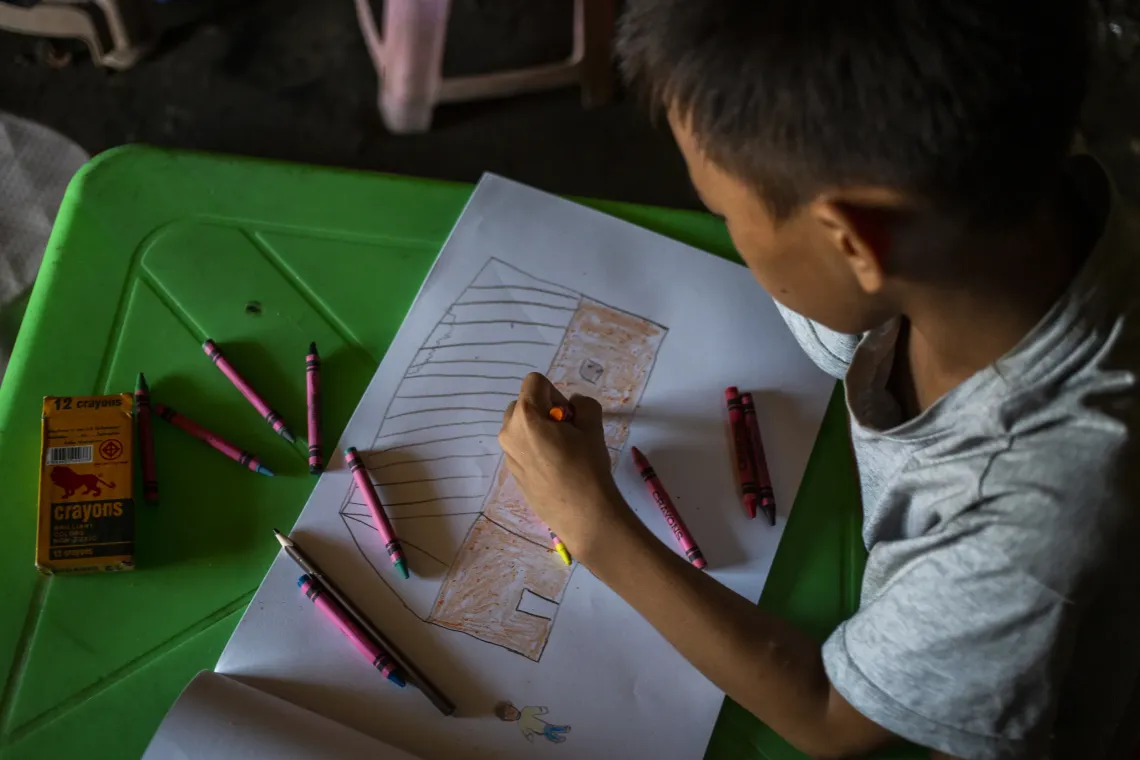
"Before, he used to always ask me to buy drawing books for him, and he was always drawing," Ro Nan says. "I'm so happy they've provided support for us, and my child also got something he really wanted."
With support from partners like the Republic of Korea, UNICEF also provides emergency cash assistances through local partners to cover crucial medical expenses, transportation costs, and other needs related to A Shao's recovery. This comprehensive support made possible his successful major surgery in December 2025, when doctors removed the remaining shrapnel from his body. "When the doctors told me he needed another big operation to take out the metal pieces still inside him. I was worried about my son going through more pain. But I am so relieved that I chose to do the surgery and he's healing well now," Ro Nan shares.
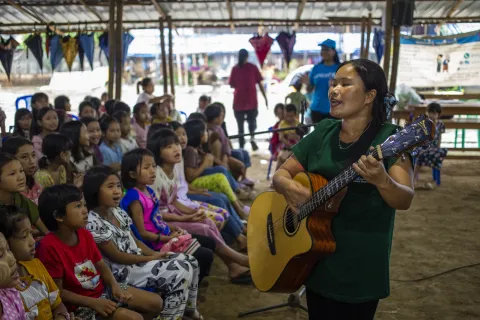
Most critically, this funding allows UNICEF to work with partners in providing life-saving Explosive Ordnance Risk Education (EORE) to children and families living in displaced camps and host communities across Kachin and other conflict-affected regions. This education helps families recognise and avoid unexploded ordnance, potentially preventing tragedies like the one that devastated A Shao's family. Through integrated EORE and victim assistance, UNICEF and its partners play a critical role in reducing risks and supporting survivors’ resilience.
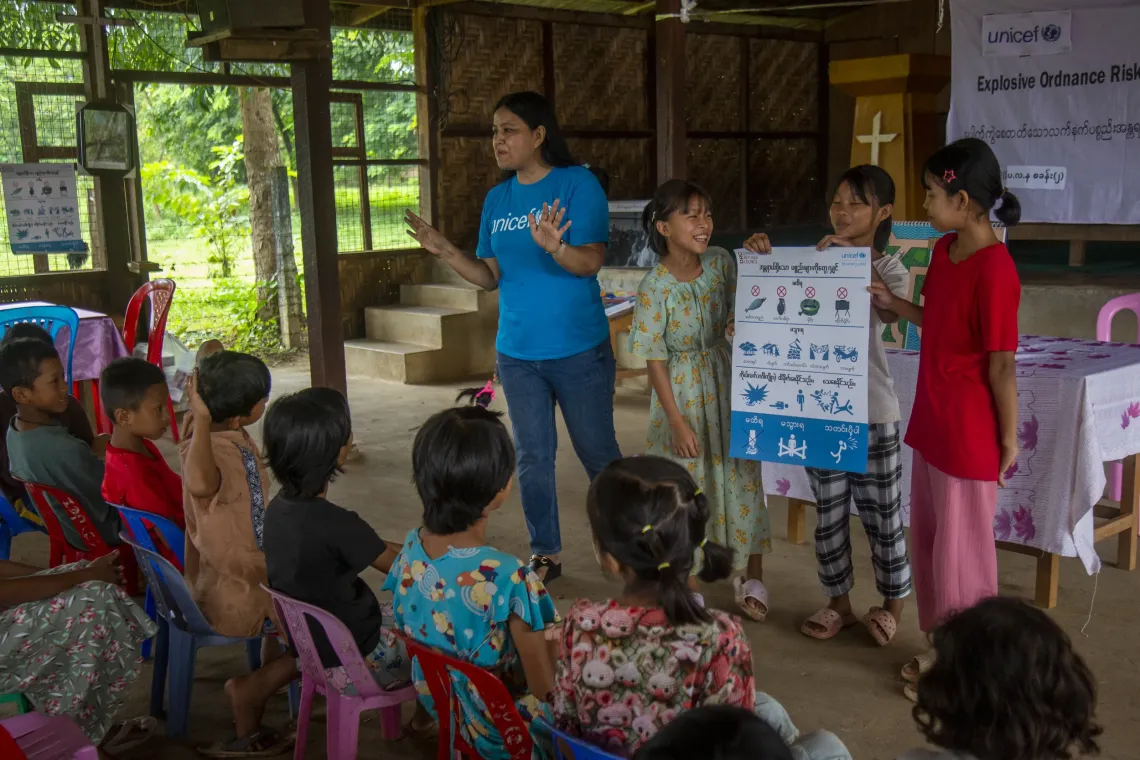
"We see families every day who have been affected by landmines and explosive ordnances of war, and our priority is to prevent more children from experiencing this trauma and support them," said Thida Seine, UNICEF Child Protection Officer based in Myitkyina. "Thanks to the Republic of Korea's generous support, we're able to teach children and families how to identify dangerous objects and stay safe, while providing comprehensive support to survivors like this brave young boy. Every child deserves to play, learn and grow without fear."
Despite the trauma and ongoing challenges, the family maintains hope for the future. A Shao continues to express his desire to return to school, saying "I want to go to school," even as his mother worries about his safety.
Ro Nan dreams of her son becoming a doctor one day. "I really want him to be a doctor so he can help and save the lives of people who don't have much, because I have experienced this myself and what we have been through," she says.
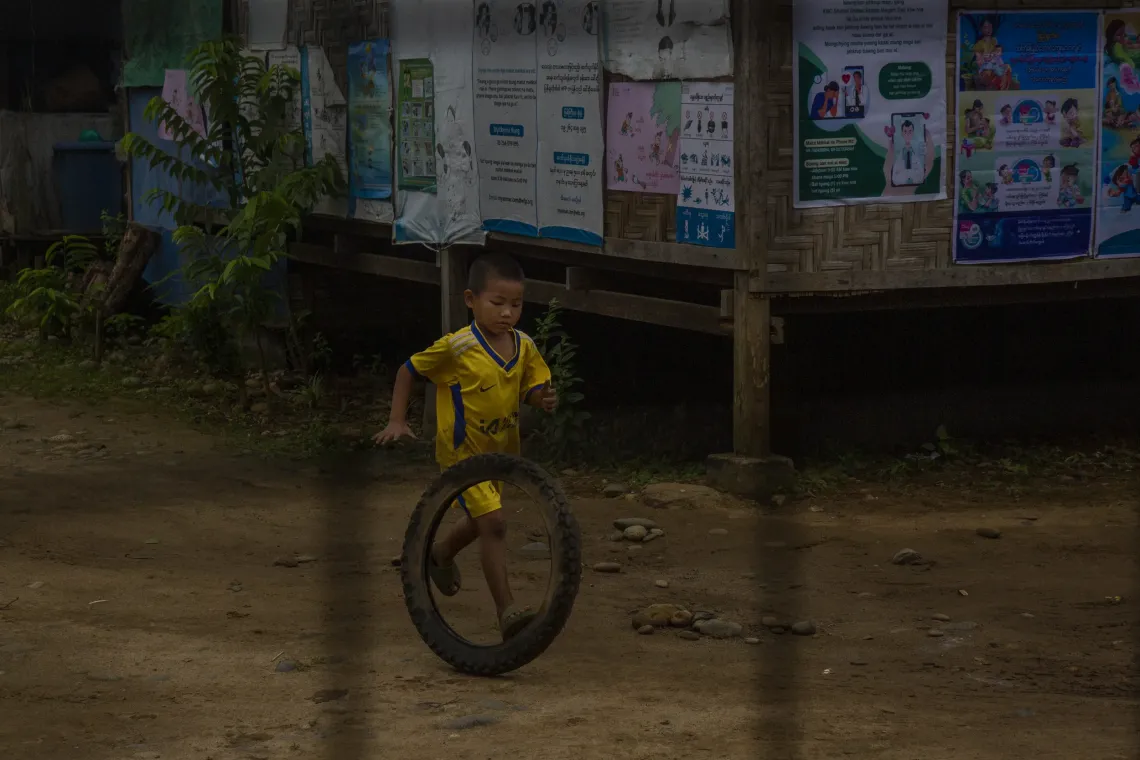
Yet the reality remains stark for Myanmar's children. The country now faces its worst humanitarian crisis in decades, with estimated 3.6 million people displaced and children making up one-third of the displaced population. Artillery strikes, airstrikes, and explosive remnants of war continue to claim young lives daily, with Myanmar recording the world's highest number of landmine casualties every year since 2023.
In a world where children should be safe to play and learn, partnerships like the one with the Republic of Korea enable UNICEF to continue standing with Myanmar's children, proving that even amid deadly conflict, hope can endure and young lives can still find paths towards better tomorrows.