Mandalay Diary
A medical student’s plea for support after Myanmar’s devastating earthquake
- English
- မြန်မာ
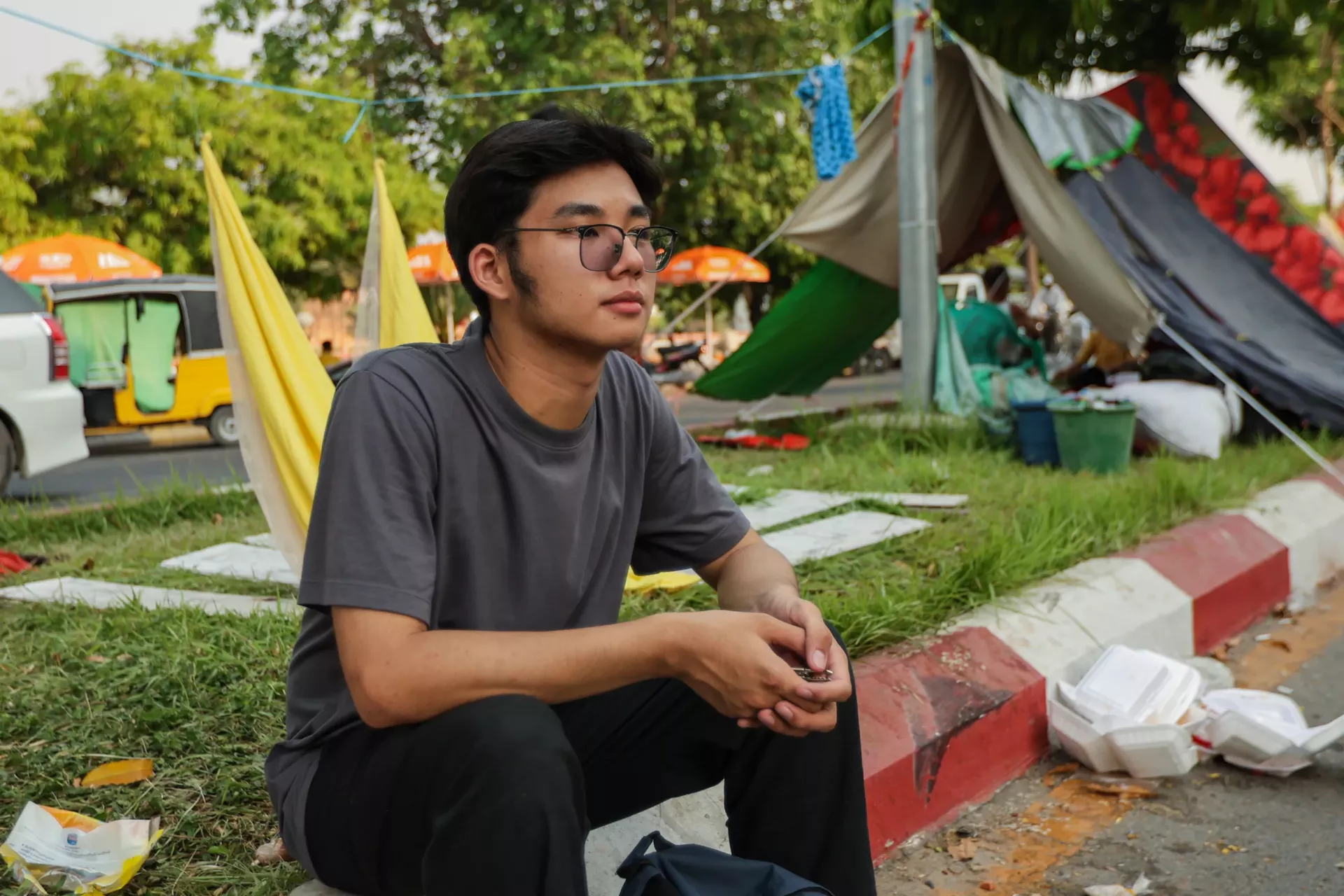
Bhone Khant, a 20-year-old medical student and UNICEF U-Reporter from Mandalay, vividly remembers the moment the earth shook on 28 March. “I was having lunch with my family when the earthquake struck. Everything fell – walls cracked, stairs shook, and people screamed,” he recalls.
“Just a few minutes after I escaped, part of our house collapsed and we've lost our home.”
While Bhone and his family escaped their collapsing home without injuries, like many in Mandalay, they now live in an open tent on the street, facing extreme heat and lacking basic necessities like clean water and sanitation.
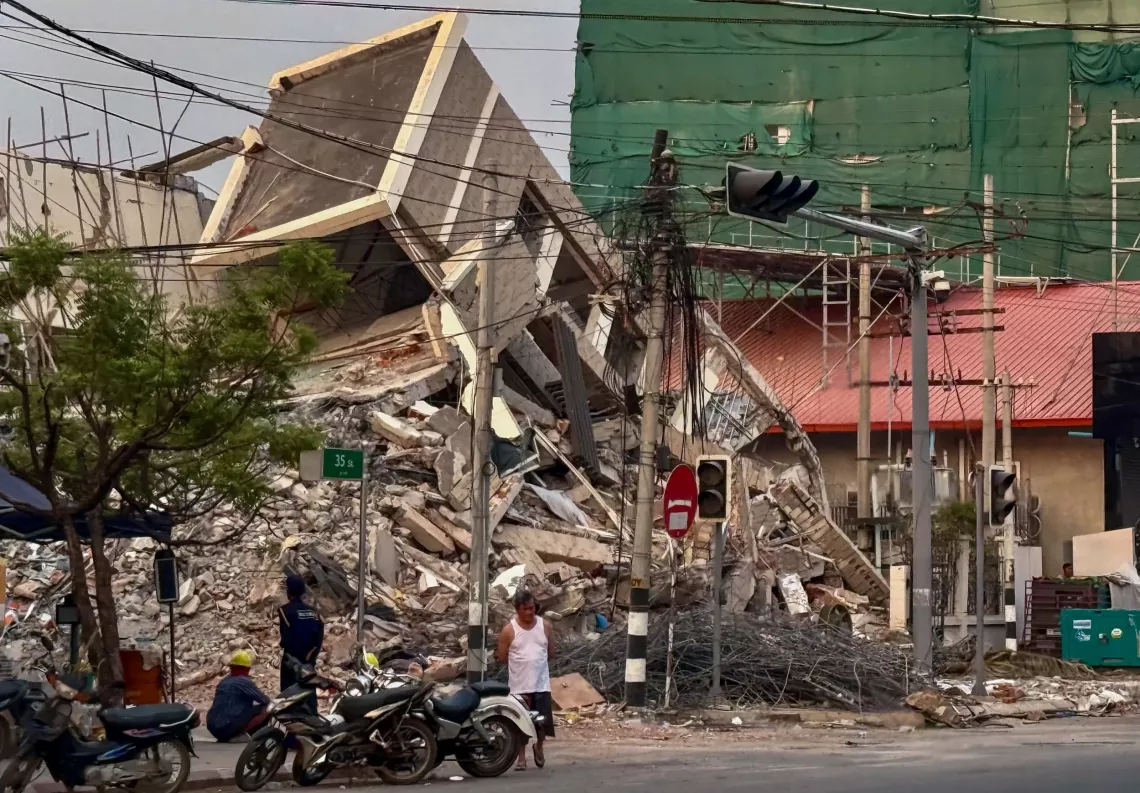
The magnitude 7.7 earthquake devastated central Myanmar, followed by a powerful aftershock just minutes later. The destruction in Mandalay is staggering – homes, schools, hospitals, and critical infrastructure have been severely damaged. Families are grappling with trauma, displacement, and survival in harsh conditions.
“Here in Mandalay, the weather is really, really hot and many people are suffering from heat stroke. And I'm worried about the consequences, about the health of the victims,” Bhone says.
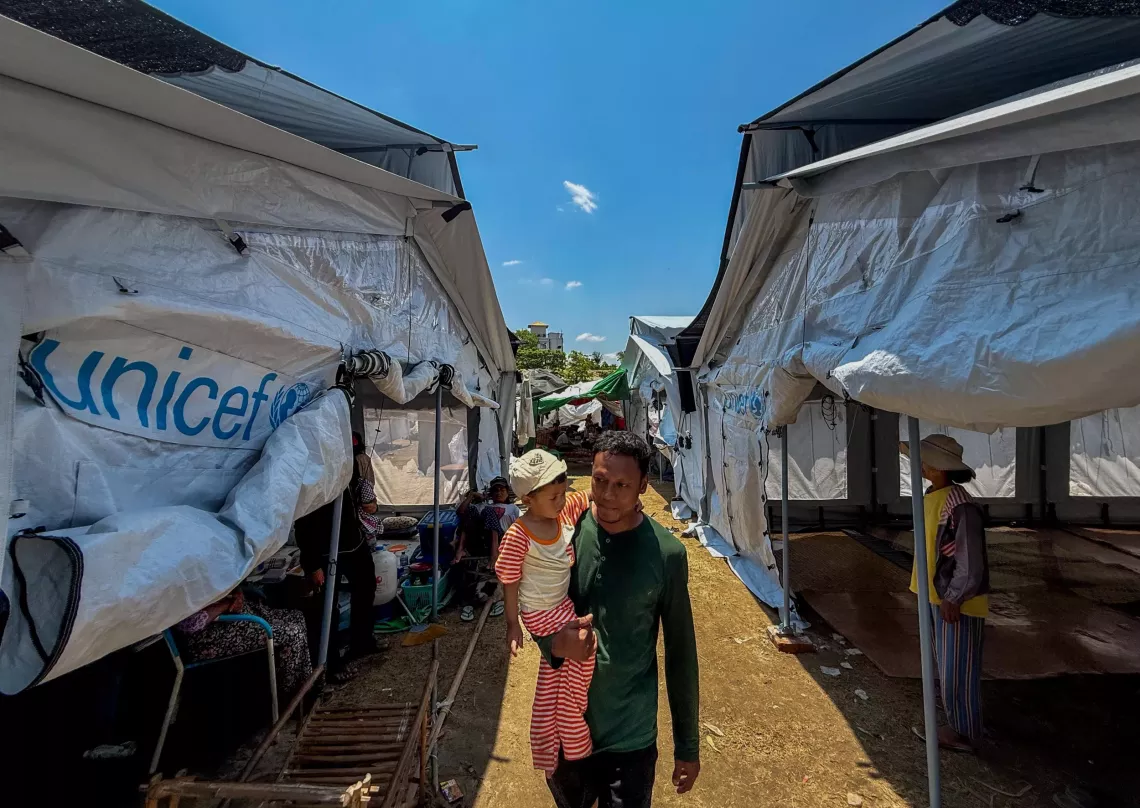
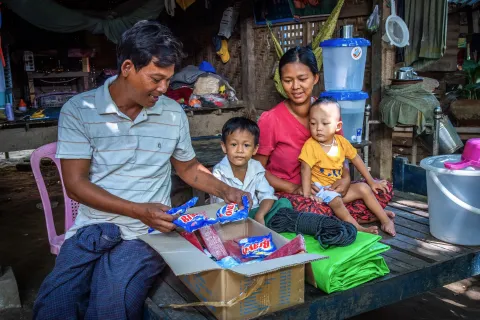
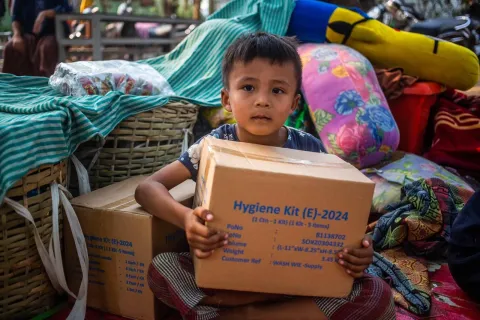
As soon as the earthquake struck, UNICEF mobilised its emergency response teams to provide immediate support to affected children and families. Leveraging pre-positioned supplies from warehouses in Yangon and Mandalay, UNICEF distributed essential items such as medical kits, water purification tablets, hygiene kits, and emergency shelter materials. The first humanitarian flight carrying 80 metric tons of relief supplies arrived in Myanmar within days of the disaster.
To address the urgent need for clean water and sanitation, UNICEF began water trucking operations to deliver safe drinking water to families living in makeshift shelters. Health services have been bolstered with kits designed to serve thousands of people for months. Additionally, UNICEF is working closely with local partners to reunite separated children with their families and provide psychosocial support to those experiencing trauma.
Bhone reconts how he lost one of his classmates in the earthquake. "I feel really, really bad for her...I wish she rests in peace, and I am sorry I can’t keep our promise on our exam results day - we promised to see each other again in Year 3, our clinical year...she didn't make it and I feel really, really sad for her and I can't imagine; it's a loss..."
Through U-Report – a digital platform empowering young people to share their perspectives—Bhone Khant found a way to amplify the voices of survivors. “U-Report feels like a family that listens to us and supports us,” he says.
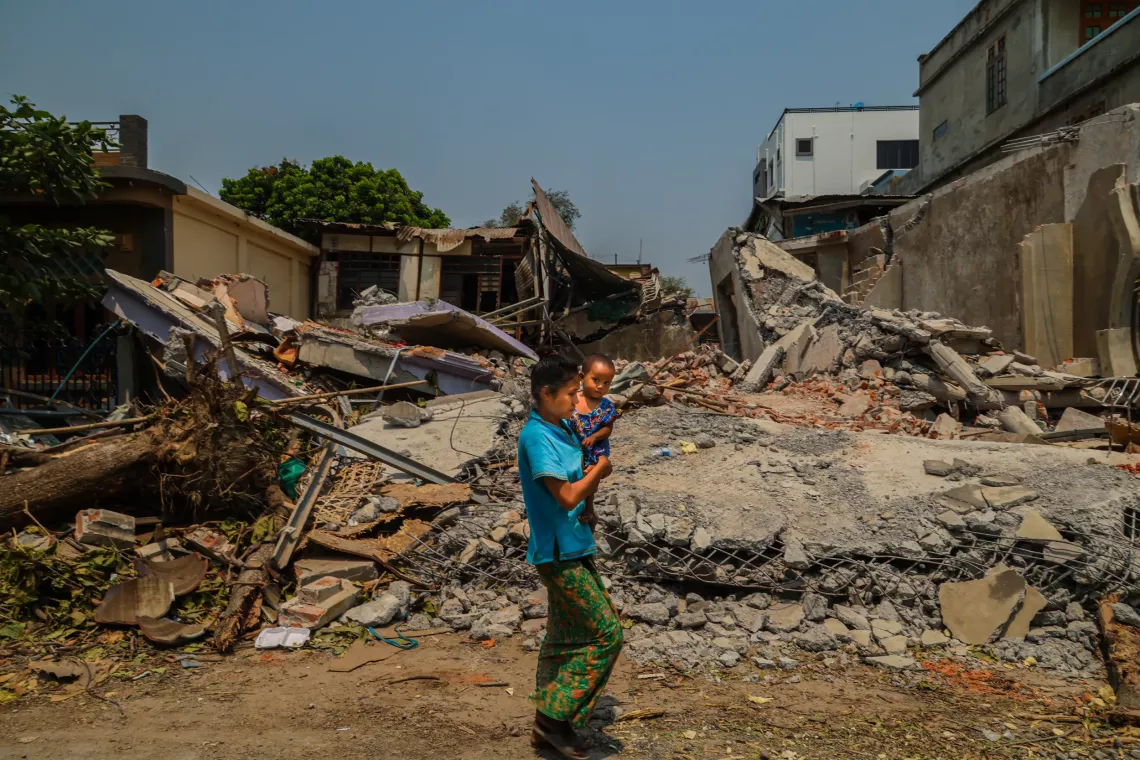
Despite these efforts, the challenges remain immense. Aftershocks continue to terrify survivors, making it difficult for them to sleep or eat.
“There are still many people missing and some of the children are still missing as well, and their parents are still missing …there are many people who need help in many ways. We need everyone's help. Food, shelter and everything. We've lost everything so we need everything,” Bhone says.