UNICEF UK supports improved access to safe water in remote communities in Nampula Province
United Kingdom Committee for UNICEF (UNICEF UK) increases access to safe water for the school and community of Matharya with a solar-powered water supply system.

- Português
- English
Ribaué, Nampula - "I used to carry plastic bottles of water to school every day because the hand pump at school was hard to use," said Ana Rodrigues, aged 12. Ana attends Grade 4 at Matharya Primary School in Ribaué District of Nampula Province.
Ana and her classmates used to spend an average of three hours a day fetching water for drinking and for hygiene at school. Sometimes they didn’t have enough water due to challenges with the hand pump.
In another part of the community, 33-year-old Satifa Januário Semente used to wake up at 3 a.m. every morning to collect 20 litres of water for her family. "I had to stand in line for hours to get water to use at home," said Satifa. Some days Satifa's children were late for school because they had to wait for their mother to arrive with water for their morning hygiene. Tragically, one early morning in the dark, Satifa was attacked by strangers when she was out collecting water.
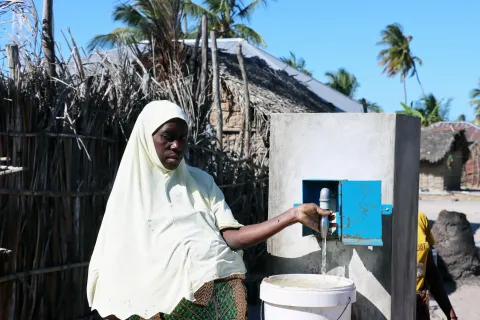
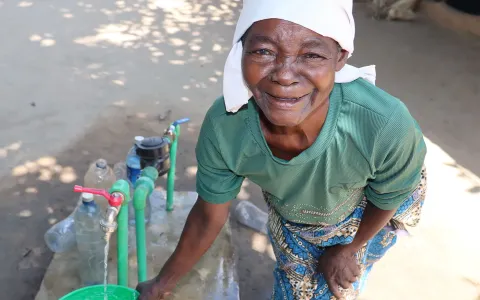
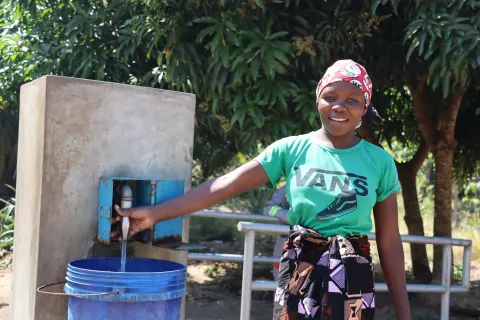
In 2023, Matharya's water supply system was rehabilitated and expanded to include three water fountains for the community, including a drinking fountain at the school with a connection to the town centre. "With this new system, I can access water quickly and safely and I always have enough for my chores at home," said Satifa.

Now we have enough safe water for drinking and hygiene.
UNICEF UK helped improve access to water in the community of Matharya by replacing the hand pump with a solar-powered water supply system, which helps the school and community have more water for drinking and hygiene purposes.
This project brings hope to Ana and other children at her school, and allows them more time to dedicate to their studies. For Satifa, the improvements to the water supply system mean that she won't have to wake at dawn to fetch water. She feels safer and has more time to rest and do other activities.
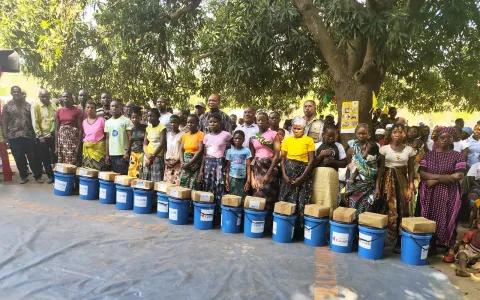
The new water infrastructure includes a maintenance and management mechanism integrating the school's water committee. The committee consists of twelve members including four teachers responsible for school health, two members of the school council, two female students, and four male students. All members were trained in the management, operations and maintenance of the solar system, helping to support sustainability of the new water system.
Ana is a member of the water committee. "I want to contribute to the upkeep of the new water system to serve my classmates and the children who will come after I leave this school," she said.
"Now we have enough safe water for drinking and hygiene. And students can have a better school experience since the time we used to spend fetching water can be used for studying. The new system is a lot easier to use – especially for the younger students – because the taps require less effort to open and close," concluded Ana.
With this new system, I can access water quickly and safely and I always have enough for my chores at home.