Football for Peace brings communities together in Palma
Football is one entry point through which communities can come together around the well-being, participation and protection of children and adolescents.

Cabo Delgado, Mozambique - In Palma District, UNICEF and Fundação Azul are supporting a community-based, integrated response centred on the needs of children and adolescents. Through MOYO, and with funding from the Government of Sweden, the response works with young people, families, community leaders and local structures to strengthen protection and well-being, build life skills, expand opportunities, promote positive gender norms and enable children and adolescents to participate meaningfully in decisions that affect them.
Football for Peace is one part of this wider response. By creating spaces where young people from different communities can meet and take part together, the championship uses sport to encourage positive interaction, peaceful coexistence and social cohesion, while contributing to stronger community relationships and resilience.
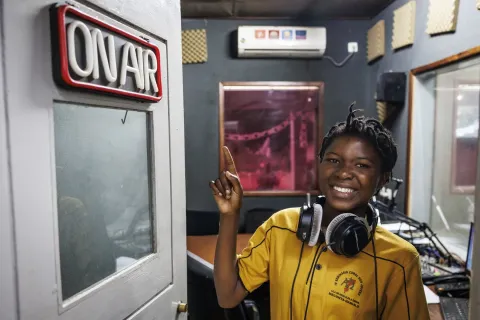
In August, Fundação Azul continued the Football for Peace Championship across 12 communities in Palma District. Forty-five matches were completed, culminating in the final on 22 August in Palma-Sede. Palma Community Radio shared information about the final and the role of sport in promoting peace and unity. Namalala won the men’s championship after contesting the final with Quirinde, while Bagala secured first place in the women’s category.
The championship brought together 29 teams, including 26 men’s teams and three women’s teams, with a total of 638 athletes: 66 girls and 572 boys. To support participation, teams received football equipment, meals, transport support and sports kits comprising jerseys, shorts and socks. In both categories, the top three teams received trophies and gold, silver and bronze medals.
As part of the wider community-based response, the championship complements work with children, adolescents, families and local leaders to create safer and more supportive environments, strengthen community ownership and reduce the risks of violence, abuse and exploitation. Football is one entry point through which communities can come together around the well-being, participation and protection of children and adolescents.