Digital learning brings new opportunities to Mozambican classrooms
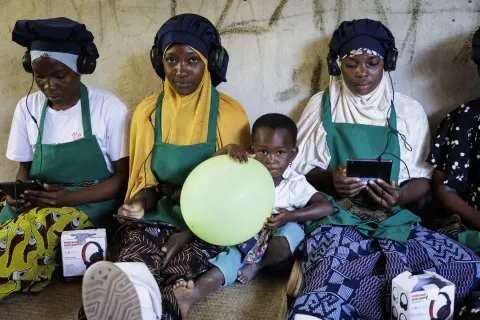
In teacher-led catch-up or remedial sessions, pupils use tablets and UNICEF's Learning Passport platform to work through activities at their own pace.

Matola, Mozambique - At EPC Matola Sede, a primary school in Matola, pupils are experiencing a new approach to teaching and learning as the school introduces digital learning into regular lessons.
During a school visit in November, UNICEF colleagues observed teachers using projectors and digital learning materials to bring lessons to life. Through videos, illustrations and interactive exercises, the approach aims to make lessons more engaging and help teachers explain difficult concepts. Teachers remain at the centre of the classroom, guiding activities and assessing pupils' progress.
In teacher-led catch-up or remedial sessions, pupils use tablets and UNICEF's Learning Passport platform to work through activities at their own pace, particularly those who have fallen behind in reading and mathematics. Teachers can track each pupil's progress and identify where additional support is needed.
The learning materials follow the national curriculum and come preloaded on USB drives, allowing teachers to use them with battery-powered projectors even when electricity or internet access is unavailable.
The initiative is set to expand significantly. By December 2026, 70 additional centres will receive tablets, accessories and solar power solutions, alongside the rollout of Learning Passport and MAZA in 67 schools across Cabo Delgado, Nampula, Zambézia, Sofala, Gaza and Maputo provinces.
Working with Mozambique's Ministry of Education, UNICEF aims to strengthen teachers' digital skills, improve classroom instruction and expand access to quality learning resources, particularly in underserved communities. The initiative represents an important step towards harnessing technology to improve learning outcomes for children across Mozambique.