A tablet, a bakery and a plan for the future
“MAZA has made me more hopeful for my future and for my daughter’s future.”

Palma, Cabo Delgado - Inside a white-walled classroom, 23 young people sit shoulder to shoulder, headphones on and tablets in their hands. The room is almost completely silent as they concentrate on their lessons. At the front, facilitator Taiar Jumo, 25, waits by the blackboard, ready to help when someone has a question.
Outside, a group of small boys roll a bicycle tyre across the dusty ground.
Among the students is 21-year-old Ana Abdala. On her tablet today, she is reading the story of a young man who started a juice business at a local market. At first, he sold only two cups a day. Then he began greeting passers-by, talking to them and telling them about his juice. Sales improved.
For Ana, it is a lesson in marketing. Just two months ago, even accessing the lesson would have been a challenge.
“Before MAZA, I had never used the internet or a smartphone,” she says. “In the beginning it was difficult to use and to understand, but now it is much easier. I am getting good at it.”
Ana left school in Grade 5 and is now raising her three-year-old daughter. She says finding work in Palma is difficult.
“There are too many young people looking and not many jobs available,” she says.
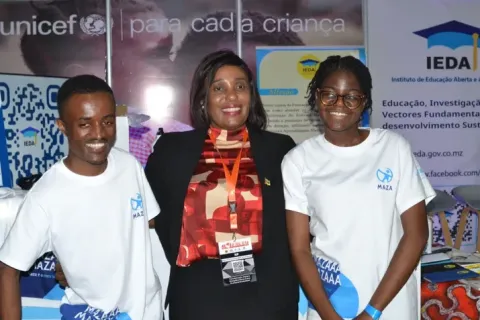
The three-month MAZA programme helps young people aged 16 to 24 develop digital, entrepreneurship and workplace skills. The participants were selected from the local community for morning and afternoon sessions.
For many, using a tablet and going online are new experiences. Facilitators help participants create email accounts, troubleshoot technical problems and understand lessons delivered in Portuguese when language becomes a barrier.
The course also teaches participants how to identify business opportunities, calculate costs, price products, make a profit and develop a business plan. They practise presenting ideas, conducting meetings and introducing themselves to potential business partners.
“I like using the tablet and learning about the business world,” Ana says. “I am learning how to set up a business, what money I need, how to price products and how to make a profit.”
Taiar has already noticed a change. At the beginning of the course, many participants were reluctant to speak in front of the group. Two months later, they are presenting their ideas with greater confidence and are increasingly comfortable using the internet and digital tools.
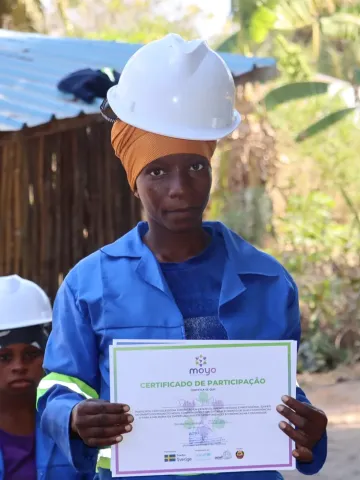
The training is part of Projecto MOYO in Palma, which supports adolescents and young people to develop skills and pursue opportunities for employment and entrepreneurship. Across Palma, 967 adolescents and young people have received employment kits after completing vocational training in areas including construction, cooking, motorcycle repair, carpentry, fish preservation and solar panel installation and repair.
For Ana, the course has helped turn something she enjoys into a possible business.
“I love to bake cakes, so I am thinking of starting a bakery,” she says. “I know how much I need to start my business and how much I need to save each week. When I have enough, I will start the bakery. That is my plan.”
She also hopes her new skills might one day help her secure an office job with one of the companies operating in Palma. Whatever path she takes, her goal is the same: to create a more secure life for her daughter.
“I have started to believe in myself,” Ana says. “Now I think I can set up my own business.”
Two months into a course that began with her first experience of the internet, Ana now has something more concrete than a dream. She has begun calculating what it will take to make it happen.
“MAZA has made me more hopeful for my future and for my daughter’s future.”
UNICEF supports Projecto MOYO in partnership with the Government of Mozambique and Fundação Azul, with generous funding from the Government of Sweden, helping adolescents and young people in Palma develop the skills and opportunities they need to build better futures.