At the Heart of a Rural Community:
a Health Centre Powered by the Sun

ARKHANGAI, Mongolia — In summer, Arkhangai’s grasslands turn green under wide blue skies. Herder families move with their livestock in search of good grazing land, often living far from provincial centres and essential services. For families spread across this vast landscape, reaching healthcare can require long journeys over rural roads.
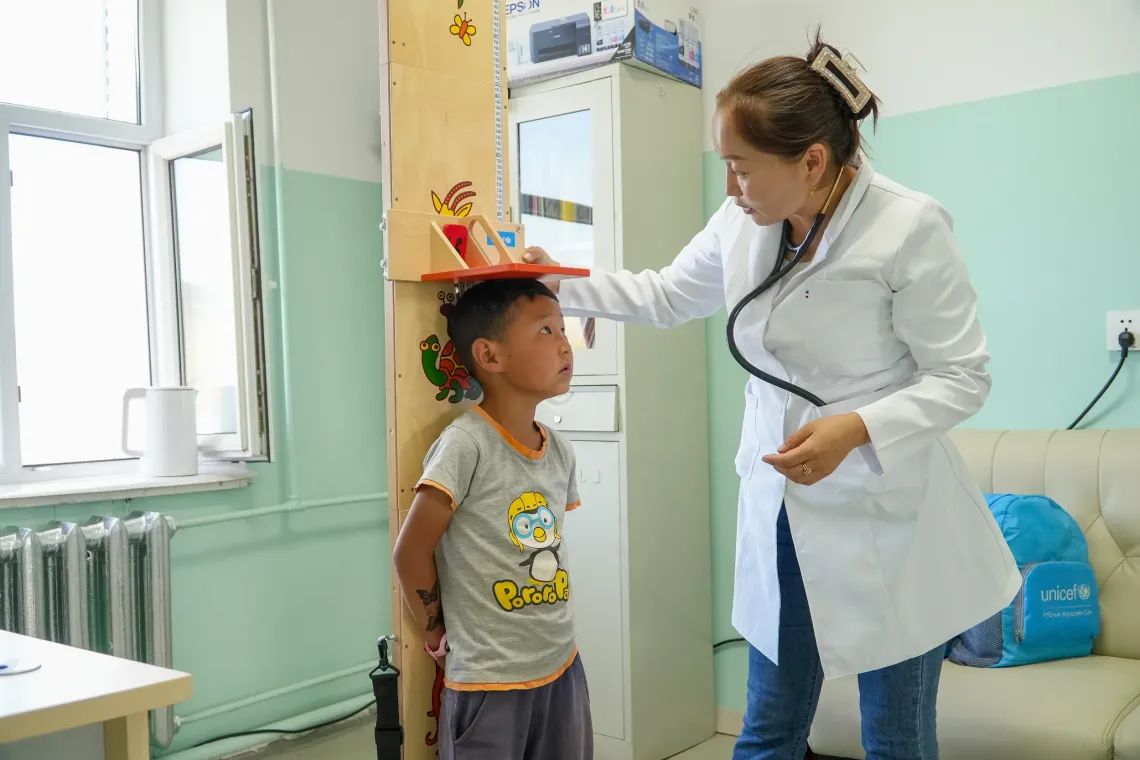
Six-year-old B. Delgerbayar sits quietly as Bagh doctor E. Ankhpurev conducts a routine health check-up at the Bagh 6 Health Centre in Erdenebulgan soum.
Located 30 kilometres from the provincial centre, the health centre serves around 1,000 people, including 120 herder families living within a 60–110-kilometre radius. Among them are around 460 children. The area is also a popular tourism destination, and the health centre provides services throughout the year to six tourist camps, a children’s camp and an elderly care and rehabilitation centre.
For doctor Ankhpurev, providing healthcare in such a remote community can be challenging, as families travel long distances to reach the health centre and resources are limited.
“Some families travel more than 100 kilometres to reach us, so when they need treatment, they often have to stay here for several days. The improved facilities make their stay more comfortable and help us provide better care,” she says.
A renewed health centre
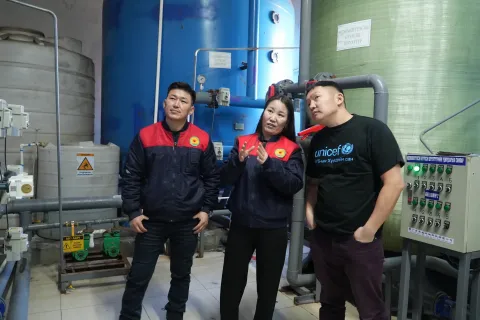
Established in 1994, the health centre has now undergone major renovation by the local government, including improved indoor watercloset, including new showers and indoor toilets. UNICEF Mongolia supported the installation of a 20-kilowatt solar energy system, new ground well and on-site small-scale wastewater treatment system.
Clean toilets and handwashing facilities with soap help protect children from infections that can lead to diarrhoea and other illnesses, especially when they are already vulnerable or receiving medical care. At health centres, safe and hygienic WASH facilities also give children privacy and dignity when using the toilet, while reducing their exposure to germs. For families travelling long distances for care, these simple improvements can help children stay healthier and make their experience at the health centre safer and more comfortable.
It also benefits visitors to the area. Tourism is an important part of local livelihoods and economic activity in Arkhangai, where travellers come to experience its landscapes, hot springs, and nomadic way of life.
“This health centre serves both local families and people travelling through the area. Strengthening essential services is important for the well-being of the community and for supporting local development,” says Mr. Ganzorig, Governor of Erdenebulgan soum.

Solar power for uninterrupted healthcare
For a remote health facility, reliable electricity is essential to keeping healthcare services running. At this bagh health centre, power cuts can last for up to three days a month, disrupting services and making it harder for children and families to receive timely care. The new solar system provides a reliable source of clean energy, helping the health centre continue essential services even when the grid is unavailable.
“Mongolia has enormous potential for solar energy, and in remote communities, it offers a practical way to make essential services more reliable. When power cuts can last for days, solar energy can help health centres keep serving children and families without interruption. It is an important step towards stronger energy security and more resilient health services in remote areas,” says B. Khishigjargal, Programme Officer for Climate Change, UNICEF Mongolia.
The improvements are part of the Solar-WASH project, implemented by UNICEF Mongolia with support from UNICEF UK and the Eleva Foundation across all 21 provinces of Mongolia. By combining clean solar energy with improved water, sanitation and hygiene facilities, the project is helping health centres provide safer services while strengthening communities’ resilience to climate and energy challenges.
Together, the renovated building, improved WASH facilities and solar power are transforming the Bagh 6 Health Centre into a safer, healthier and more resilient place for children and families. For herder families and other residents travelling long distances across Arkhangai’s vast landscape, these improvements mean greater access to essential healthcare in a facility that is better equipped to serve them, whatever the conditions outside.