Children's Climate Risk Report (2026)
About
The Children’s Climate Risk Report 2026 provides the most detailed global picture to date of where children face the greatest climate risks. In an unprecedented level of detail, it shows how children’s exposure to multiple, overlapping climate hazards – combined with their inherent physical vulnerabilities and gaps in the social services they rely on – undermines their rights and increases their risk of harm.
The report introduces new data from UNICEF’s Global Child Hazard Database, enabling analysis at a geographic scale relevant for policy and action. It presents updated data and models covering a broad range of hazards for most countries and territories, including the Small Island Developing States. In addition to counting children by country, the analysis maps where children live on a fine geographic grid, so it can estimate how many face several climate hazards in the same place. A newly developed Children’s Climate Risk Framework pairs hazard exposure with children’s vulnerability (their access to health, WASH, nutrition, education, protection and social protection). The report also provides concrete policy recommendations across different sectors.
Key highlights
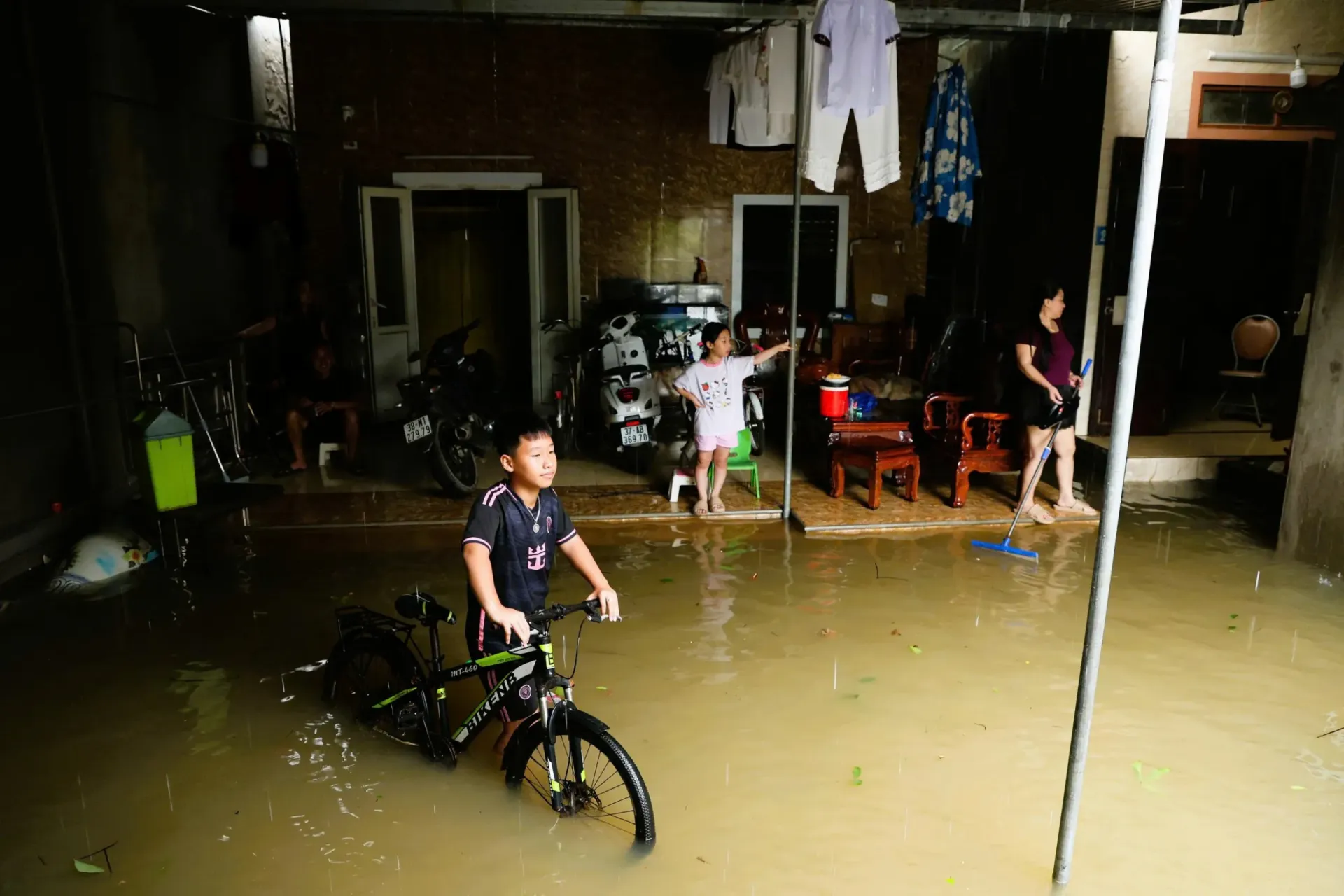
Children around the world are being exposed to climate hazards at an unprecedented scale. Nearly one in seven children – around 337 million – live in areas affected by riverine flooding, while 33 million are exposed to coastal floods. Drought is even more widespread: more than three quarters of all children globally (1.8 billion) are exposed to agricultural or meteorological droughts, threatening food security, nutrition and livelihoods. At the same time, 662 million children live in areas exposed to tropical storms, where intense rainfall and high winds disrupt homes, schools and health services.
Nearly two in three children worldwide (1.5 billion) are exposed to heatwaves that are becoming more frequent, longer-lasting or more severe, and 1.2 billion children are exposed to extreme heat conditions. These exposures pose serious risks to children’s health, learning and well-being, particularly where access to cooling, safe water and health care is limited. Additional hazards compound these risks, with 206 million children exposed to frequent and severe fires and 123million exposed to sand and dust storms.
Climate change also amplifies hazards that directly affect children’s health. Over two in five children globally (around 1 billion) live in areas with exposure to malaria, a climate-sensitive disease whose transmission is influenced by temperature and rainfall patterns. Air pollution is even more pervasive: an estimated 2.3 billion children – almost all children worldwide – live in areas where air pollutants are detectable. Together, these climate-sensitive hazards underscore how climate-related hazards threaten children’s survival, development and futures, particularly in contexts where health and protective systems are weakest.