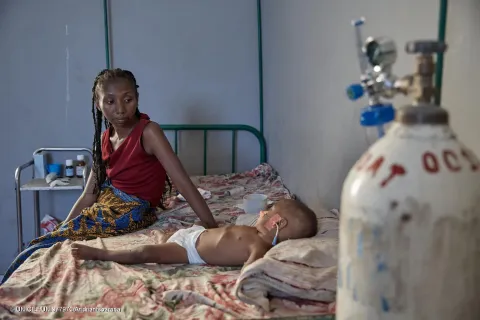
UNICEF and Partners Are Mobilizing in Response to Malaria Surge in Ikongo
In response to a malaria outbreak in Ikongo, UNICEF and its partners launched a three-month emergency response in June 2025, including mobile clinics, awareness campaigns, and support with medication.

In response to a malaria outbreak alert in Ikongo district, Fitovinany region, UNICEF and its partners launched a multisectoral emergency intervention in June 2025 to address an unusual surge in malaria cases.
Initially planned for a three-month period (June to August 2025), the support has focused on the most affected and hard-to-reach rural areas. The strategy is community-based, involving the deployment of integrated mobile clinics, combined with community awareness campaigns and the provision of essential medicines.


Deployment of Integrated Mobile Clinics
Since early June 2025, two mobile clinic teams have been deployed in the most severely affected areas of the district, particularly in the fokontany of the hardest-hit communes (Ambatofotsy, Belemoka, Ikongo, and Maromiandra). Each team consists of three health workers traveling by motorcycle (one motorcycle per health worker) and carried out 15-day missions per month during the three-month intervention period.
These clinics primarily targeted remote localities, some located several tens kilometres from the nearest health centres. In an effort to save lives, they offered the population a comprehensive package of health services, including: malaria treatment (for children, adults, and pregnant women), curative consultations, Integrated Management of Childhood Illness (IMCI), vaccination, antenatal care (ANC), as well as screening and referral of child malnutrition cases.
This strategy helps ensure the continuity of curative care in a crisis context, while also strengthening community-based epidemiological surveillance and the connection between vulnerable populations and the health system.
During the mobile clinic outreach missions in June and July, 1,498 girls, 864 boys, and 1,774 adults received care for various illnesses. Among them, 1,180 children and adolescents, as well as 219 adults were treated for malaria, representing 34 per cent of all consultations.


Provision of Essential Medicines
UNICEF also supported the provision and delivery of essential medicines (complementing the antimalarial drugs supplied by the National Malaria Control Programme) to meet the needs of 13,000 people over a three-month period. This supply primarily targeted children, adolescents, and pregnant women, ensuring the continuity of primary health care through mobile clinics in areas where access to permanent health facilities is very limited.
On 8 May, 2025, concerning alerts were received by the Regional Directorate of Public Health in Fitovinany through the Event-Based Surveillance (EBS) system, reporting several community deaths with clinical symptoms consistent with malaria. Although Ikongo is a historically endemic district, these events suggested an abnormal situation that required urgent action. In response, the Regional Directorate of Public Health (DRSP) of Fitovinany and the District Health Service (SSD) of Ikongo mobilized technical and financial partners, including UNICEF, which responded positively to the call.


Community Awareness and Rapid Situation Assessment
Alongside medical interventions, the teams conducted community awareness activities on good malaria prevention practices: consistent use of insecticide-treated nets, elimination of mosquito breeding sites, early detection of disease symptoms, and prompt use of health services. To amplify the impact of these messages, community engagement efforts were combined with media communication activities, including the regular broadcasting of awareness-raising radio programmes, which widely disseminated prevention messages to the populations in the affected fokontany.
These actions helped strengthen community knowledge and improve understanding of the factors contributing to the persistence of the outbreak. They also laid the groundwork for the development of a targeted communication strategy and other complementary social interventions.
Rapid assessments of the health situation were carried out to better guide the response and identify areas requiring increased attention.