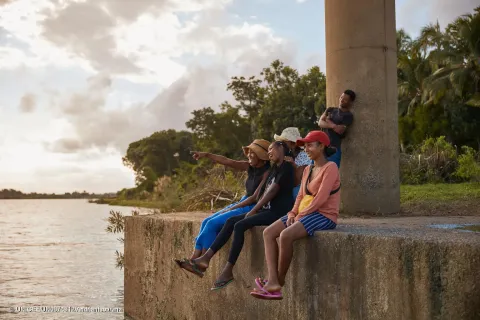
Two Destinies, One Choice: Ando Raises Awareness.
Ando is committed to raising children's awareness about the dangers of early marriage and promoting the power of education. Through the Zara Mira programme, she leads listening groups where every word becomes a tool for change
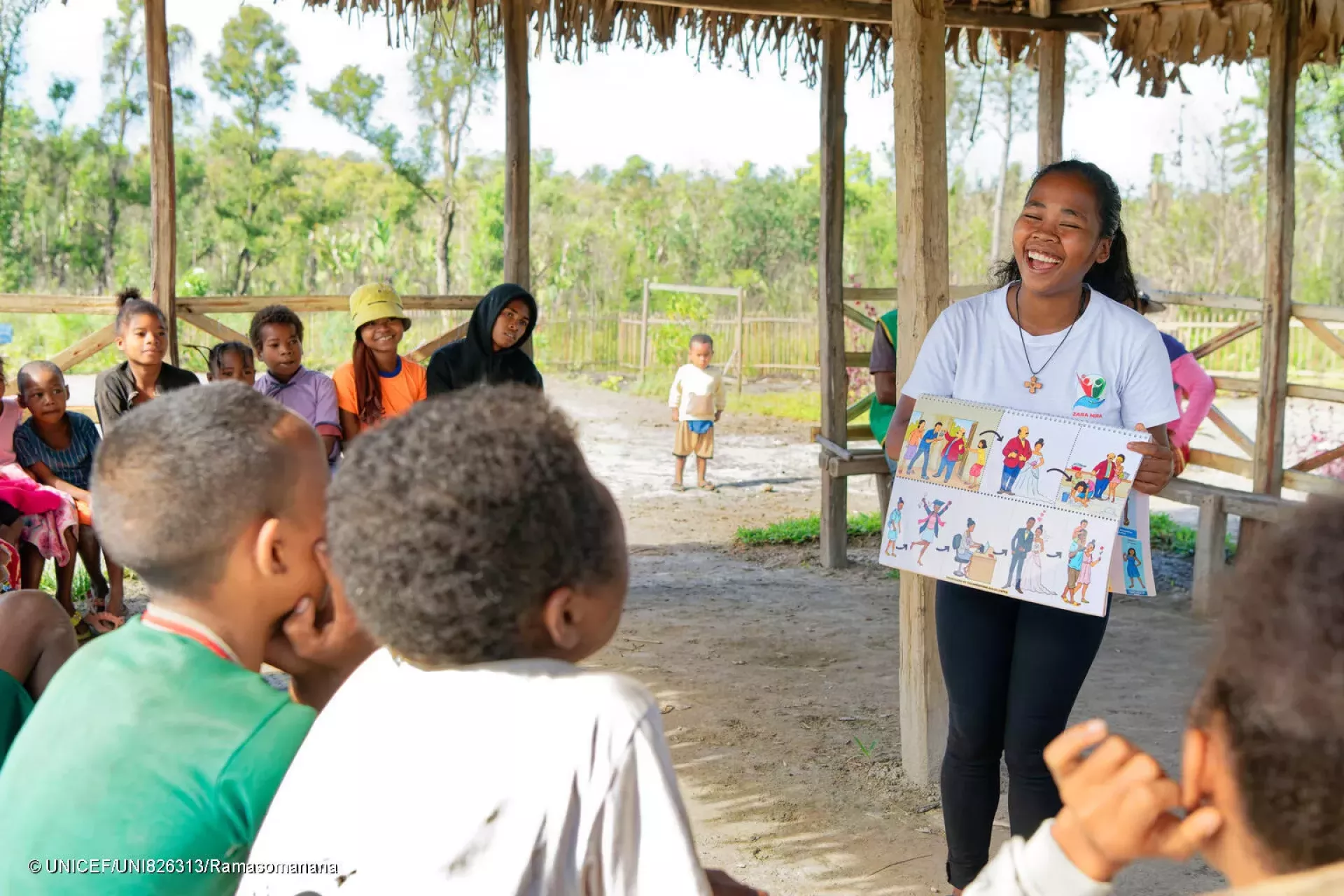
"Which of these two stories do you think is better — Mbity’s or Meva’s?" asks Ando, with a knowing smile, as she is facing a group of about thirty children and teenage girls. They all reply in unison: “Meva’s!”
In her storytelling box, two destinies take shape: that of Mbity, forced into an early marriage, and that of Meva, who stayed in school and is now thriving.
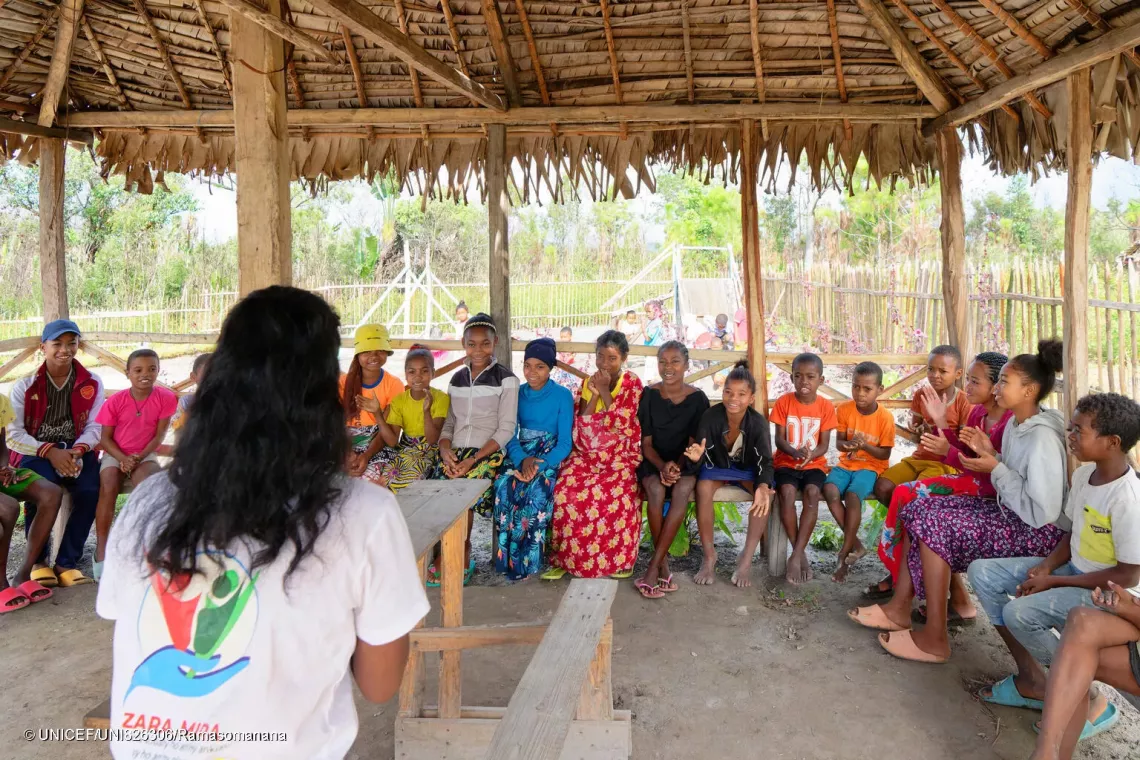
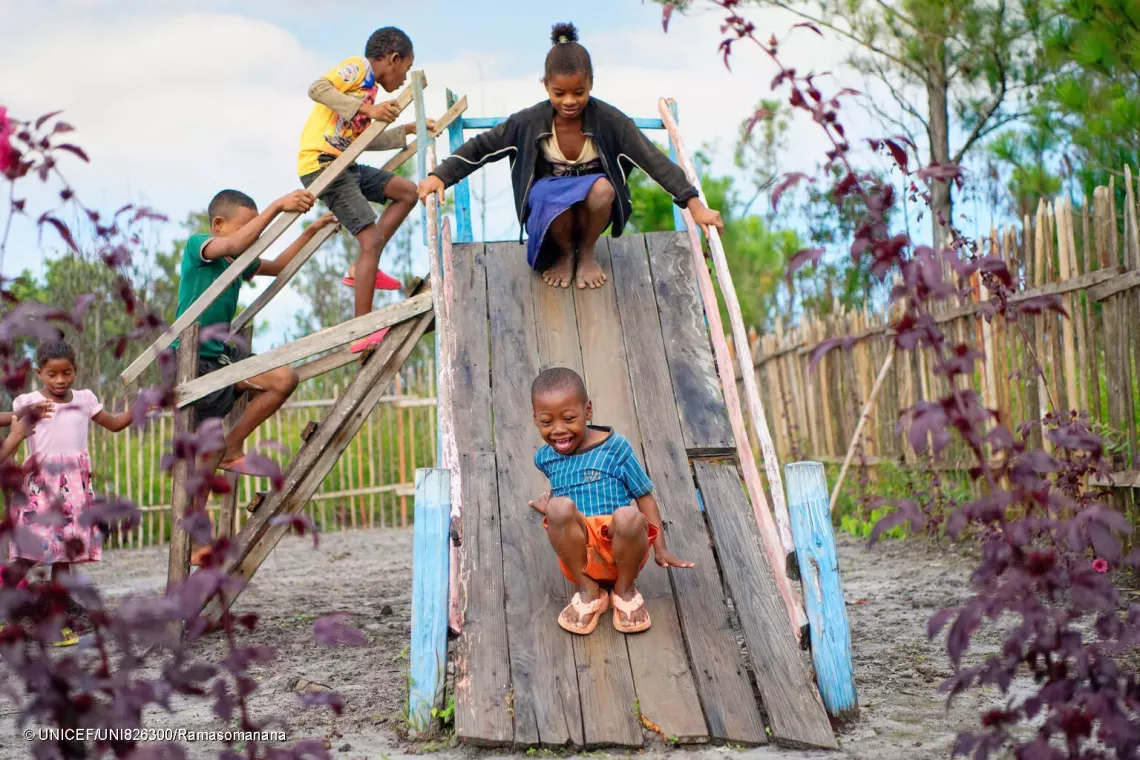
This scene takes place at the community site of Ambohimandroso, in south-eastern Madagascar, in a place called “well-being space.” This space is dedicated to sharing good practices with parents and children who benefit from the Zara Mira programme. On this particular day, through an approach that is both playful and impactful, Ando spent an hour engaging with children and adolescents on sensitive topics, such as protection from violence and the fight against child marriage.
Ando, whose full name is Andonirina Razanadrafara, is 24 years old and works as a community support worker in the commune of Tataho. She is in charge of raising awareness in the community, relaying essential information, and conducting home visits to monitor the progress of beneficiaries. She covers three villages and works closely with parent leaders and young community volunteers. A mother of a three-year-old, she is also a beneficiary of the Zara Mira programme.
“I believe that the most vulnerable, especially children and people with disabilities, deserve to be supported with kindness. No one should be left behind,” says Ando.
When a Challenge Becomes a Vocation
Ando pursued her studies in the capital, Antananarivo, until she obtained her baccalaureate. However, due to financial constraints and the COVID-19 lockdown, she had to abandon her plans and return to her native village of Ambohimandroso. She then took an English training course in Manakara. Shortly afterward, she became pregnant. Today, she divides her time between running a small family business and her community commitments.
She started as a youth community relay before becoming a community support worker—a role she proudly embraces, as it allows her to stay close to her community and build new connections. Ando receives a monthly stipend of about USD 40 for her work as a support worker – a source of financial assistance that helps her meet her needs – in addition to the cash transfer her child receives through the programme, which provides a monthly allowance for each beneficiary. In the commune of Tataho, seven villages and nearly 1,500 households benefit from this cash transfer programme.
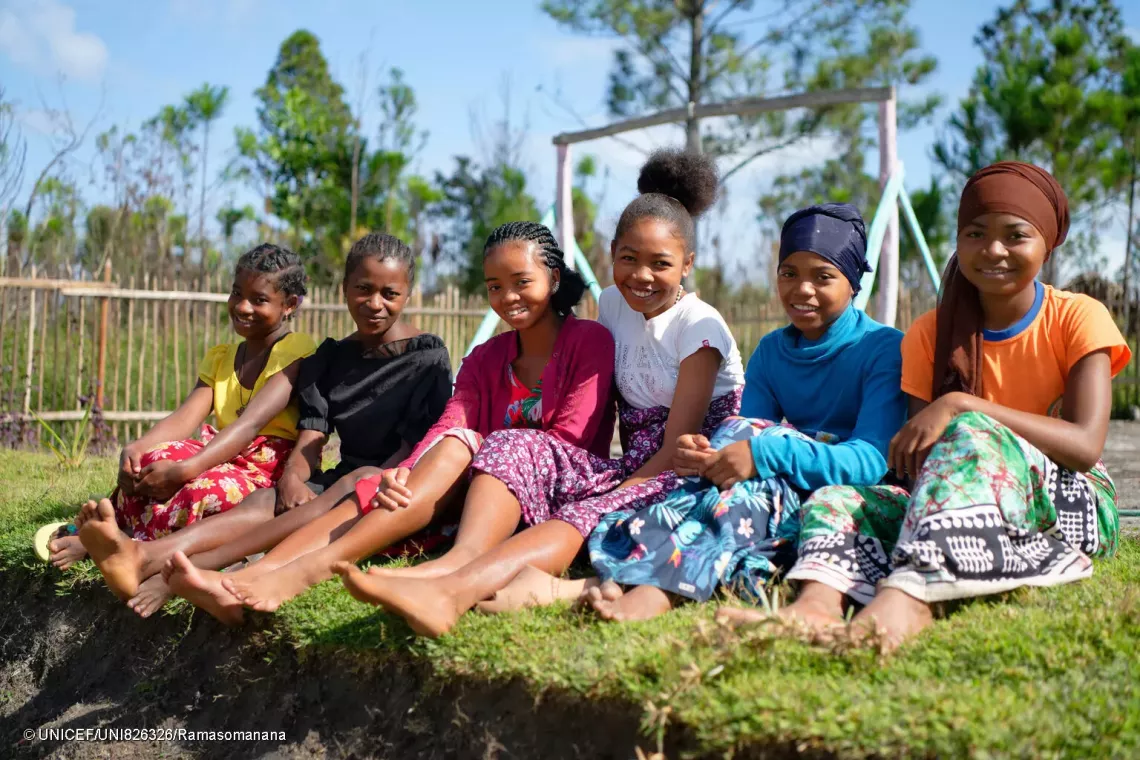
At the well-being centre, several teenage girls regularly attend this activity called “listening group” and benefit greatly from it. They appreciate the way the community support worker educates them through these discussions. “I enjoy the teachings I receive here, and I share them with my friends,” says Juliana, one of the participants present that day.
In Madagascar, nearly 39 per cent of girls are married or in a union before the age of 18. The Zara Mira programme supports the Let Us Learn initiative, which adopts a multisectoral approach aimed at improving access to and retention in secondary education—particularly for girls—by combining actions in the areas of education, child protection, social protection, and community engagement.
Note: The Zara Mira universal child benefit and equal opportunity programme, as well as the Let Us Learn programme, in the commune of Tataho, are funded by the Findel Foundation and the German Committee for UNICEF.