The "TOSIKA FAMENO", a breath of fresh air for vulnerable families under lockdown
The "Tosika Fameno" will financially support vulnerable families because of the socio-economic impacts of the lockdown

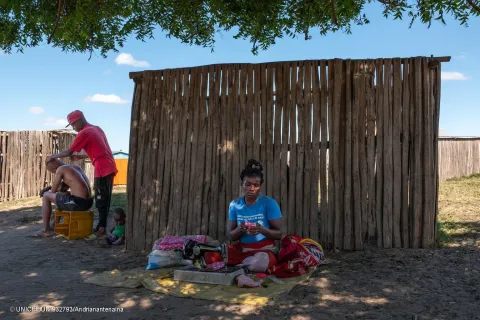
Chantal Raharimalala, 21, mother of three, would never have imagined her life after the COVID-19 pandemic. Since 21 March when the Malagasy government decreed lockdown in the capital, she and her husband have lost their jobs as gardener and mason. To respect the lockdown, they had to stay at home in Morarano Alarobia – it was not an easy decision because before lockdown, the two spouses earned an average of 15,000 Ariary per day ($4), an amount that allowed them to make it through the month.
They had to stop their work for lack of job and had to resort to small morning jobs like carrying water. They could barely earn 4,000 Ariary a day (just over one dollar) since a can of water transported costs 200 Ariary (5 cents). "Our little hope is suddenly collapsed because the situation is so dire. We couldn't even pay our rent and asked for a payment schedule with the owner," explains Chantal, continuing that the biggest impact was to see her purchasing power reduced every day – a situation which unfortunately gets difficult with the three small mouths to feed. "We, adults are able to understand, to make sacrifices and not to eat anything at all, whereas children should eat at least once a day. We did our best to have something to put on our plates every day," she explains bitterly.
The cash transfer assistance was provided to them as a surprise. They did not really believe it, but neighbours informed them that their names were posted on the TOSIKA FAMENO (“bridging the gap”) beneficiary list in the village.
It was a great relief for this family to be able to receive 100,000 Ariary ($ 26) of cash assistance per month – an economic and social assistance plan put in place by the State with its partners, including UNICEF. We met Chantal, equipped with her mask, joining the ranks of other beneficiaries already on the scene. Before going through the checkout counter, she had to follow the instructions: wash her hands and keep a distance of at least one meter.
The list is long for Chantal, who told us, with a smile on her face, how she will spend the money received: her priority is to buy food, especially for their children. The rest will be used by the family to cover debts and other charges before they can gradually return to their daily activities.
As part of the Social Emergency Plan in response to COVID-19, TOSIKA FAMENO will target a total of 189,400 households in Antananarivo, Toamasina and Fianarantsoa where lockdown has been put into effect for two months.
UNICEF, which financially supports this programme with the World Bank, UNDP, WFP, European Union, Action Against Hunger (ACF), CARE and the Malagasy Red Cross, has played a key role in the design of the social protection intervention plan by coordinating the working group on social protection and the mobilization of approximately $13 million.
"Before the announcement of the first case of COVID-19 in the country in early March 2020, Madagascar was already facing a multitude of crises, including cyclones in the North and drought in the South. In Madagascar, COVID-19 is above all a socio-economic crisis that directly affects the well-being of 13 million children – four in five of whom are affected by severe poverty. Social assistance is therefore an essential part of the COVID-19 response that we are starting to strengthen with TOSIKA FAMENO," concludes Erica Mattellone,Chief of Social Policy and Evaluation at UNICEF Madagascar.