Children's safety and well-being first
Following the passage of Cyclone Gezani, child-friendly spaces were set up to provide a protective environment for the youngest children. These spaces allow them to rediscover a framework for play, learning, and psychosocial support.
- Français
- English
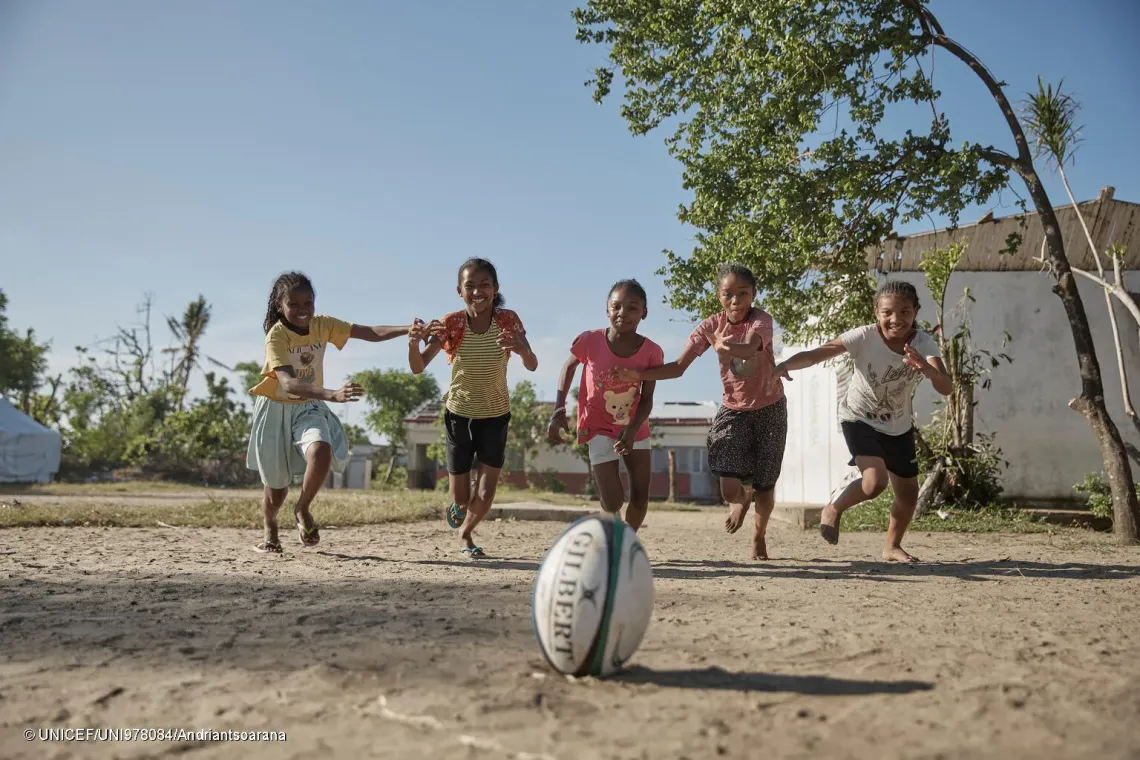
The game is on. These girls are playing a game they call "to the rescue." Among them, Jaella (on the right) says: "I like it because it makes me run and burn energy."
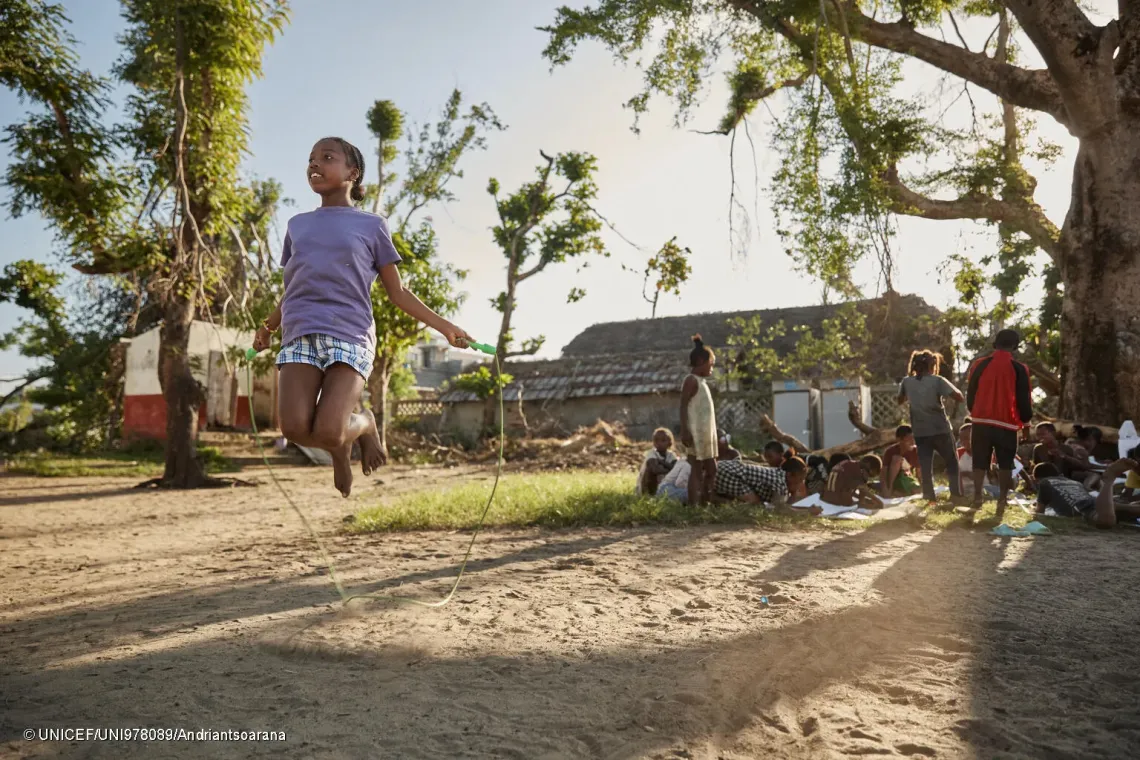
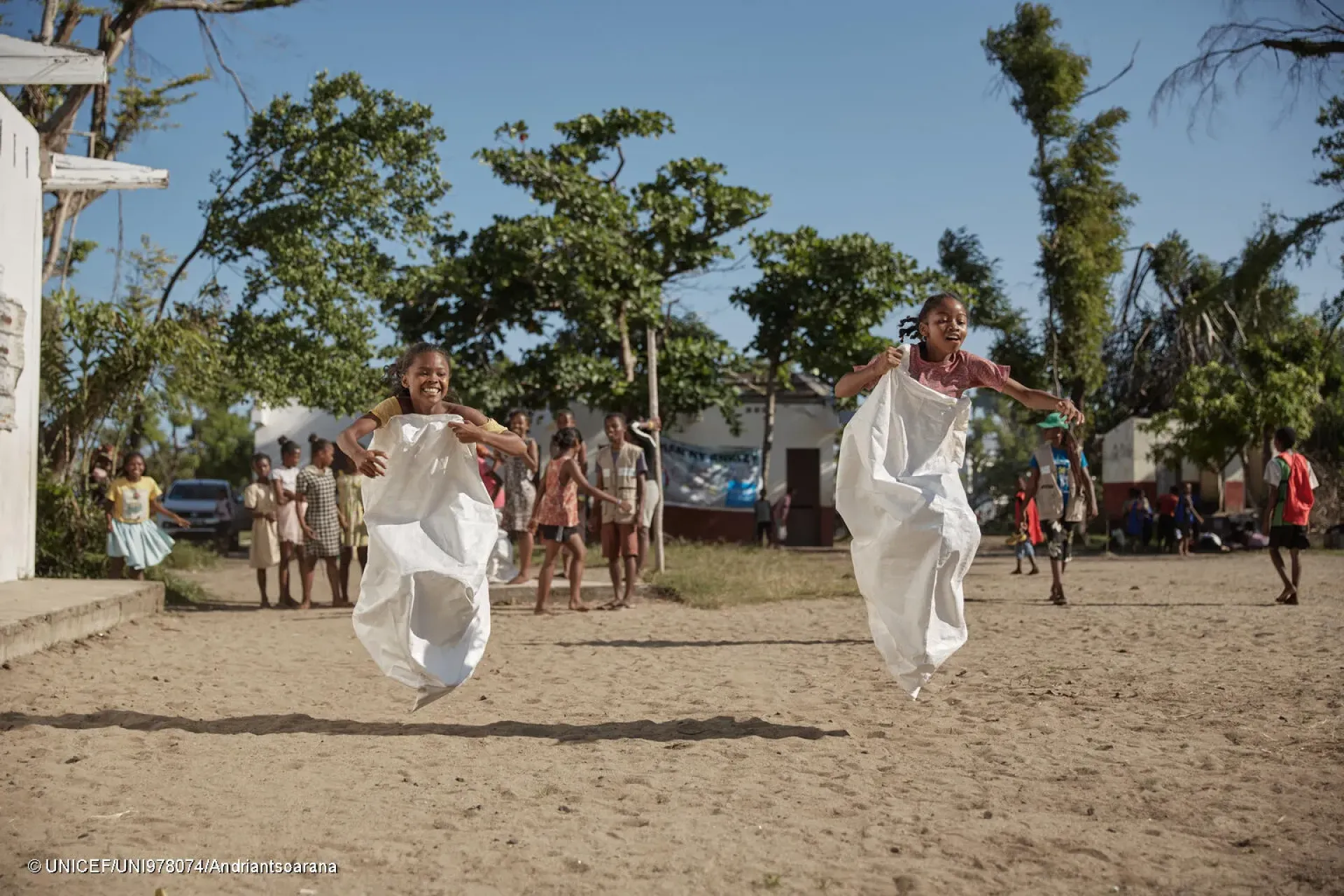
Francia, 11, jumps rope outdoors at this Sahan'ny Ankizy space. "I always want to come here whenever I get the chance," she says.
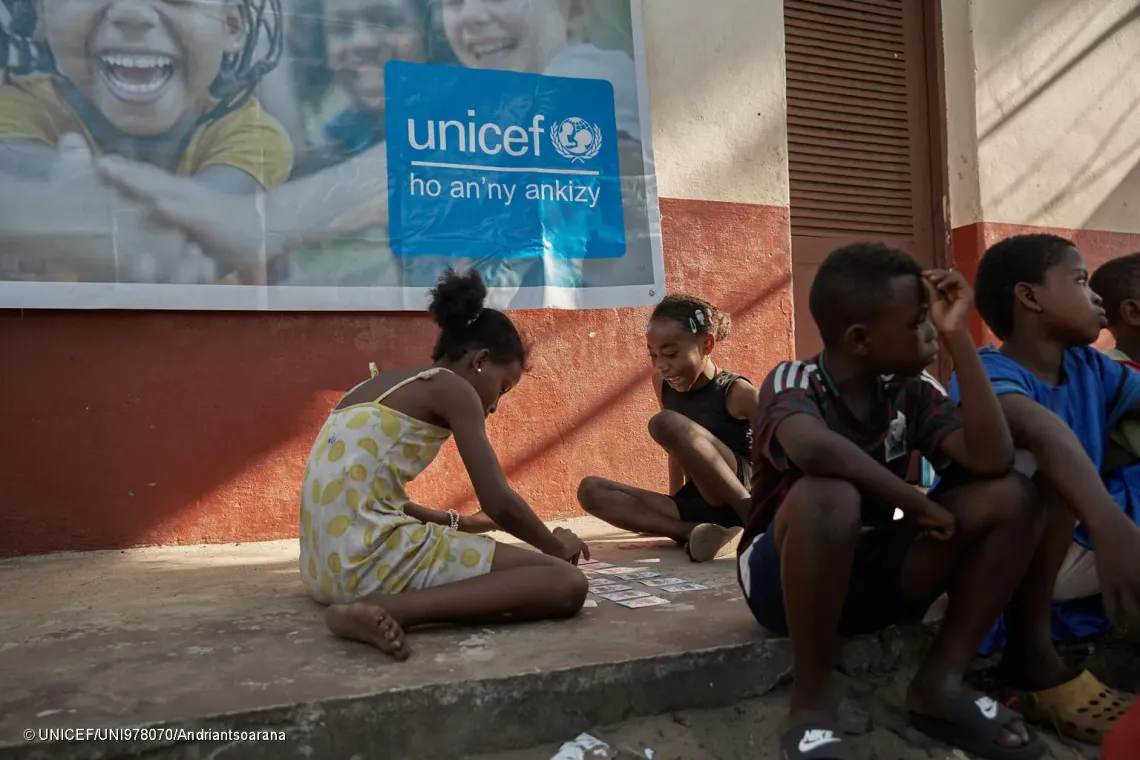
Phagelah, 10, wearing a black dress, prefers to play cards with her friend.
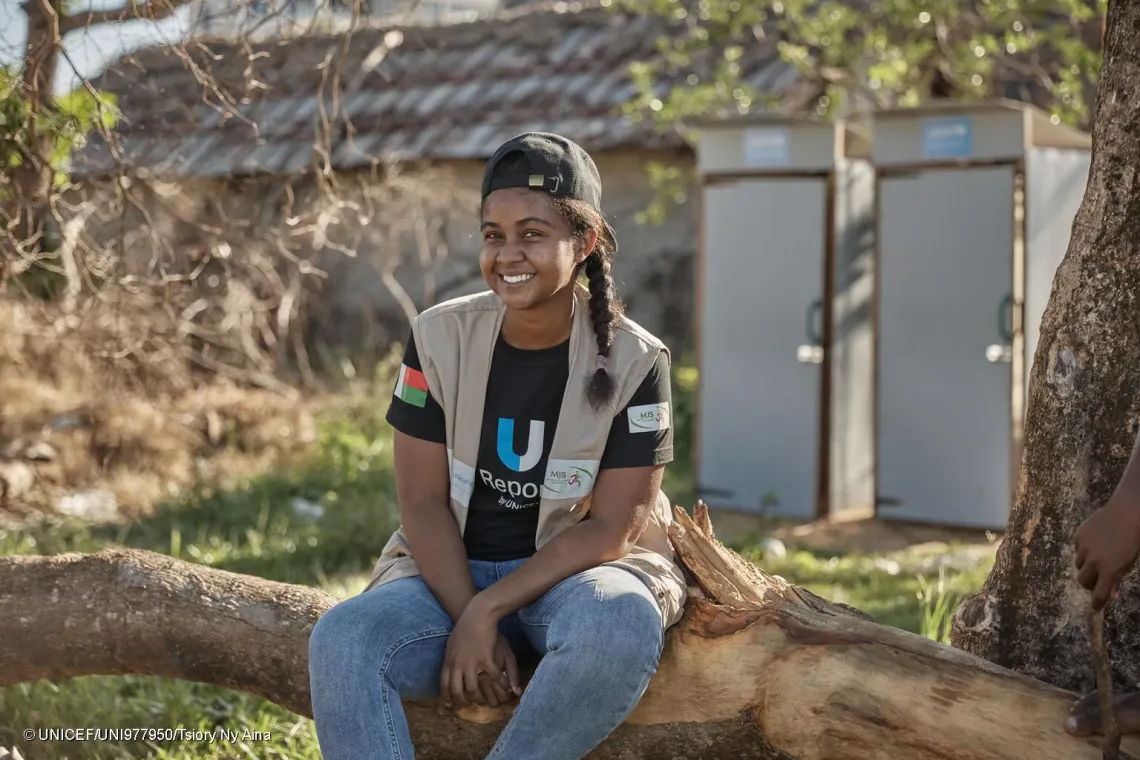
"As a scout, I committed to helping others and serving my country. I appreciate the bond we build with the children, especially seeing them grow in confidence" - Hoby, 24, facilitator and scout. She came with seven other young peer educators.
These spaces, called Sahan'ny Ankizy, were initially set up in displacement/shelter sites. Created with UNICEF's support, they offer a dedicated place to bring children together and raise their awareness of their rights. Children can play and thrive in a safe, protective environment.
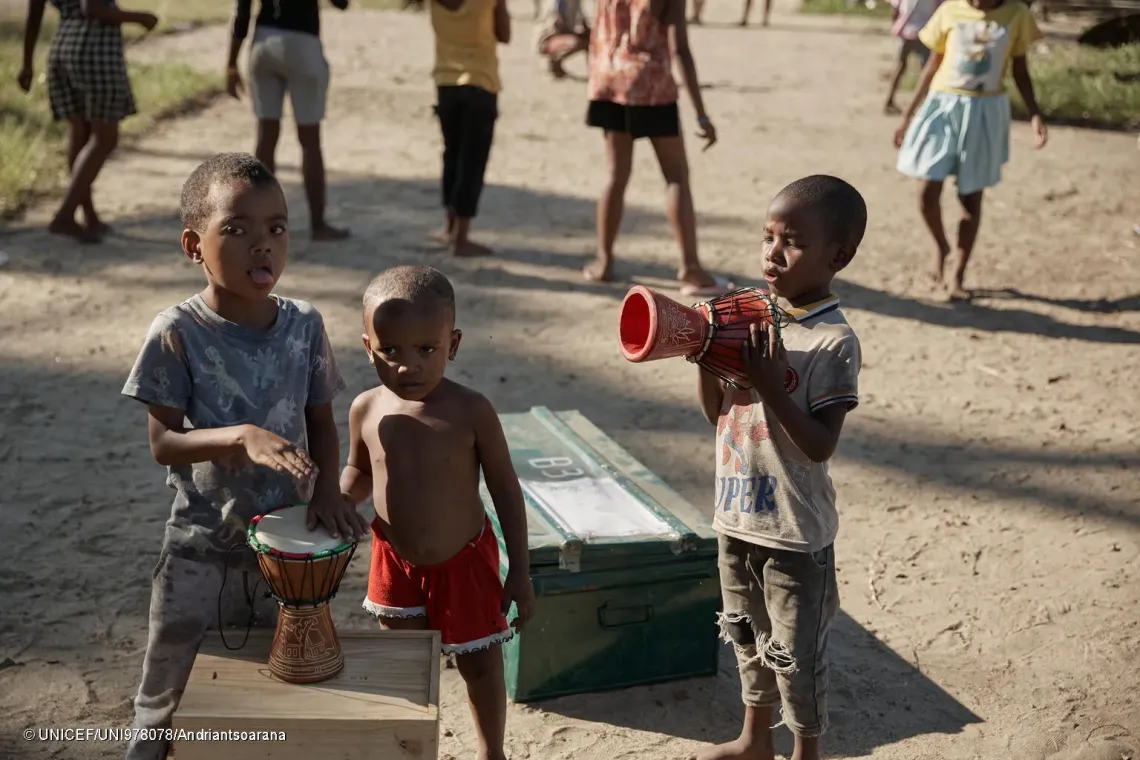
The youngest children are also beginning to discover music. "At first, the children were traumatized: they were crying and every noise disturbed them. After a few days at the Sahan'ny Ankizy, they started playing and laughing again. These spaces are essential for building their resilience and preventing lasting trauma." - Annie, another facilitator at this space.
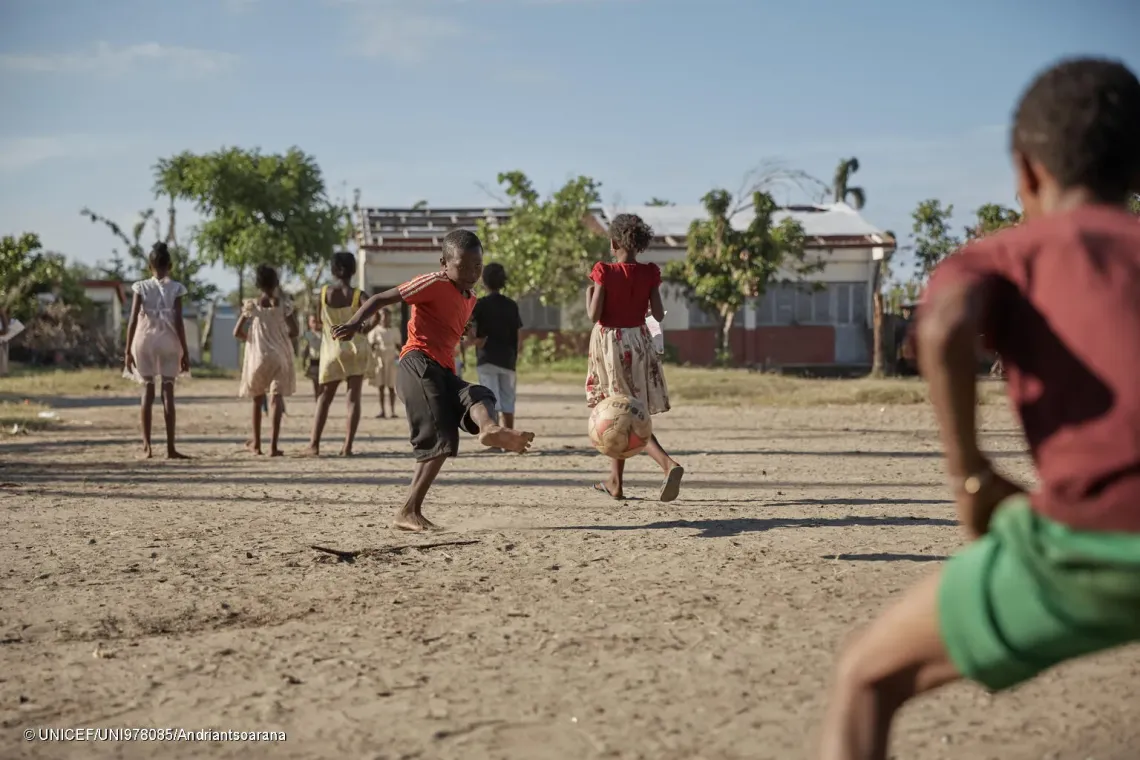
Other boys prefer to play football.
Thanks to the cyclone insurance funding from the "Today and Tomorrow" initiative, these spaces were able to be set up immediately, just a few days after Cyclone Gezani passed, making it possible to address children's protection needs.
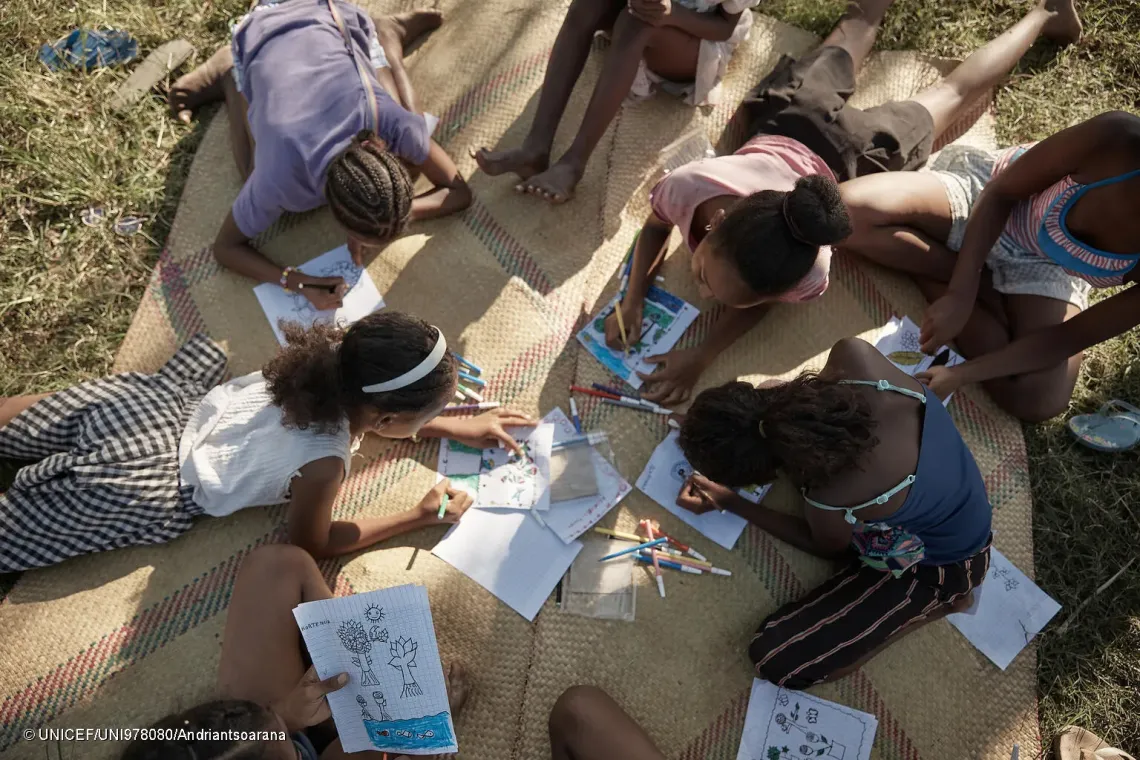
For the more creative ones, they prefer to stay quietly and draw.
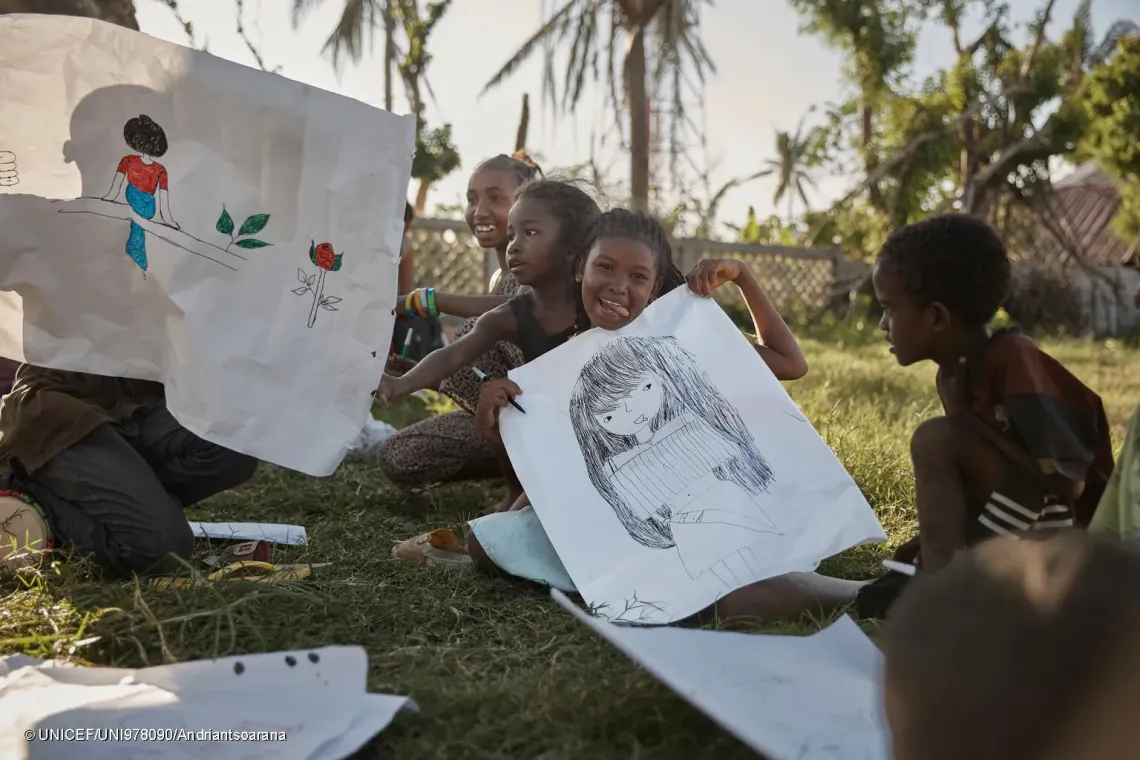
Angelica, 13, proudly shows her drawing, seated on the grass with other children in the Sahan'ny Ankizy space.
Note: These UNICEF interventions were made possible through financial contributions from the United Kingdom's Foreign, Commonwealth and Development Office (FCDO) through the "Today and Tomorrow" initiative.