Chantale and her community are recovering together after the cyclone
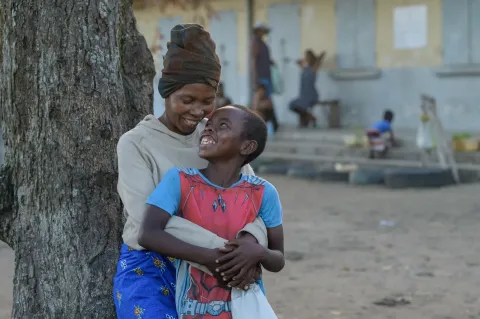
Beyond the destroyed homes, cyclone Gezani has left invisible wounds: children and families are weighed down by constant anxiety. The solidarity of the community has become a vital source of support in overcoming these hardships.
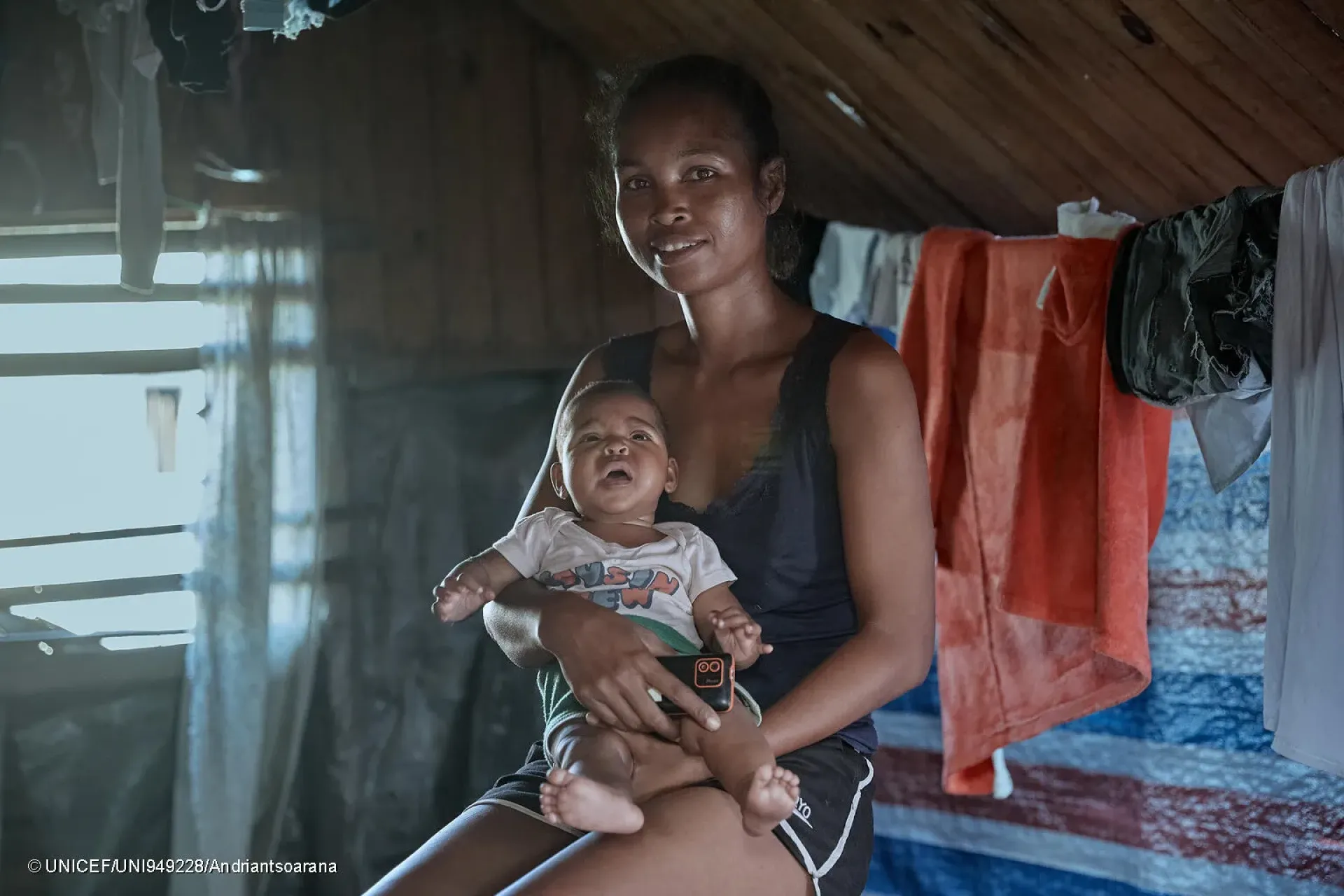
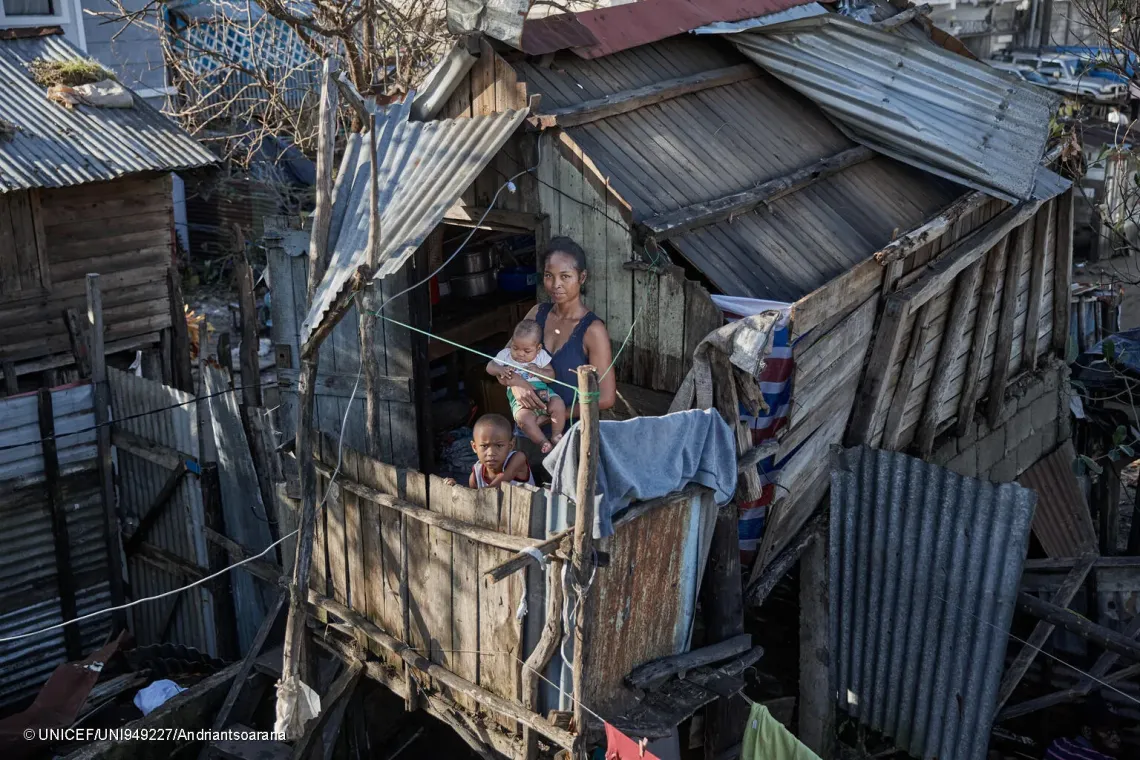
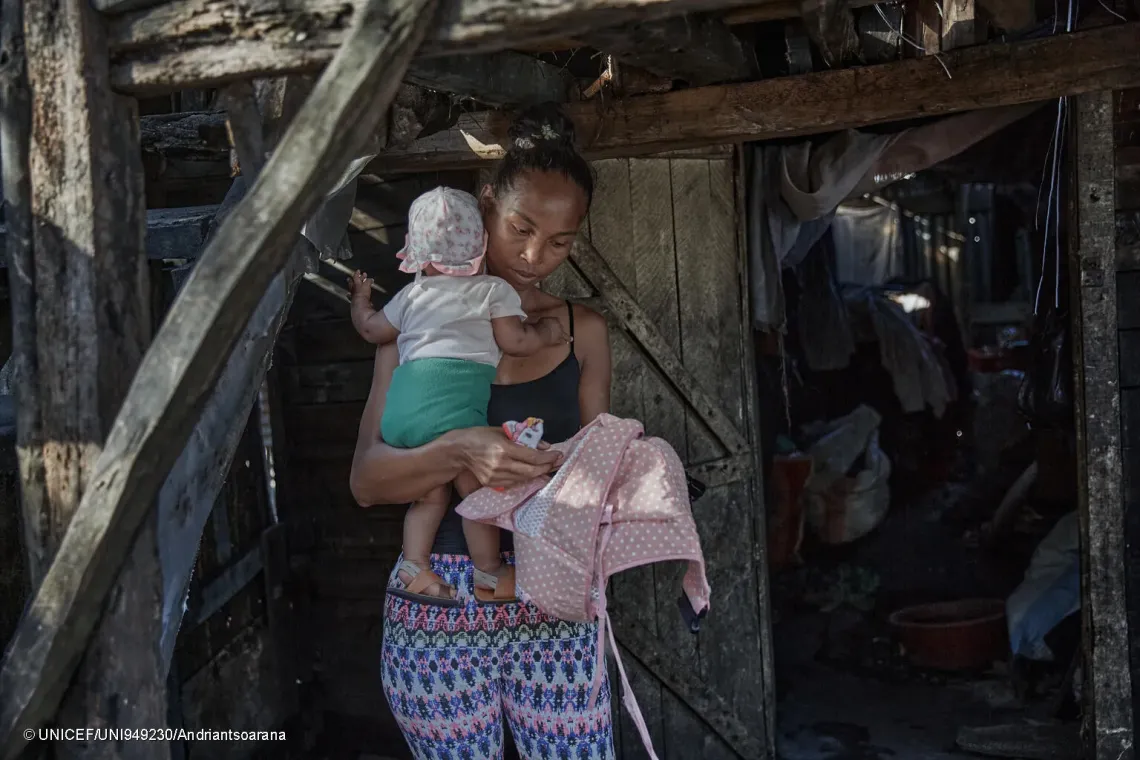
Life is gradually returning to normal in the Tanambao 5 neighbourhood, where Toamasina bus station is located. Five days after cyclone Gezani struck, the area is once again crowded with bush taxis. At the end of an alleyway, we meet Rafaraniaina Chantale, 30, a single mother of three: Ericka (11 years old), Aina (5 years old) and Fiarena (4 months old).
Her eldest daughter lives in Moramanga, her hometown, because it is difficult for her to look after all three children at the same time. “I was worried about Ericka during the cyclone. To make things worse, we couldn’t keep in touch: there was no electricity and the network was patchy when I managed to charge my phone,” she confides.
In the courtyard where her house is located, several women have gathered with their children. The solidarity in this small community is obvious from the very first words exchanged. “We are all tenants here, renting these hut houses in the courtyard. During the cyclone, we took refuge in the only concrete house,” explains one of them. All the houses made of flimsy materials were destroyed by the force of the gusts.
“We put mattresses on the floor to sleep, but since the water also rose inside the house, we had to stand and put the babies on the bed. We didn't sleep all night.”
Safety and well-being
During the day, Chantale goes to the shelter set up at the local public primary school to avoid disturbing the other occupants of the house. Before the cyclone, her five-year-old son attended preschool.
"There are all kinds of people from different backgrounds at this site, and it's difficult to live together. I don't really feel safe or at ease. At night, I prefer to stay with my neighbours," she explains. Chantale supports her family by doing odd jobs. When she is working, she feels that her children are safer with other members of her community.
Approximately 6,000 displaced children face increased risks to their safety.
At the shelter, around 350 people are living together, the majority of whom are women and children. Working with UNICEF, social worker Delphine explains the measures put in place to protect children and the most vulnerable people. "We raise awareness to prevent violence, exploitation and sexual abuse. We also provide psychosocial support for those who need it,” explains the professional.
For their part, Chantale and her community are doing their best to cope with the situation. “My greatest wish is to see this house rebuilt and to return to our home,” she concludes, remaining hopeful that she will be able to resume her life as before.
Note : Emergency responses, including anticipatory activities, are funded by the United Nations Central Emergency Response Fund (UN CERF).