Speed saves lives
What cyclone Gezani reveals about the value of rapid and flexible financing for children
The Situation at a Glance
Cyclone Gezani showed why climate-shock response systems must be both fast and adaptable. In Madagascar, stronger early warning and preparedness measures, combined with pre-arranged disaster risk financing, helped UNICEF and partners act quickly before and after landfall, restore essential services for children, and support government- and community-led response efforts. When Gezani struck the east coast on 10 February 2026, it affected more than 478,000 people, including 203,000 children, and damaged over 102,000 homes, 761 schools and 30 health facilities. For children, the shock disrupted multiple services at once including education, health care, safe water and protection.
Gezani also demonstrated why one-size-fits-all emergency response is no longer enough. Unlike Cyclone Fytia, which was characterized by extensive flooding, Gezani caused widespread destruction primarily through extreme winds, damaging schools, health centres, water systems and electricity networks. This contrast matters because it shows that even within the same cyclone season, emergencies can generate different humanitarian profiles. Response systems therefore need not only to move quickly, but also to adapt rapidly to the actual pattern of damage and need on the ground.
Why Children Were at Risk
Globally, an estimated 662 million children are exposed to tropical storms, with more than 80 per cent of this exposure concentrated in just 10 countries, including Bangladesh, Madagascar, Mozambique, the Philippines and Viet Nam (CCRI, 2026). Madagascar is highly exposed to climate shocks, where recurrent cyclones intersect with widespread poverty, fragile infrastructure and limited household coping capacity. As many children already live in vulnerable conditions, even short interruptions to essential services can quickly place them at serious risk. Gezani disrupted the systems children rely on for their health, safety and wellbeing, turning a meteorological event into a multisectoral threat to child survival and protection.
Damage to water and sanitation infrastructure increased disease risks, especially for young children. 30 health facilities were damaged, limiting access to routine consultations, maternal and child health services and immunization. Damage to solar-powered cold chain equipment also threatened vaccine storage and continuity of services.
The cyclone also reduced families’ access to food and income at a time when many households were already highly vulnerable, increasing the risk of malnutrition and harmful coping strategies.
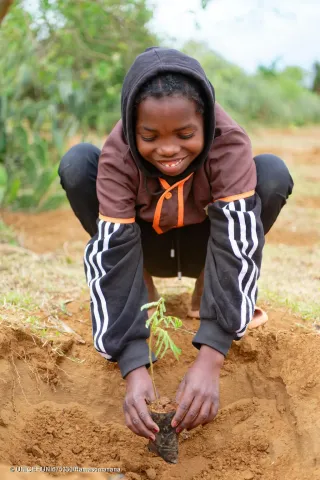
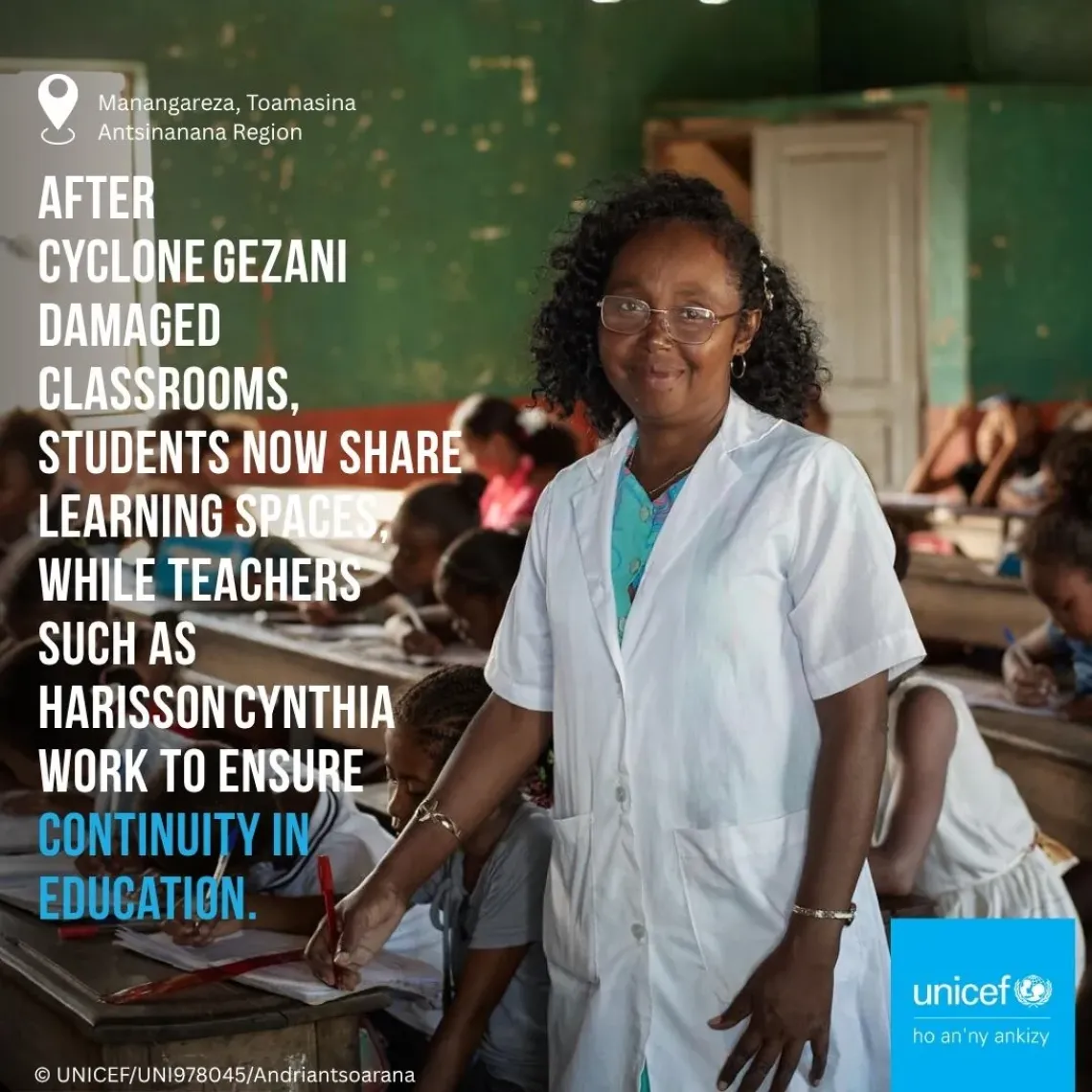
Education was heavily affected: 761 schools were damaged, disrupting learning for nearly 60,000 children. Beyond learning loss, school closures increased exposure to child labour, early marriage, early pregnancy and permanent dropout.
Child protection concerns also intensified. Around 20,854 people took refuge in temporary displacement sites, where overcrowding and limited services heightened risks of violence, exploitation and psychosocial distress among children. Damage to the Centre Vonjy further reduced access to critical support services for survivors of violence.
Because Gezani affected both rural and urban areas at the same time, local authorities and response structures in nearby towns were also under pressure, complicating coordination and access to services. This is where the combination of early warning, preparedness and pre-arranged finance became important. Advance warnings and forecast-informed preparedness allowed humanitarian actors to prepare ahead of impact, while pre-positioned teams and supplies reduced the delay between landfall and action. UNICEF’s own response messaging noted that early emergency action was made possible by rapid partner support and pre-positioned supplies, and the World Meteorological Organization reported that advance forecasts and early warnings enabled humanitarian agencies in Madagascar to position vital supplies ahead of landfall.
The impact of rapid and flexible financing
The value of the Today and Tomorrow Initiative (TTI)1 parametric cyclone insurance payout supporting the Gezani response lay not only in the availability of additional resources, but in the flexibility it offered as needs evolved. UNICEF’s TTI combines preparedness, disaster risk reduction and resilience-building under its “Today” pillar with a parametric insurance mechanism that provides rapid and predictable financing for humanitarian response under its “Tomorrow” pillar. The TTI parametric cyclone insurance coverage had been renewed for 2026, including for Madagascar, with support from the United Kingdom of Great Britain and Northern Ireland, before Cyclone Gezani made landfall2. In the context of Gezani, this flexible financing helped reinforce the continuity and adaptation of support for children and communities as the full pattern of damage and needs became clearer.
The policy value of this mechanism lies not only in speed, but in operational flexibility. In a context where Gezani created a predominantly wind-driven crisis, flexibility mattered because it allowed support to be aligned more closely with the sectors and services most affected, rather than following a standard response model. This helped sustain critical interventions for children across education, WASH, health and protection, while supporting UNICEF and partners to adapt assistance in line with evolving realities on the ground. That flexibility translated into tangible lifesaving results for children3.
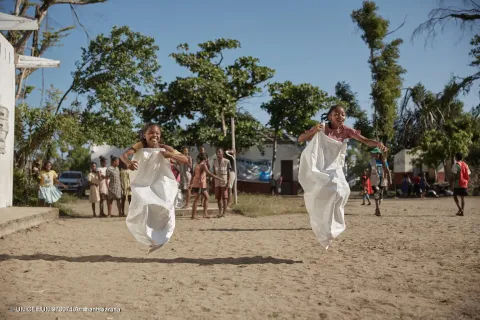
- In education, more than 34,000 children received school supplies and temporary learning spaces were established, enabling 57 per cent of affected students to return to school within two weeks.
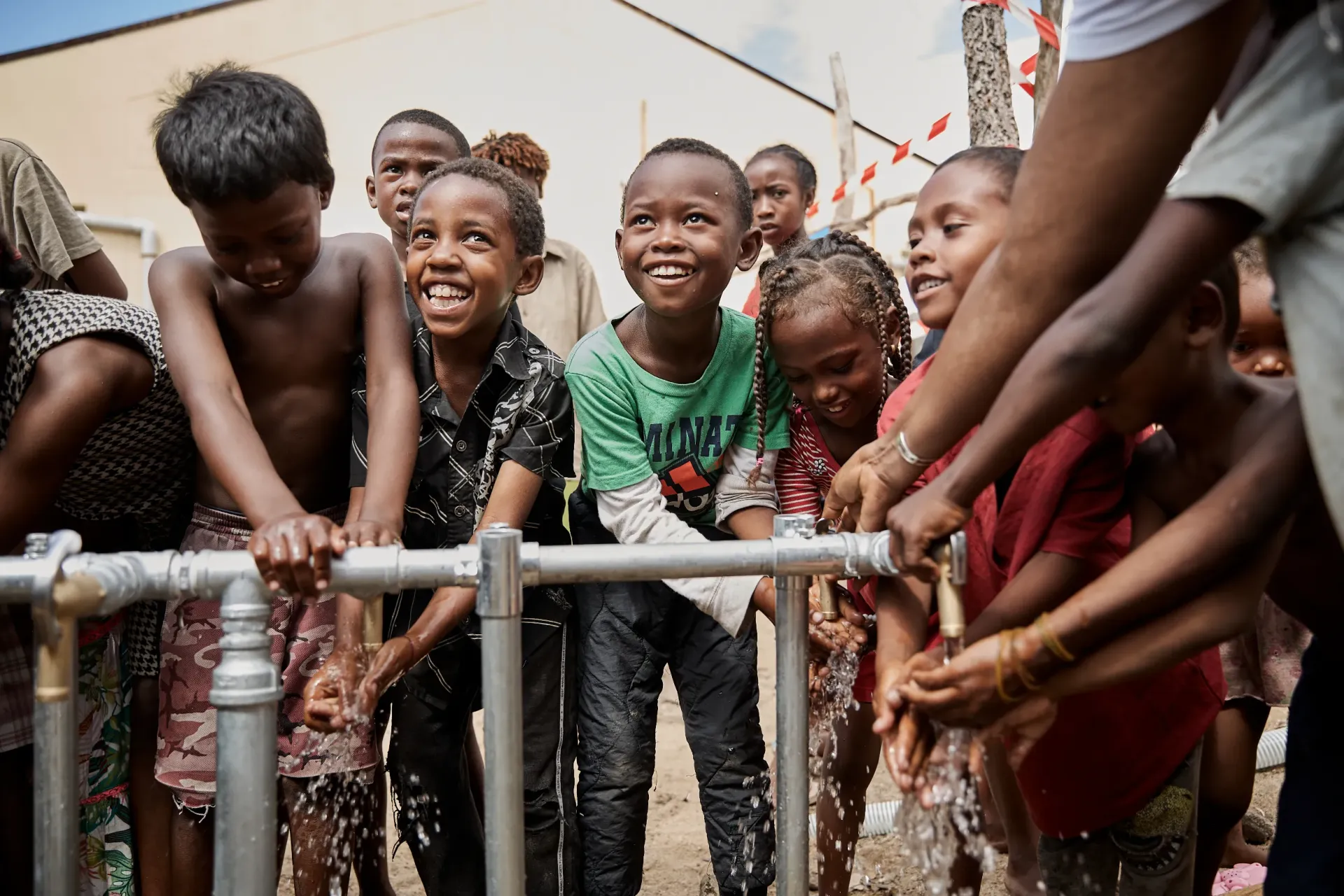
- In WASH, 15,879 people regained access to safe drinking water through emergency water trucking and treatment.
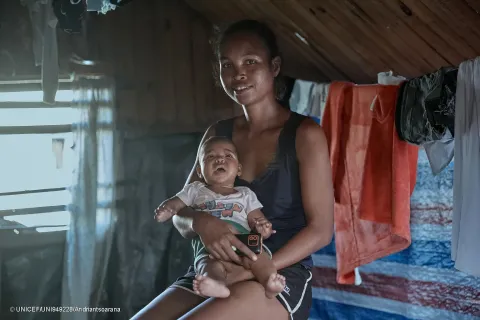
- In health and nutrition, 7,260 people received essential health services, including 1,730 children, while damaged facilities were supported to continue operating through temporary structures, emergency health kits and mobile outreach.
- Child protection support was also quickly put in place: Child-Friendly Spaces and psychosocial support reached more than 2,000 people, and nearly 600 highly vulnerable cases were identified and referred to specialized service.
The response also helped reinforce local capacity. Government-led coordination structures, including the National Office for Risk and Disaster Management BNGRC and sector mechanisms, organized rapid action on the ground, while UNICEF and partners worked through sector platforms and local authorities to restore services. Community response capacity was equally important. Youth volunteers and community mobilizers supported outreach, clean-up, messaging and service information, while accountability mechanisms such as the free hotline 930 and U-Report channels helped connect affected communities to support and feedback processes. This combination of institutional coordination and community engagement helped strengthen both the relevance and reach of the response.
The value of this support was visible on the ground4.
Resilience through education after Cyclone Gezani
Cyclone Gezani highlights three critical lessons
- Speed must be paired with preparedness and flexibility. The first days after a climate shock are decisive. Rapid action helps maintain education, health, nutrition, water and protection services before systems break down. What matters is not only the volume of funding, but its ability to be deployed immediately and adapted to evolving needs on the ground. Cyclone Gezani underscores an important lesson for Madagascar and other climate-vulnerable contexts: speed alone is not enough. Forecast-informed readiness, stronger early warning capacity and pre-arranged financing can help governments and partners act before service disruption deepens into a wider crisis for children.
- Rapid finance is most valuable when it is flexible. Fytia and Gezani struck Madagascar within a short period, yet one was marked by extensive flooding and the other by destructive winds. The response therefore could not be identical. Child-centred climate and disaster financing is most effective when it enables faster action and smarter adaptation to the actual profile of each emergency.
- Early warning, preparedness and disaster risk financing must work together. Gezani offers a clear lesson for G7 policy discussions: these should not be treated as separate agendas. When combined, they help governments and partners move from delayed, reactive response towards earlier, more adaptive and more child-centred action. Multisectoral coordination was not optional but foundational. Children experience crises in interconnected ways, and protecting them requires coordinated action across health, nutrition, education, WASH and child protection.
Cyclone Gezani showed that preparedness and flexible financing play complementary roles: one supports readiness and early action, while the other helps sustain and adapt support as needs evolve.
1 For more information on TTI please visit https://www.unicef.org/documents/today-tomorrow
2 Funding for the TTI parametric cyclone insurance instrument for the 2023–2025 period was provided by the Government of Germany and the United Kingdom of Great Britain and Northern Ireland through the Global Shield Financing Facility (GSFF)
3 See here photos of the lifesaving results for children
4 See here stories of the lifesaving results for children