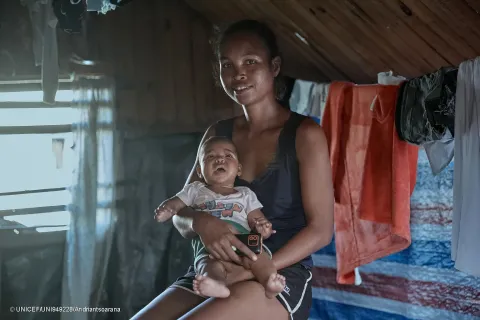
Fanjarline reunites with her child 12 days after cyclone Gezani.
Thanks to UNICEF's advocacy to continue search efforts, Espérance (8) was reunited with his family, safe and sound.
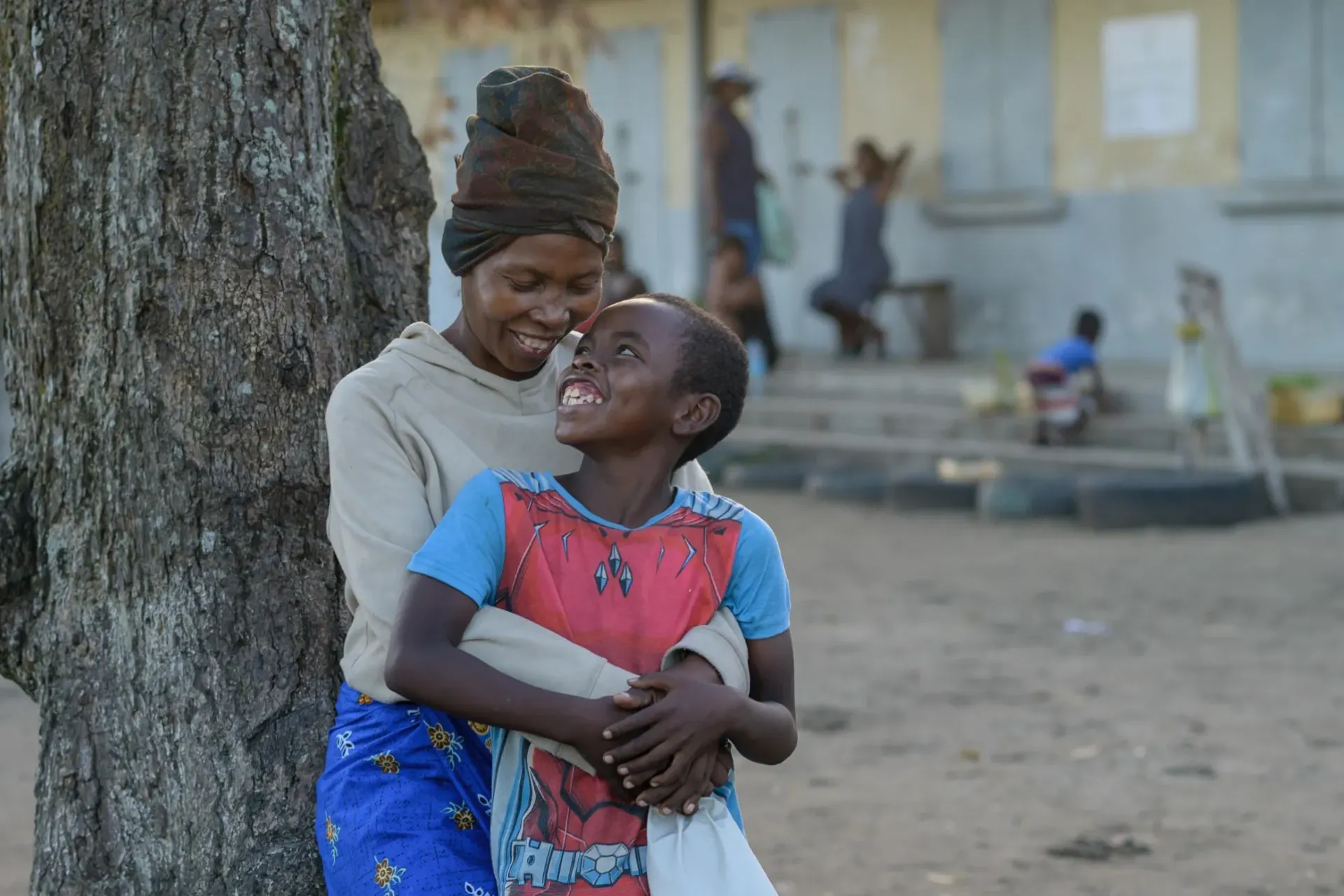
There is palpable excitement at the La Foire public elementary school in Toamasina, which serves as a temporary shelter on Madagascar's east coast. After twelve days of search efforts, the police, with the support of social workers, have just found Espérance, 8 years old.
Fanjarline, her 34-year-old mother, is overjoyed. It was her greatest wish. Interviewed a week earlier, she had expressed her hopes of finding her child, despite the precarious conditions in which she lives at the shelter.
“Finding my son was my deepest wish, and it came true. I am so happy to have him back. My children are everything to me.”
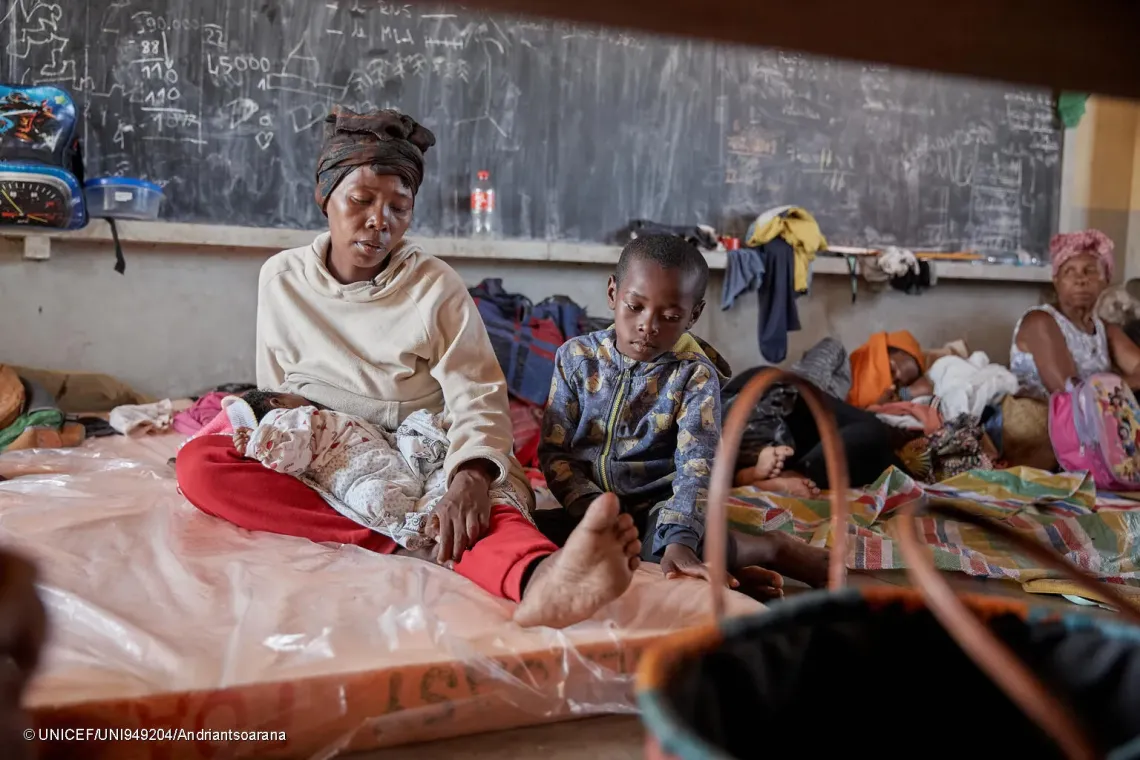
When we first met, Fanjarline was on the verge of despair. In the middle of the classroom where she and her family had sought shelter after the cyclone, she sat motionless on a mattress, her one-month-old baby in her arms. Everyone in the room felt deeply for her.
Next to her, her husband had fallen asleep on a bench. He was exhausted by trying to find his son and the responsibility of protecting the rest of the family, while making sure they had everything they needed. Yet despite the deep sadness, the family seemed very open and approachable. “In the afternoon, as the cyclone was about to hit, we immediately tried to find him. But we needed to find shelter urgently and we were unable to locate him,” said the mother, breaking down in tears.
Espérance, a name full of hope
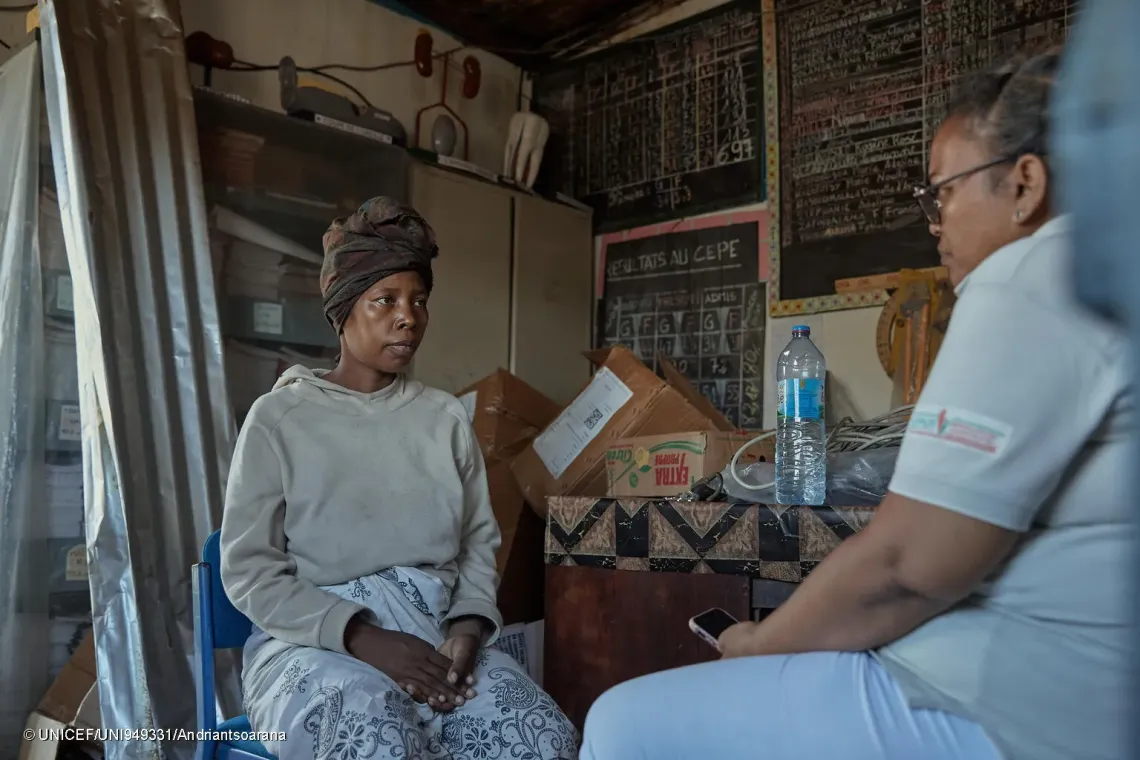
Fanjarline never lost hope. “I don't know if I've lost him already, but I keep believing and I think he's still somewhere in the city,” she said. Fanjariline has five children, including Espérance. Two days after our first meeting, Delphine, a social worker, came to the site to help the victims. She held a private session with Fanjarline to listen to her and encourage her to never lose hope.
Approximately 6,000 displaced children face increased risks to their safety.
Like Delphine, ten other social workers have been deployed in the city of Toamasina thanks to UNICEF. This same support has enabled the deployment of 22 additional social workers from the city of Fénérive-Est, who have come to provide the psychosocial support that some families need.
The most important aspect was the advocacy work carried out with the authorities to intensify the search for the young boy. All these efforts paid off: Espérance was found in a market in another part of the city.
“People gave me food at the market, but I was scared and thought about my mother all the time.”
While the United Nations and humanitarian partners, including UNICEF, have launched a flash appeal for US$67.8 million to provide life-saving emergency assistance to approximately 486,000 people, families are doing their best to cope with the situation. Of this total amount, UNICEF needs to raise US$8.4 million to strengthen vital assistance and support the rapid recovery of children and their communities.
Fanjarline and her family will remain temporarily at the shelter until they find new accommodation. They may not be in their own home, but they are reunited, and that is what matters most to them. “Now that we have found Espérance, we will try to survive by finding work and a new home where we can feel safe.” she concludes.
Note : Emergency responses, including anticipatory activities, are funded by the United Nations Central Emergency Response Fund (UN CERF).