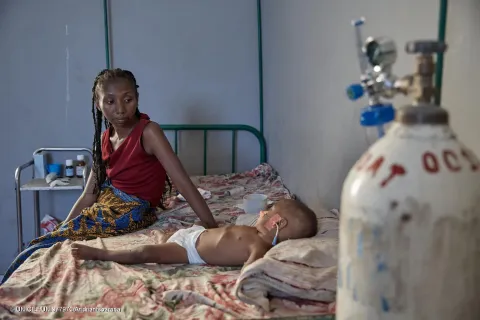
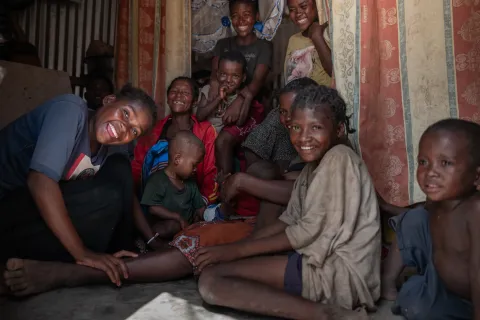
Nahy, a mother at the heart of Ehavo’s agricultural initiatives.
In southern Madagascar, Nahy, a member of a farmers association, helps feed his family and community through a collective vegetable garden he set up after drinking water arrived in his village.
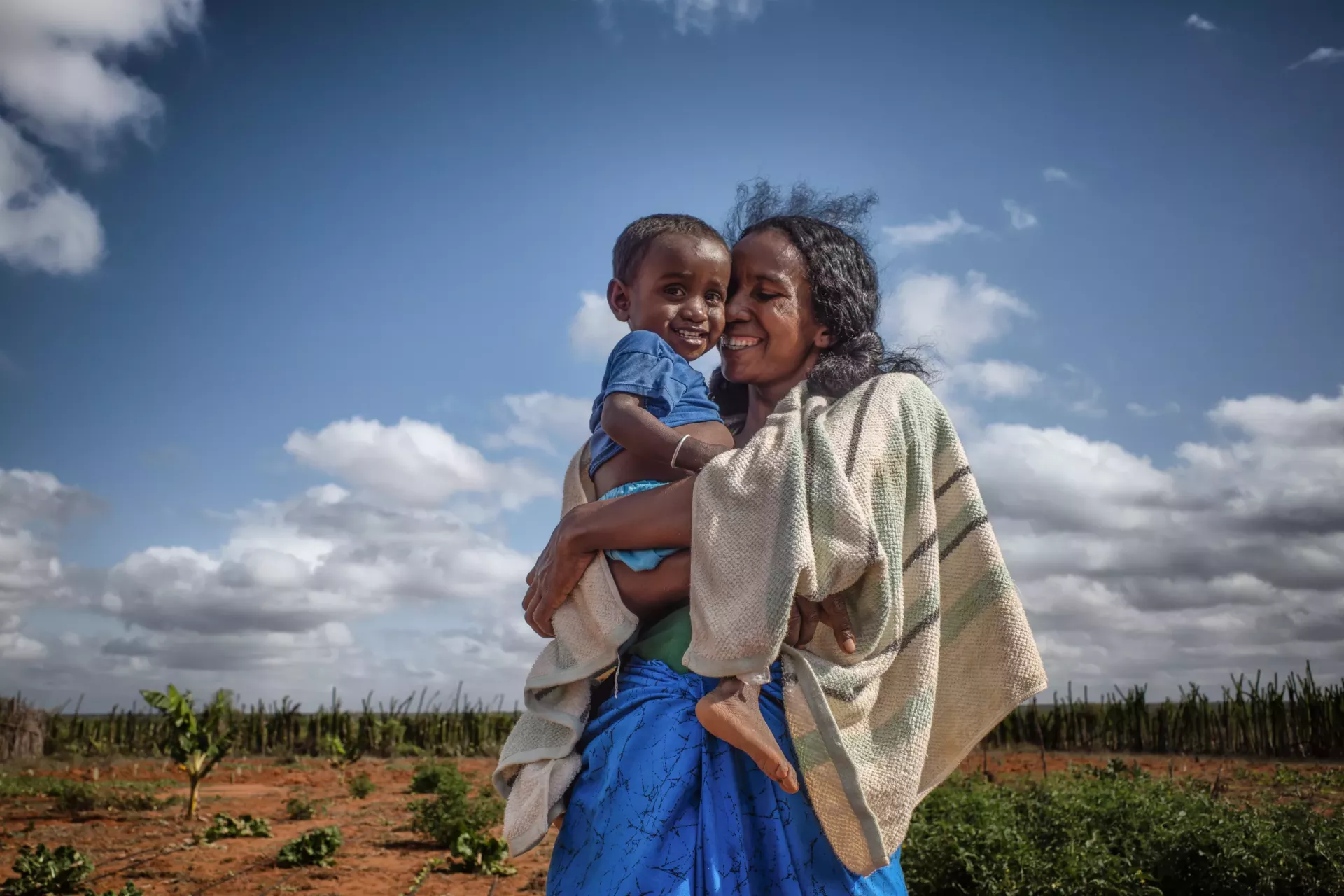
Nahy, 34 years old, is a devoted mother of eight children, including four girls and four boys. That day, we find her in the middle of a field, working alongside village farmers’ association members. Together, they grow vegetables such as tomatoes, zucchini, and leafy greens. This community vegetable garden was established three years ago, after new infrastructure built by UNICEF and its partners brought sustainable and climate-resilient drinking water to the village, a transformative project for the inhabitants.
Before that, Nahy had to walk an hour to reach a water source. “Now I can devote more time to my farming activities,” she says, carrying her youngest child, Natrefendraza, who is a year and ten months old while working. For Nahy, « her children are her wealth. » Her husband, also a farmer, is not part of the association, as the number is limited.
" My children are my wealth"

An association for all
The association, which has around 30 active members, enables farmers to work the land together and sell their harvests, part of which is paid into a common fund. On the one hand, this model encourages shared consumption and strengthens families’ food autonomy. Meanwhile, Nahy participates in a community savings group, contributing 50 euro cents weekly. The collective fund is redistributed approximately every nine months, enabling her to double her savings, an investment she considers advantageous. With her earnings, she has been able to buy chickens and food and finance her children’s education.
Part of the association’s harvest is used in the villa’s community nutrition site, where community workers organize cooking demonstrations to encourage good eating habits. Parents can learn to cook with local produce while their children play and are looked after on the site. These initiatives, supported by a local non-governmental organization, are improving children’s nutrition and making life easier for parents in the village of Ehavo.
Note: The UNICEF eco-villages concept is funded by the National Committees for UNICEF in Belgium, the Netherlands, the United Kingdom, France, Andorra, and Germany, as well as by the Moondance and Eleva foundations.