In Madagascar, drought, cyclones and learning to cope with extreme weather
In the south and south-east of Madagascar extreme weather events are becoming more frequent and more disruptive to vulnerable populations. One result is that some 1.2 million people are experiencing high levels of food insecurity and malnutrition.


Sisters Cendrinah (16) and Francine (15) in their destroyed classroom at the Antsenavolo secondary school in south-eastern Madagascar. “I had to redouble my efforts to move up to the next class because my studies were often interrupted during the cyclone period,” says Francine.

UNICEF helped to rebuild the roofs of the three classrooms in the school after they were damaged by two cyclones in 2022, but in 2023 cyclone Freddy destroyed them again. This year, UNICEF and partners are looking for sustainable solutions for the reconstruction of these classrooms.

Cendrinah and Francine walk past their damaged house close to the school. They are staying with a neighbor as the family does not have the means to repair the house.

Jocelyne (16) and her teachers in front of the tent that serves as a temporary classroom in the village of Irondro in south-eastern Madagascar. “With the tent, we were able to resume classes quickly,” said Joceline.

A man preparing a field to plant rice in Mananjary district in Eastern Madagascar. The recurrence of cyclones has severely affected agriculture in the region.

A street vendor selling vegetables in Irondro in south-eastern Madagascar. Access to food in the region is limited due to an insufficient harvest.

Children bathing in the same water used by animals in the village of Tanindrato in south-west Madagascar. Years of severe drought have wiped out crops and severely limited access to clean water and food in the region.

A child collecting brackish water for use at home in the same village. Drinking dirty water is one of the leading causes of diarrhea and malnutrition in children.

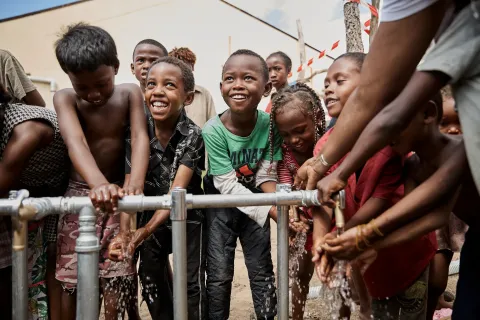
A water tank stores water pumped from an underground aquifer, proving safe water and an irrigation system to people living in the village of Nisoa in south-west Madagascar. Before, the community of 1,800 were paying for salty water brought by ox cart from the nearest water point two hours away.

Villagers working in a vegetable garden, made possible by the construction of the multi-use water system.

Claudia, a 22-year-old single mother, holding her six-month-old son, Jean Claude, who is suffering from severe acute malnutrition. She travels 40 kilometres by bus every week to reach the clinic in the village of Itampolo in south-west Madagascar.

During each visit Jean Claude has the circumference of his upper arm measured and is weighed to see if he has gained weight. This week he has gained 700 grams. Children suffering from severe malnutrition are given a nutrient-rich peanut-based paste called PlumpyNut. “I am more confident now,” says Claudia. “His weight is a bit better, though there are times he still refuses to eat.” According to projections, more than 120,000 children will need to be treated for acute malnutrition this year.

Children who are severely malnourished and have complications such as respiratory infections are hospitalized. Sitraka Randrembason, a UNICEF nutrition officer, helps Tsovaraza feed her 18-month-old son, Toviraza, who is also suffering from pneumonia at the hospital in the town of Betioky. “I’m relieved. He is eating better and sleeping more now,” says Tsovaraza.

Fisherman Lucien Zelody (64) and his family prepare fishing nets in the village of Itampolo. The family and 472 others in the village are receiving monthly cash-transfer payments of $2.50 per child and pregnant woman from UNICEF and partners to help them cope with the drought and changing weather conditions. “There are more storms now and more days when I can’t fish,” says Lucien.
To read on similar topics, please refer to the articles below:
The most vulnerable populations are still the first victims of climate change in Madagascar.
Severe weather events increasingly disrupting children’s education in Madagascar.
Scouts: committed heroes do not hesitate to risk their lives to save others
UNICEF extends its heartfelt gratitude to USAID, CERF, ECHO, BHA, KFW, FCDO, Government of Japan, Government of Norway, Japanese Natcom, German NatCom/Findel, US NatCom/Zonta, Dutch NatCom, Australian NatCom and French NatCom for their generous support.