Inspiring local solution: Mendrika’s Commitment to Ensuring Every Child in Amboanio gets Vitamin A
Utilizing a Human-Centered Design approach to co-create local solutions with communities improves the use of health center services, including the uptake of Vitamin A in routine mode.
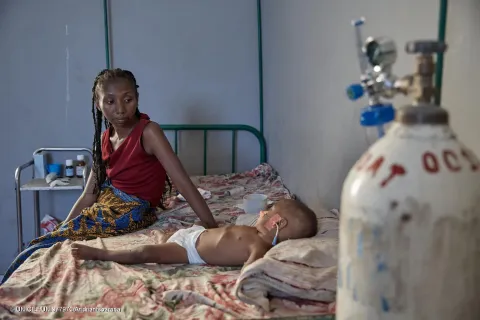
In the heart of the village of Amboanio in the southeast of Madagascar, 30-year-old Mendrika stands as a beacon of hope amidst adversity. As a mother of two—a vibrant 6-year-old and a curious 1-year-old—Mendrika’s world revolves around the health and well-being of her children. She is navigating the challenges of student life and says, “I don’t work yet; I’m still a student, and I haven’t found a job yet.” Like many families in her community, Mendrika grapples with economic hardships that make it difficult to provide her children with the care they need. The district’s primary occupation is fishing, but even this is not always enough to guarantee a secure future.
Mendrika, aware of the importance of her children's health, is a diligent mother who regularly visits the basic health center (CSB) for medical consultations. However, despite her efforts, she realizes that she lacks information on essential health services for her child. She then asks herself an important question:
“I want my children to grow up healthy and full of energy, but what should I do to achieve this?”

UNICEF and its partners supported a human-centered design consultation with communities focused on contextualized problem-solving related to access to health services. This approach aimed to discuss communities' experiences, perspectives, and solutions adapted to the needs of mothers like Mendrika'. During discussions with the community, some participants, including community health workers, raised a key point: Mothers often hesitate to take their children to health centers mainly due to a lack of knowledge and information; persuading individuals without concrete evidence of the benefits is difficult. As part of the local solution identified by the participants, the concept of community health testimony emerged as a tailored approach to enhance the effectiveness of immunization campaigns in Amboanio. While participating in designing a prototype for the immunization awareness campaign at the local health center, Mendrika listened to mothers and health workers sharing their experiences with the essential care needed for young children. She decides to ask the nurse more questions at the local health center. That's when she discovers key information: even though she already makes sure to give her child a balanced diet, he must also receive a vitamin A dose to strengthen his immune system and ensure his healthy growth. In the past, health workers went door to door to inform mothers. In 2024, as part of the integrated immunization approach, thanks to awareness campaigns, mothers are taking the initiative to bring their children to the essential health center to receive the necessary care including Vitamin A uptake.
“I will take my child to the health center to receive vitamin A and share this information with those around me,” she declared with resolve.

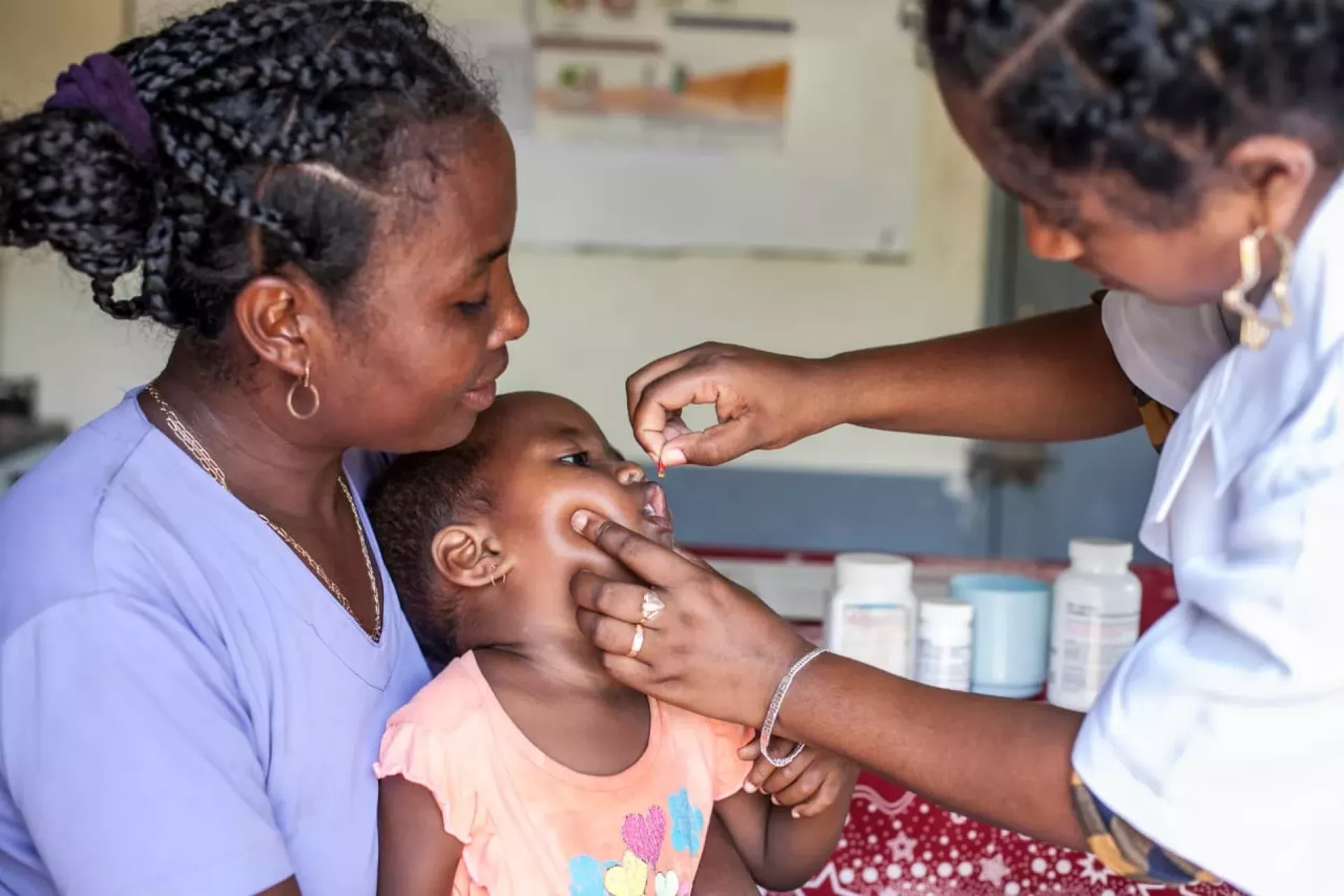
At the Ambohipo Basic Health Center (CSB), a health worker administers a dose of vitamin A to a 7-month-old baby, accompanied by his mother. This essential intervention helps prevent nutritional deficiencies and strengthen the child's immune system.
Following the HCD consultation sessions with mothers, health workers, and community members, Mendrika committed to setting an example an took her child to get Vitamin A supplementation at the health center in Amboanio. The community role model approach integrated into the awareness campaigns is the ideal solution proposed by the communities to strengthen the use of basic health services, including vitamin A supplementation, in routine mode.
With her eagerness to spread knowledge, Mendrika has become more than just a mother—she is a champion for child health in her community. Her story is a powerful reminder that bringing testimonies, knowledge, and key information during an awareness campaign is crucial to initiating change and encouraging others to take charge of their children's health and well-being. In the face of adversity, Mendrika’s commitment shines brightly, illustrating that hope and healthy futures are within reach through community engagement.
At the Fénérive-Est hospital, a health worker gives vitamin A supplements to a 5-year-old child under his mother's watchful eye. This preventive measure helps strengthen the immune system and promote healthy growth.

Note: The programme Vitamin A Supplementation in A new Age (VINA) is funded by the Government of Canada
HIS collected by Human Development Action – Social and Behavior Change Section UNICEF Madagascar