Only 47.5 per cent of water points surveyed in the Atsimo-Andrefana region are working, according to a UNICEF survey.

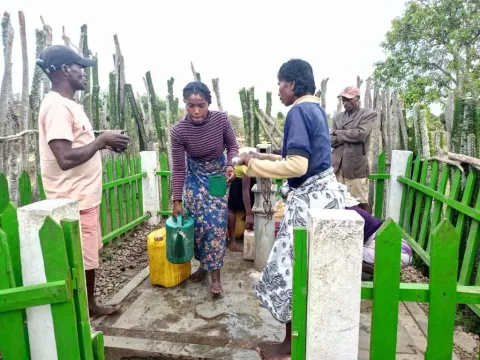
Tuléar, 14 August 2024 – In the four districts where data was collected in the Atsimo-Andrefana region, only 47.5 per cent of the water points surveyed are functional, and water potability is relatively low, with nearly 63 per cent of water points contaminated by bacteria from faecal matter. This is one of the key findings of the comprehensive inventory carried out by the non-governmental organization SAHI, UNICEF's implementing partner in the Mionjo project, initiated by the government through the Ministry of Water, Sanitation and Hygiene and funded by the World Bank. The findings were presented today in Tulear at a workshop co-organised by the Ministry and UNICEF.
The Mionjo project aims to establish resilient livelihoods in southern Madagascar in response to the persistent drought affecting this part of the country. This inventory is necessary to decide on the actions to be taken to rehabilitate and optimise existing water points for better access to drinking water.
The four districts targeted by the inventory are Betioky Atsimo, Ankazoabo, Beroroha and Ampanihy Ouest. In these districts, between April and July 2024, existing water infrastructure at both community and institutional level (schools, health centres, etc.) was inventoried and its management methods recorded. In addition, the water was tested for quality and potability.
The results highlight significant inequality in access to water, with more than 446 drilled wells inventoried for the district of Ampanihy Ouest, 226 for Betioky Atsimo, only four for Ankazoabo and one drilled well for Beroroha.
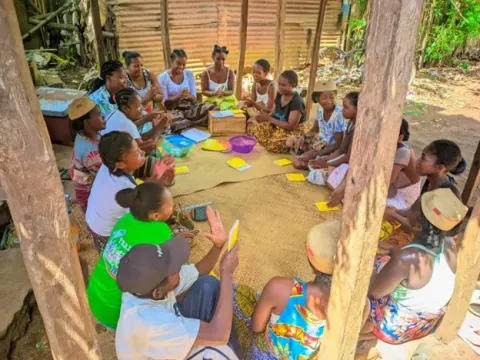
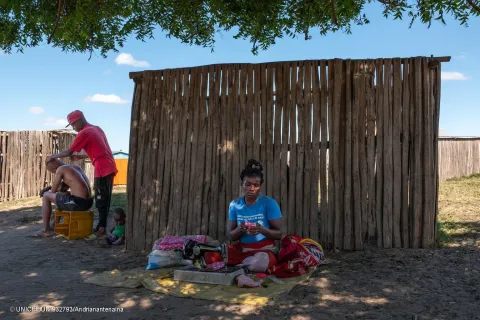
Schools also have very poor access to water, sanitation and hygiene, with 23 per cent of schools having access to water and 20 per cent having hygiene facilities. As for health facilities, 25 per cent have access to drinking water and the inventory shows that only 2 per cent of them have acceptable toilets. The management approach adopted has been identified as an important factor in ensuring the proper functioning of existing infrastructure.
The results of this survey will provide the government, through the Ministry of Water, Sanitation and Hygiene, and its development partners with reliable and up-to-date data for the implementation of their programmes. For the Mionjo project in particular, the database will be used to identify the sites that need to be targeted to remedy the water shortage and increase drinking water coverage in the region. The data also feeds into the WHO/UNICEF joint monitoring database programme, which is the international benchmark for drinking water access worldwide.
A similar survey of the water, sanitation and hygiene situation is also planned in the districts of Amboasary, Taolagnaro and Betroka for the Anosy region, and in the districts of Ambovombe, Tsihombe, Beloha, Antanimora and Bekily for the Androy region.